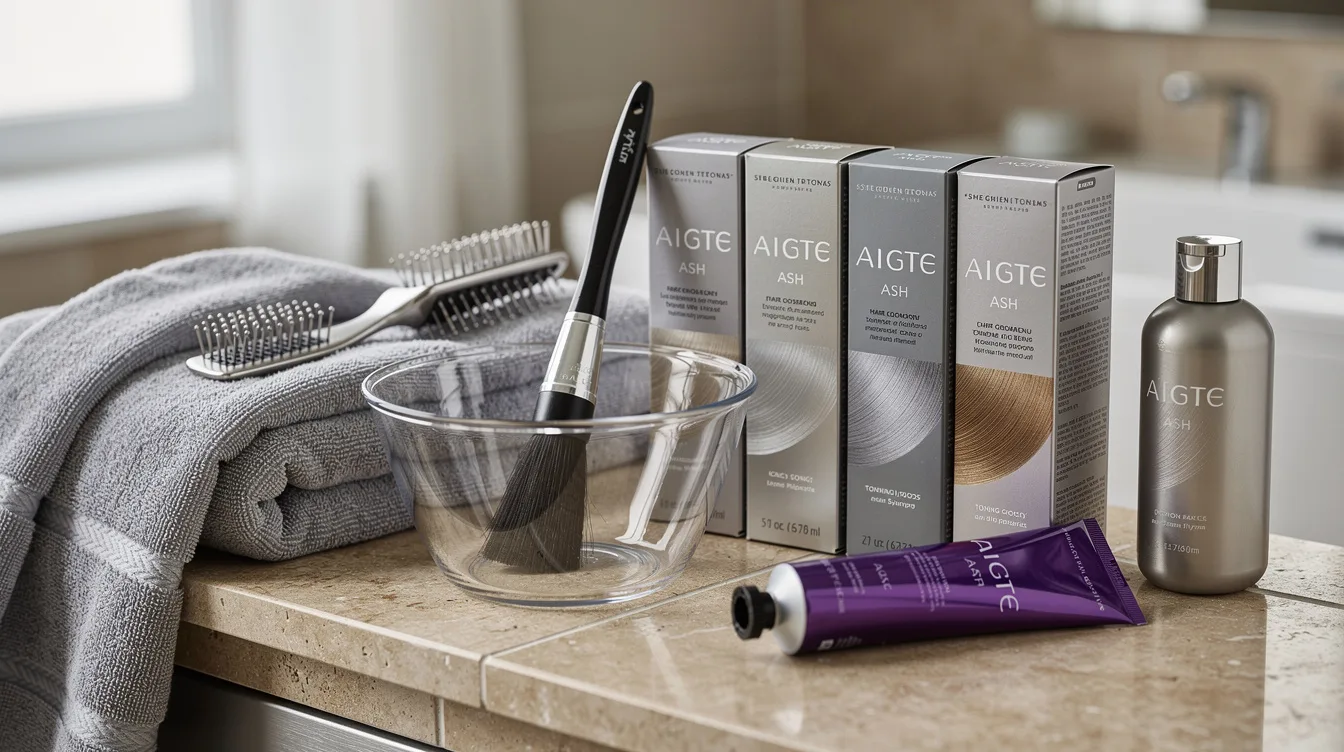
The mirror problem usually shows up a week after coloring: the gray is covered, but the roots look orange beside your cooler lengths. Before opening a box, give every dye a 48-hour patch test, especially when menopause has left the scalp drier or more reactive.
Brass comes from lifting warm underlying pigment and from formulas that lack enough neutral balance. A calmer plan protects the scalp and keeps the color believable.
What you will find inside
- 1. Choose a Neutral Base Before Adding Ash
- 2. Mix Cool Tone Conservatively
- 3. Match Your Natural Depth Instead of Lifting
- 4. Color Regrowth, Then Refresh Lengths Separately
- 5. Tone Yellow With Purple, Not More Permanent Dye
- 6. Treat Scalp Reactions as a Stop Sign
1. Choose a Neutral Base Before Adding Ash
For resistant gray, let a natural N or NN shade do most of the coverage work. It gives gray strands the opacity that a pure ash formula can lack, particularly around the temples.
Then use a controlled cool component at the same depth, such as 7N with 7A for dark blonde or 5N with 5A for light brown. Our opinion: a natural base plus ash looks more expensive at home than chasing a single “cool” box shade.
2. Mix Cool Tone Conservatively
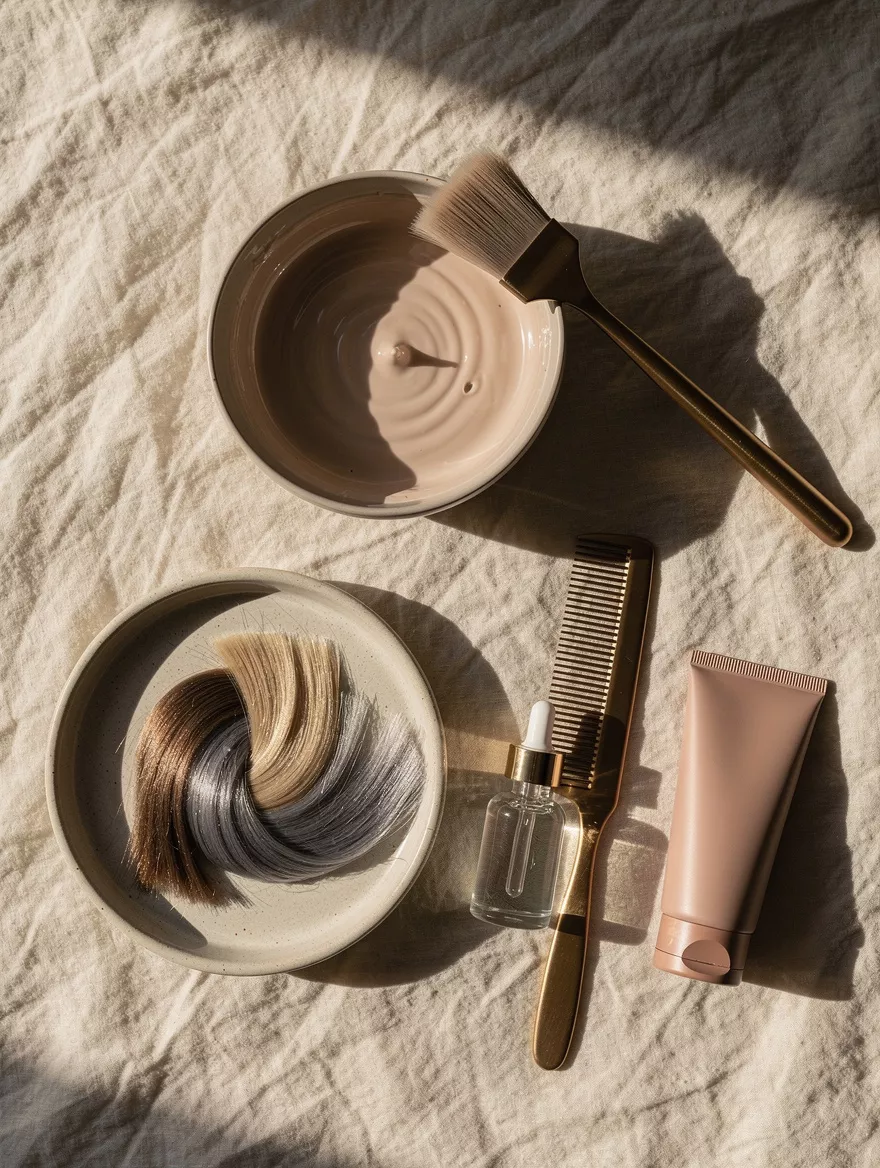
If a brand permits within-system shade mixing, roughly two parts natural color to one part ash is a sensible starting point. Follow that manufacturer’s developer, timing, and mixing directions exactly.
All-ash color can grab on porous gray and leave a flat khaki or smoky cast. Keep the ash portion modest, then adjust on a later application only if warmth still shows through.
3. Match Your Natural Depth Instead of Lifting
Stay close to the depth you had before gray became prominent, whether that is dark blonde, light brown, or medium brown. Stronger lift exposes more yellow and orange pigment, which creates the brass you are trying to avoid.
A shade such as Clairol Nice’n Easy in a neutral or cool family can be practical when its shade chart matches your existing depth. Skip labels such as golden, honey, caramel, chestnut, and mahogany when warm roots are already your concern.
4. Color Regrowth, Then Refresh Lengths Separately
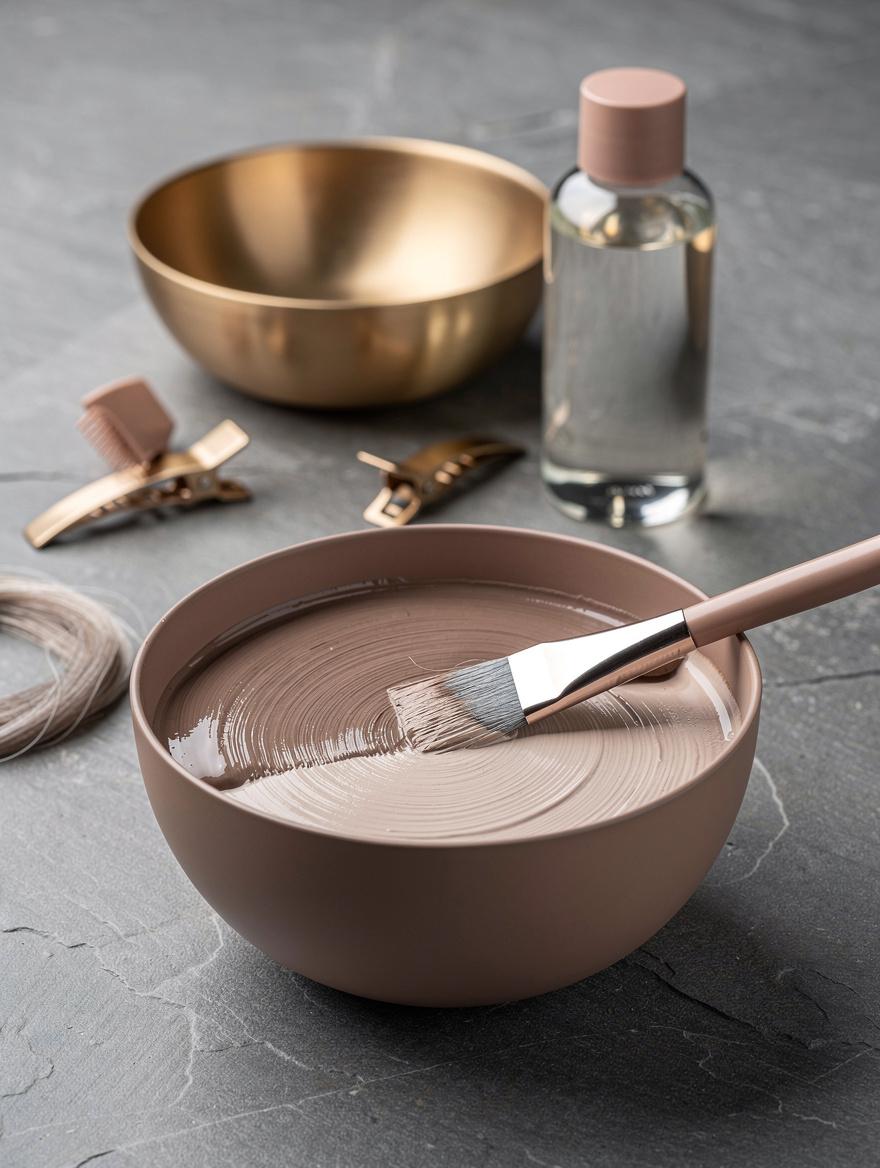
Apply permanent color to new growth rather than pulling it through the entire head at every touch-up. Older lengths are often more porous after repeated coloring, heat styling, and lower natural oil production.
For faded mids and ends, use a lower-commitment Kristin Ess Signature Hair Gloss in a suitable cool or neutral tone instead of another permanent-color pass. This is the swap we favor most for preserving softness while keeping the overall shade from drifting warm.
5. Tone Yellow With Purple, Not More Permanent Dye
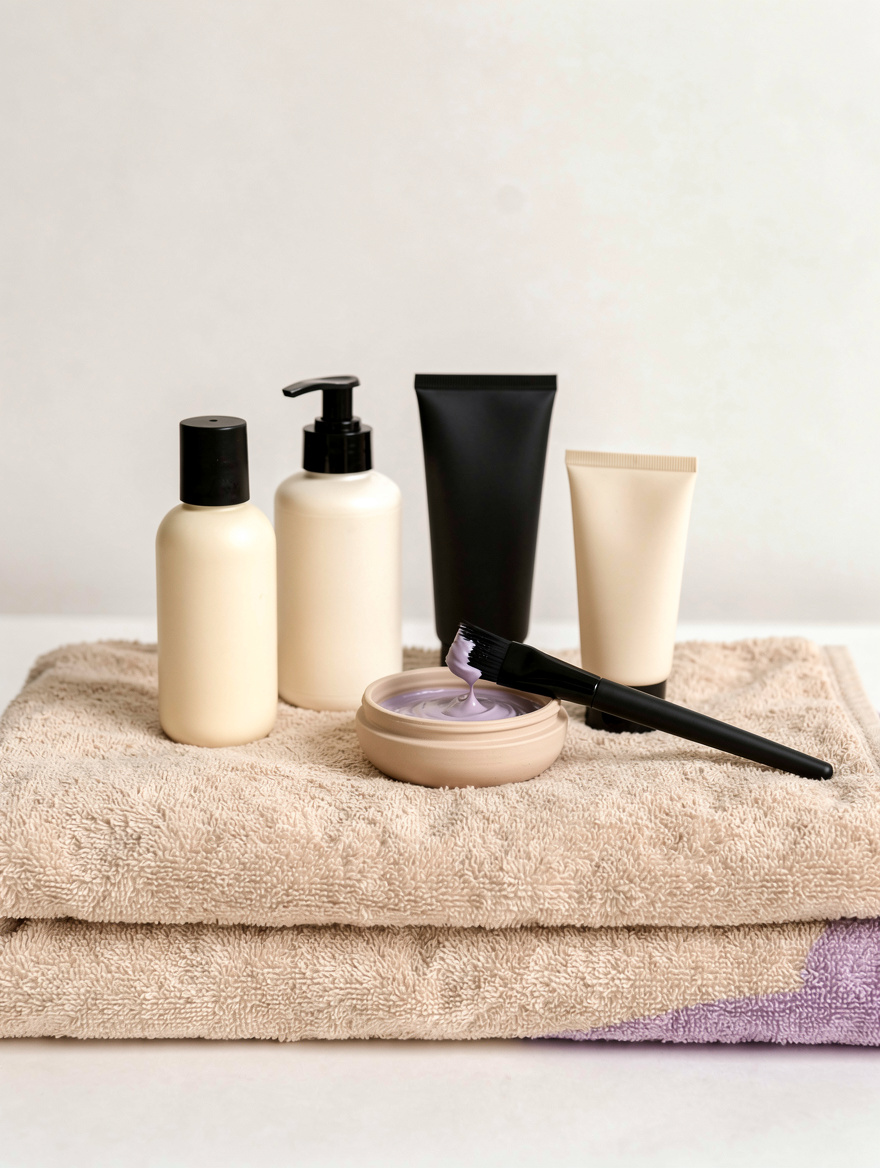
When blonde or silver lengths look yellow but the roots still have coverage, reach for a purple-toning wash or gloss. Purple pigment visually offsets yellow, while another round of permanent color can make dry ends look dull.
dpHUE Cool Blonde Gloss+ is the kind of between-color product worth considering for blonde, highlighted, or silver-blended hair. Use any toning product as directed and watch porous ends closely, since they can take on violet pigment faster than healthy regrowth.
6. Treat Scalp Reactions as a Stop Sign
Hair dye can trigger allergic contact dermatitis from ingredients including PPD, related oxidative dye compounds, fragrance, and resorcinol-family ingredients. “PPD-free” does not guarantee that a formula is allergy-free.
Do not color if a home test causes rash, burning, itching, swelling, or blisters, and seek prompt medical care for facial swelling or trouble breathing. A dermatologist can evaluate suspected dye allergy with formal patch testing, and any scalp spot that bleeds, changes shape, or does not heal deserves a dermatologist’s attention.
Start with the shade label: choose your natural depth in N or NN, then add only a small compatible ash element if warmth has been a repeat issue. Keep permanent color at the roots and reserve a gloss for the lengths, which is often the lower-stress route for hair over 50.