Toledo’s Medieval Maze: Where Three Cultures Built Spain’s Most Extraordinary Skyline
A city suspended in time above the Tagus River
The ancient city of Toledo rises dramatically from a granite promontory, encircled by the Tagus River like a natural moat protecting a treasure chest of history. Just 90 kilometers south of Madrid, this remarkably preserved medieval city holds a distinction few places on earth can claim – a seamless architectural fusion of Christian, Muslim, and Jewish heritage that earned it UNESCO World Heritage status.
Walking Toledo’s labyrinthine streets feels like stepping through a portal to Spain’s most pivotal era. Nowhere else captures the essence of pre-Renaissance Spain with such authenticity. The city’s dramatic setting inspired El Greco’s most famous painting, “View of Toledo,” which captures the mystical quality that still permeates the city today.
The “City of Three Cultures” where civilizations converged
Toledo’s most extraordinary feature is how it showcases the harmonious coexistence of three major religions that shaped Spanish identity. For centuries, Christians, Muslims, and Jews lived side by side, creating a cultural melting pot that produced remarkable architecture and artistic traditions.
“Toledo represents Spain’s soul – where east met west, where faith transcended politics, and where artisans from different worlds created something entirely new,” explains María Hernández, local historian and tour guide.
This multicultural heritage is visible everywhere: in the horseshoe arches of former mosques, the intricate geometric patterns of synagogues, and the soaring Gothic ambition of the cathedral. In the Synagogue of Santa María la Blanca, you’ll find Islamic architectural elements in a Jewish place of worship that later became a Christian church – a perfect metaphor for Toledo itself.
When to experience Toledo’s golden glow
The ideal times to visit are spring (April to June) and fall (September to October). During these months, the amber-hued buildings catch the golden Mediterranean light, temperatures are perfect for exploring, and the tourist crowds thin compared to summer months.
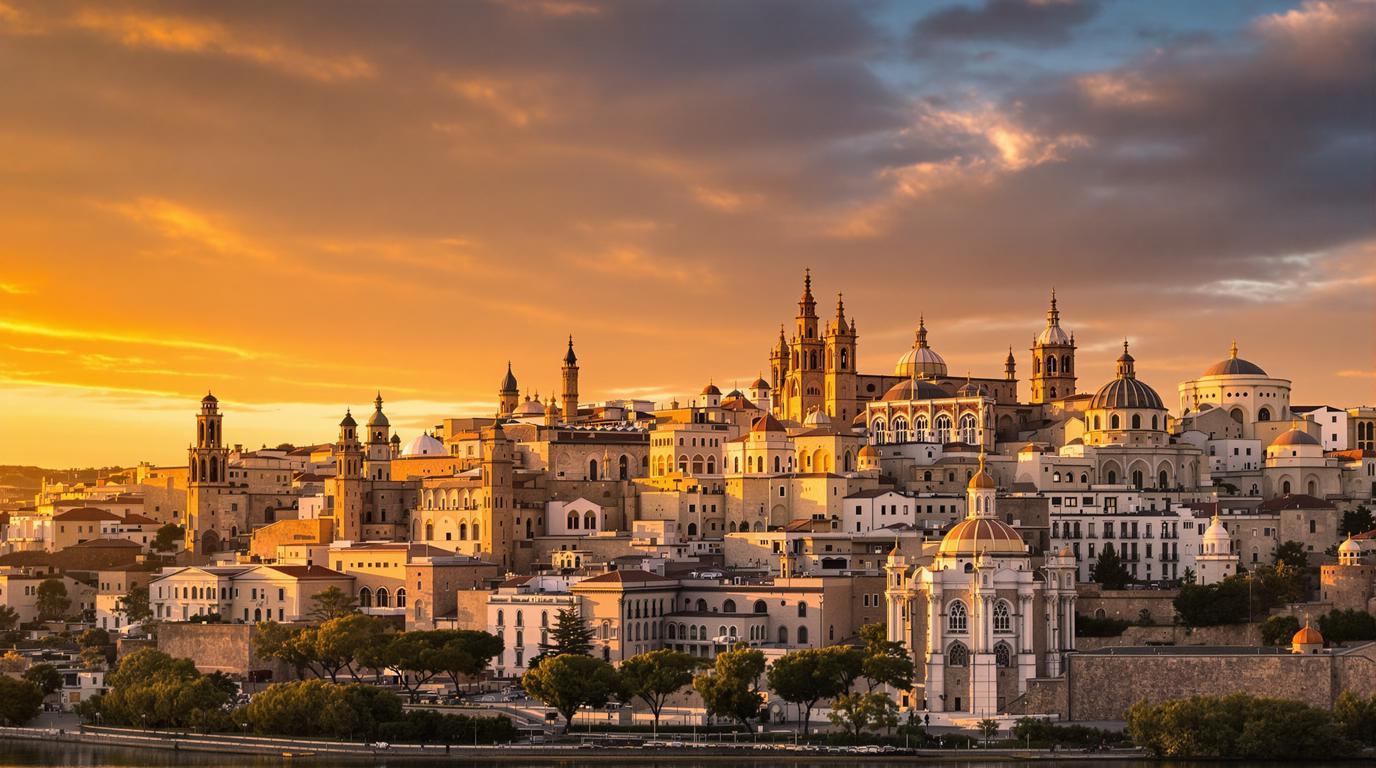
Visiting during these shoulder seasons allows you to experience what locals call “la luz de Toledo” – the distinctive light that bathes the city in a warm glow, especially during sunset when the entire cityscape turns a breathtaking reddish-gold.
A medieval wonderland frozen in architectural splendor
Toledo’s skyline appears virtually unchanged since the 16th century, making it one of Europe’s most atmospheric destinations. Its winding streets reveal treasures at every turn – much like Belgium’s medieval wonderland, Toledo preserves its architectural heritage with religious devotion.
The city’s crown jewel is its magnificent cathedral, a 13th-century Gothic masterpiece housing an astonishing collection of art treasures. El Transparente, its baroque altarpiece with a skylight that creates the illusion of ascending to heaven, rivals even Palma de Mallorca’s Gothic masterpiece in audacity and beauty.
The sword city where legends were forged in steel
Toledo’s steelworking tradition dates back to Roman times, when the city produced weapons for legionaries. This legacy continued through the Middle Ages when “Toledo steel” became legendary across Europe for its exceptional quality.
“Our smiths could make a blade so sharp and flexible you could bend it into a circle without breaking,” explains Carlos Ruiz, a seventh-generation swordsmith. “Kings and emperors would accept nothing less than Toledo steel.”
Today, you can visit workshops where artisans still craft ceremonial swords using ancient techniques, creating museum-quality pieces that maintain this proud tradition.
A culinary tradition as rich as its history
Toledo’s gastronomy reflects its multicultural heritage, with dishes that blend Spanish traditions with Arab and Jewish influences. The city has recently emerged as an unexpected food paradise, where ancient recipes meet modern culinary innovation.
Don’t leave without trying marzipan, Toledo’s signature sweet treat, perfected by nuns using recipes preserved since medieval times. For something heartier, partridge stew and carcamusas (slow-cooked pork in tomato sauce) offer a taste of authentic Castilian cuisine.
Beyond the city walls: breathtaking panoramas
The most unforgettable view of Toledo comes from across the Tagus River at Mirador del Valle. This panoramic viewpoint rivals even Ireland’s 700-foot cliffs for dramatic impact, offering a vista that encompasses the entire medieval cityscape rising majestically above the river.
For those combining work and travel, Toledo offers a refreshing alternative to scenic mobile offices – its historic paradores and cafés provide inspiring workspaces surrounded by centuries of Spanish history.
As the sun sets behind Toledo’s spires and towers, casting long shadows across its ancient stones, you’ll understand why this extraordinary city captures the imagination like few others in Europe. It’s not just a monument to Spain’s past – it’s a living testament to how different cultures can create something greater than the sum of their parts.