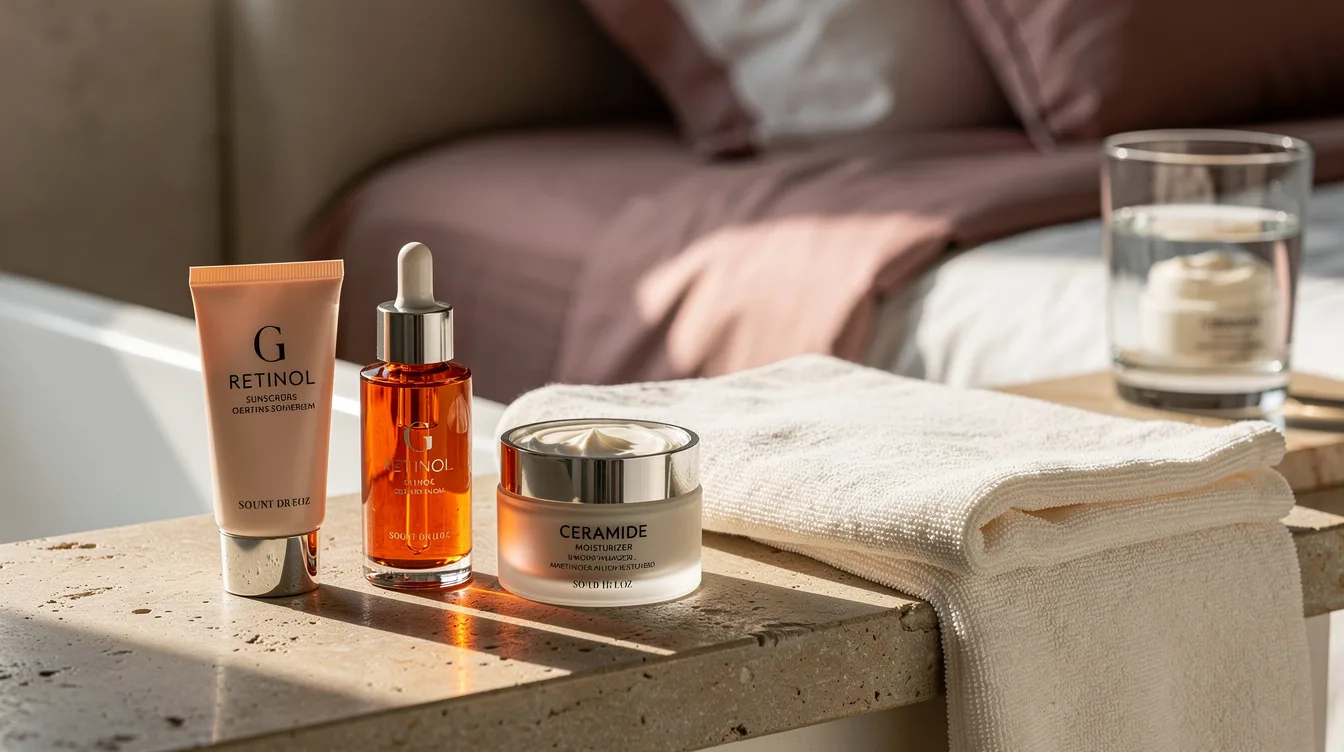
The mirror can feel suddenly unforgiving when the moisturizer that once disappeared beautifully now sits on dry, easily irritated skin. A commonly cited population estimate is roughly 30% collagen loss in the first five postmenopausal years, but it cannot predict any one face.
Lower estrogen can reduce the skin’s structural reserve, making earlier sun exposure and dryness easier to see. That calls for a steadier routine, not a frantic shelf reset.
Put Sunscreen Ahead of Every Collagen Claim
Estrogen supports fibroblasts, the cells involved in making collagen, including types I and III, while its loss can leave skin thinner and less springy. But dermatologists still point to UV exposure as the major preventable driver of collagen breakdown, so broad-spectrum SPF 30+ is the practical first move.
Use it on the face, neck, chest, and hands every morning, then reapply when outdoor exposure is meaningful. A peptide serum may feel lovely, but it cannot outwork unprotected daylight, and that is my blunt opinion on where the budget belongs.
Start Retinol at a Pace Your Barrier Can Handle
A topical retinoid is among the better-supported options for the appearance of fine wrinkles and photoaging because it helps normalize epidermal turnover and supports dermal matrix signaling. Begin with The Ordinary Retinol 0.2% in Squalane, typically about $9.70, only two nights a week if your skin is dry or sting-prone.
Apply a pea-sized amount to fully dry skin, then add moisturizer, and increase only when your skin stays comfortable. Retinoids are useful tools, not a test of toughness, especially when lower estrogen has reduced oil and water retention.
Choose Moisture That Strengthens the Daily Routine
Menopausal skin often has less sebum, fewer protective lipids, and less water retention, which can show up as tightness, flaking, or stinging. A formula with ceramides, glycerin, hyaluronic acid, dimethicone, petrolatum, or squalane can make skin feel more comfortable and help a retinoid stay tolerable.
CeraVe Skin Renewing Retinol Serum, listed around $24.99, pairs encapsulated retinol with three ceramides, although the brand does not disclose its retinol percentage. It is a sensible middle-ground choice for someone who wants one streamlined evening product instead of layering several actives.
Treat the 30% Figure as Context, Not Destiny
The often repeated estimate of collagen decline after menopause is useful for explaining why skin may feel different, not for forecasting your exact future. Genetics, smoking, weight changes, sleep, illness, skincare tolerance, and accumulated sun exposure all influence how collagen looks and functions over time.
Estrogen loss can make existing photodamage more visible because the dermis has less structural reserve, but every wrinkle is not hormonal. I would skip any product pitch that treats one statistic as proof that your face needs a dramatic intervention.
Reserve Stronger Retinol for Skin That Is Ready
Once a lower-strength retinol feels easy for several weeks, a higher OTC option may be reasonable if your skin stays calm. Neutrogena Rapid Wrinkle Repair Retinol Pro+ Power Serum contains 0.5% pure retinol and typically lands in the mid-$30s to $40 range, depending on the retailer.
More strength can also mean more dryness, so do not add exfoliating acids on the same night just to speed things up. A simple schedule of retinol, moisturizer, and sunscreen is more convincing than a crowded routine that leaves your barrier inflamed.
Ask About Prescription Care When It Fits
For some people, a clinician may recommend generic tretinoin 0.025%, a prescription retinoid option. It is appropriate to ask a dermatologist whether it fits your skin, your goals, and the rest of your medical care, especially if OTC retinol has been frustrating.
Prescription treatment deserves a real conversation rather than a social-media workaround, and irritation still needs managing with a gentle routine. See a dermatologist promptly for any spot that bleeds, changes shape, or does not heal, since skincare cannot diagnose a concerning lesion.
Start with a daily broad-spectrum sunscreen you will actually wear on your face, neck, chest, and hands. Add a low-strength retinol only after your moisturizer routine feels reliably comfortable.