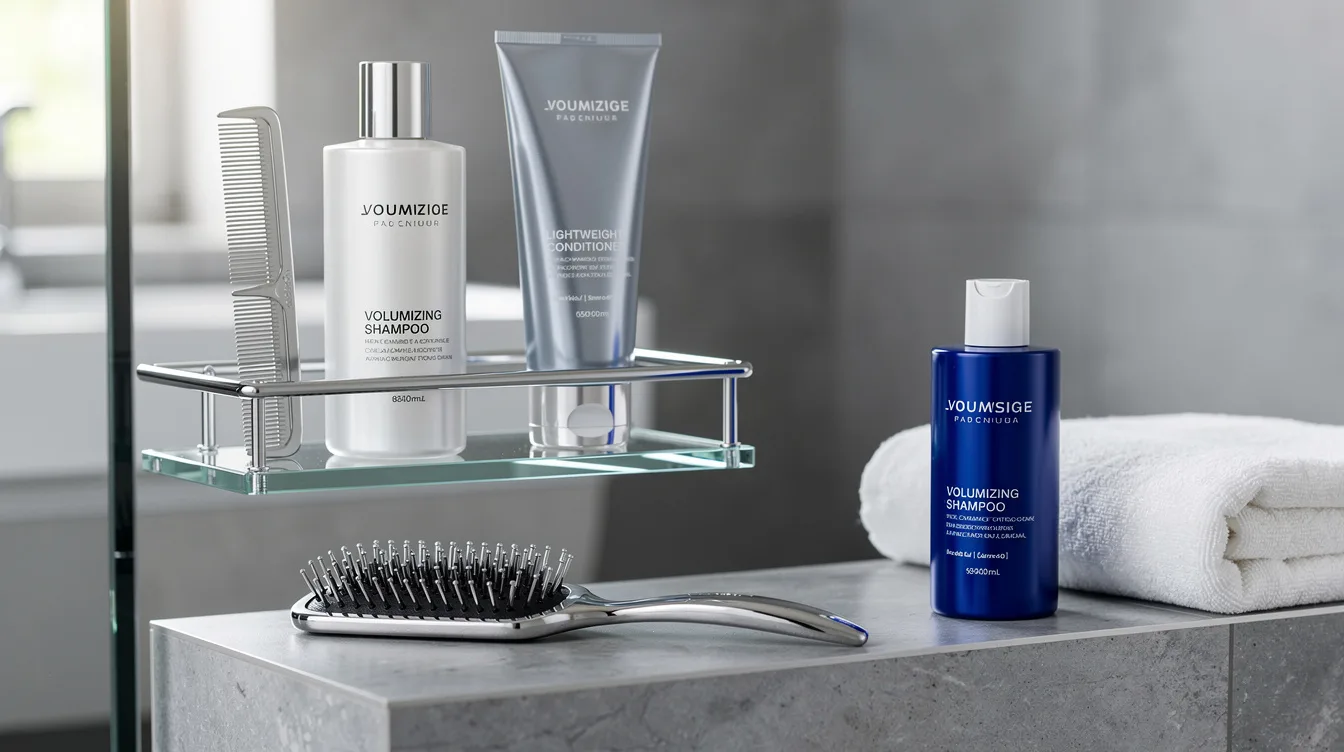
The mirror can be rude at 8 a.m.: your ends feel soft, but the hair at your crown has already settled against your scalp. A volumizing shampoo often costs about $20 to $30, which is far less frustrating than repeatedly buying another rich repair formula that leaves fine roots looking smaller.
Fine hair means each strand has a small diameter, not that you have done anything wrong or that shampoo caused hair loss. After menopause, changes in density, breakage, color damage, and scalp comfort can overlap, so the useful goal is a cleaner-looking root area and protected lengths.
What you will find inside
- 1. Choose Root Cleansing Over All-Over Richness
- 2. Keep Conditioner Below Your Ears
- 3. Rinse Like Deposits Matter
- 4. Wash for Your Actual Scalp
- 5. Look for Temporary Body Builders
- 6. Treat Flakes Separately From Volume
1. Choose Root Cleansing Over All-Over Richness
Retire a default shampoo labeled moisture, smoothing, anti-frizz, or intensive repair when your roots routinely collapse. Those formulas can be pleasant on dry lengths, yet deposited conditioning ingredients may reduce the visual separation that gives fine hair its lift.
Try a conventional volumizing formula such as Biolage Volume Boost, typically around $25, if your scalp tolerates stronger cleansing. Its ingredient list includes sodium laureth sulfate, cocamidopropyl betaine, hydroxypropylcellulose, and hydrolyzed rice protein, a sensible mix for someone who wants body without an oil-heavy wash.

2. Keep Conditioner Below Your Ears
Put conditioner, masks, oils, and leave-ins on mid-lengths and ends, then keep them away from the scalp and root zone. This single placement change is often more useful than replacing every product in the shower.
A separate conditioner with a modest amount of polyquaternium can make fragile ends easier to comb without asking the roots to carry extra coating. I would rather protect the ends deliberately than spread a rich formula everywhere and wonder why the crown disappears.
3. Rinse Like Deposits Matter
Give shampoo and conditioner more rinse time than you think they need, especially at the nape, temples, and crown. Silicone and cationic conditioning systems are designed to deposit on fibers for slip and surface feel, so incomplete rinsing can leave fine hair with less bounce.
You do not need to fear silicone as an ingredient category. It can be genuinely useful on bleached or rough ends, but a high-deposit routine at the roots is a poor match when lift is your priority.
4. Wash for Your Actual Scalp
Skip the rule that says you must train your scalp to tolerate infrequent washing. Fine hair can look flat quickly as sebum and styling residue collect, so wash according to oiliness, comfort, activity, and how you want your hair to look.
A shampoo using sodium laureth sulfate may work very well for an oily scalp that handles it comfortably. If your scalp is chemically irritated, eczema-prone, or feels tight after washing, choose a gentler option and let scalp comfort set the schedule.
5. Look for Temporary Body Builders
For visible fullness, look for ingredients that support the appearance of body, including panthenol, hydrolyzed rice, wheat, or soy proteins, amino acids, cellulose, or hydroxypropylcellulose. Their effect is cosmetic and temporary, which is still worthwhile when you want hair that styles with more presence.
Panthenol is a reasonable ingredient to welcome in a lightweight formula, but do not let a front-label claim imply a known dose. In ordinary shampoo, the exact percentages of proteins, polymers, oils, and similar ingredients are usually proprietary, and the ingredient list cannot tell you the precise amount.
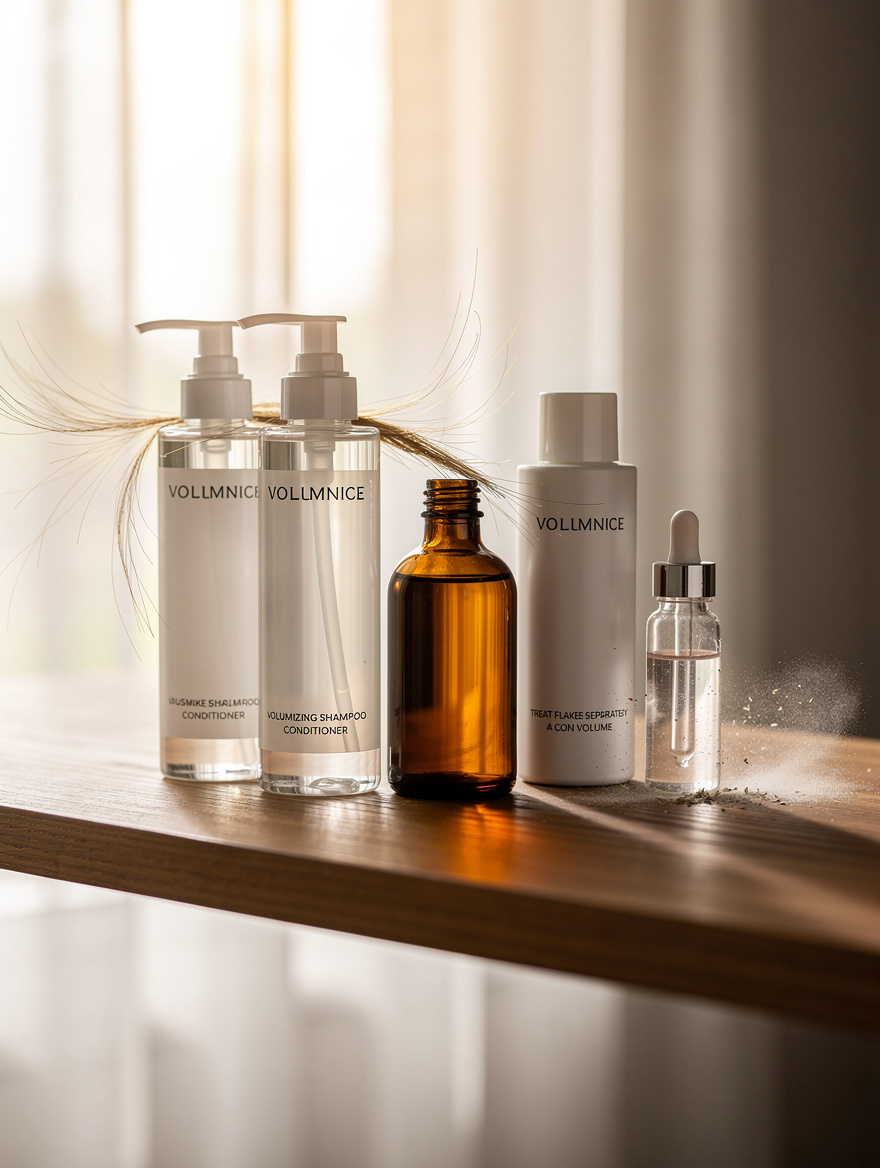
6. Treat Flakes Separately From Volume
Do not buy a thickening shampoo hoping it will solve persistent flakes or itch. A scalp-treatment ingredient such as ketoconazole, selenium sulfide, or salicylic acid has a different job from a volumizing cleanser, and it should be used as directed for scalp concerns.
Shampoo can improve how hair looks and reduce breakage from rough handling, but it cannot reliably reverse androgenetic hair loss. See a dermatologist if shedding worries you, your scalp is persistently uncomfortable, or you notice a spot that bleeds, changes shape, or does not heal.
Start with the lowest-cost switch: move your conditioner below the ears and rinse thoroughly for a full extra minute. Then choose your next shampoo based on your scalp, not on a promise that every dry-looking end needs a rich formula at the root.