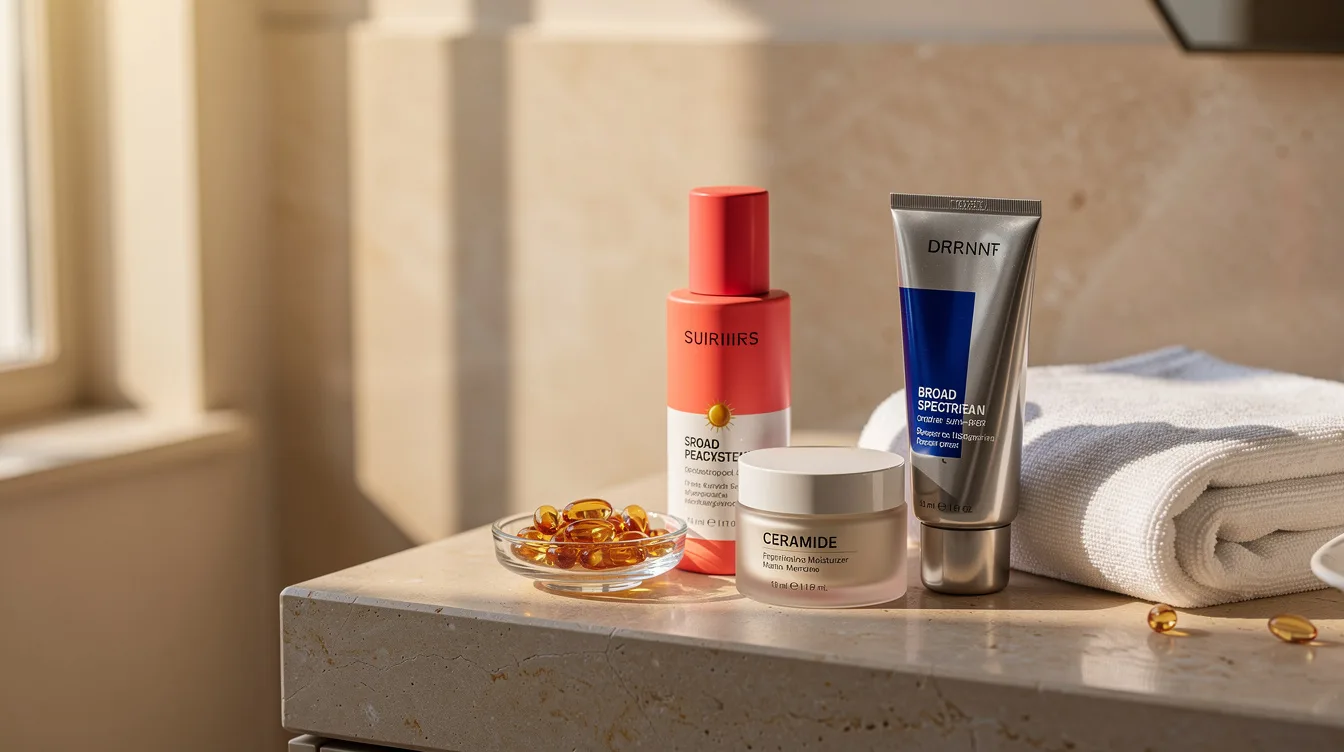
The clue usually appears when a dependable face routine reaches the neck and suddenly stings, pills, or leaves the upper chest feeling papery by noon. A practical SPF 50 used below the chin every morning often matters more than adding another specialty cream, and many good drugstore options run about $18.
Skin here can be thinner and less oily after menopause, so the smartest routine is deliberately plain: protect it daily, introduce treatment slowly, and keep the barrier comfortable.
What you will find inside
- Carry Sunscreen Past Your Jawline
- Stop Treating the Neck Like Forehead Skin
- Buffer Retinol With Moisturizer
- Use Niacinamide on Recovery Nights
- Retire Scrubs and Friction
- Give the Routine Time Before Upgrading
Carry Sunscreen Past Your Jawline
Apply broad-spectrum sunscreen over the front and sides of the neck, ears, nape when exposed, and upper chest to the clothing line. La Roche-Posay Anthelios Melt-In Milk Sunscreen SPF 60, typically around $26, is a sensible pick for larger exposed areas because it is designed for face and body use.
I would prioritize the sunscreen you will actually spread generously over a precious little neck cream. Dermatology guidance generally recommends at least SPF 30 on exposed skin, with reapplication about every two hours during real outdoor exposure and after swimming or sweating.
Stop Treating the Neck Like Forehead Skin
The neck has less margin for a strong active applied nightly, especially when dryness or friction from collars is already in the mix. Start with a typical 0.1% retinol product two evenings a week, rather than borrowing a face routine built for tougher skin.
RoC Retinol Correxion Line Smoothing Night Serum Capsules, often about $30 at US drugstores, offers a measured format that can make it easier not to overapply. Retinol formulas are intended to support smoother-looking texture over time, but irritation is a clear signal to pause and simplify.
Buffer Retinol With Moisturizer
For a reactive neck, smooth on moisturizer first, add a small amount of retinol, then follow with another light layer of moisturizer. This buffering approach may improve tolerance without turning the routine into a complicated project.
CeraVe Moisturizing Cream, commonly around $17 depending on size and retailer, uses ceramides and hyaluronic acid in a straightforward formula that works well for this job. Skip retinol over chafed, peeling, or freshly shaved skin, and ask a dermatologist before using prescription tretinoin 0.025% there.
Use Niacinamide on Recovery Nights
On the nights between retinol applications, a bland moisturizer is enough, though niacinamide can be a useful add-on for uneven-looking tone and barrier support. Clinical support is clearest around 5% niacinamide, yet lower-strength formulas can be more comfortable for sensitive skin.
Olay Regenerist Micro-Sculpting Cream Fragrance Free, usually about $35, includes niacinamide and makes a convenient recovery-night moisturizer. I would avoid stacking it with acids or scrubs on the neck simply because the face tolerates those extras.
Retire Scrubs and Friction
Rough washcloths, grainy scrubs, exfoliating brushes, and aggressive towel drying can keep a vulnerable neck in a cycle of redness and tightness. Use a mild cleanser such as CeraVe Hydrating Facial Cleanser, often around $16, then pat the area dry.
Exfoliation has a place for some people, but it is rarely the first lever to pull here. A retinoid schedule that remains comfortable is more useful than chasing a tingly, polished feeling that disappears by breakfast.
Give the Routine Time Before Upgrading
After two to four comfortable weeks, consider moving retinol to every other night, but only if the skin is calm. Studies of retinol products have reported gradual improvements in neck texture and fine lines over roughly 12 to 16 weeks, so impatience is an expensive irritant.
The Ordinary Multi-Peptide + HA Serum, typically about $25 at Sephora or Ulta, can be a pleasant hydration-focused adjunct, but peptides do not replace sunscreen or retinoid consistency. See a dermatologist for any spot that bleeds, changes shape, or does not heal, and do not delay prescribed care for a cosmetic routine.
Start tomorrow with sunscreen from the jawline to the neckline, then add a buffered retinol night twice weekly once that habit is steady. That low-drama order keeps the total routine focused on the two steps most likely to earn their shelf space.