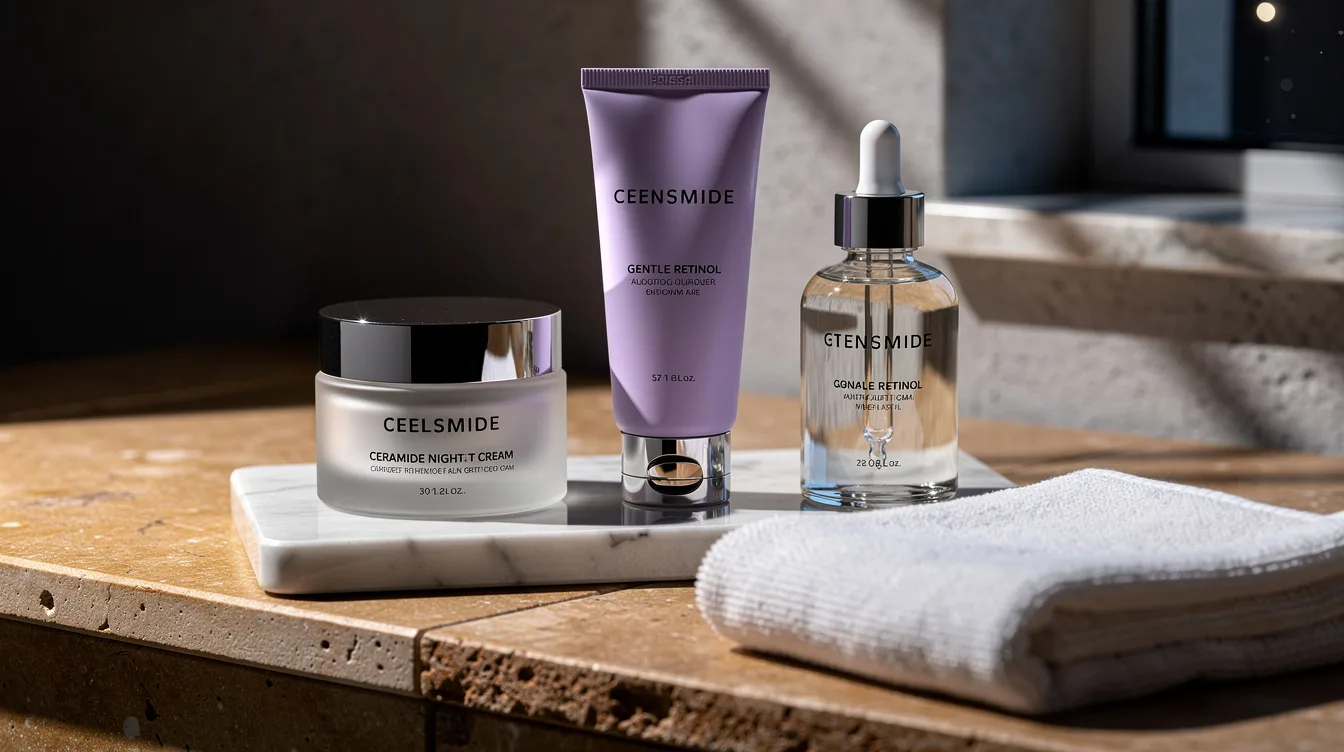
The moment a familiar night cream starts stinging, or makeup seems to catch on the cheeks by morning, more exfoliation is rarely the answer. Thin, crepey skin often needs a quieter routine built around water, lipids, and a retinoid introduced slowly.
A typical 0.1% retinol cream can cost about $8, which is enough to start thoughtfully without buying a shelf full of treatments.
What you will find inside
- 1. Cleanse Without Stripping Away Comfort
- 2. Start Retinol at a Deliberately Slow Pace
- 3. Let Skin Dry Before Applying Your Retinoid
- 4. Buffer Retinoid With a Rich Moisturizer
- 5. Build Recovery Nights Around Barrier Lipids
- 6. Pause Exfoliation Until Your Skin Feels Steady
1. Cleanse Without Stripping Away Comfort
Use a gentle, non-foaming cleanser with lukewarm water, then pat rather than rub. CeraVe Hydrating Facial Cleanser, typically around $15 to $18, is a sensible pick because ceramides and glycerin support the skin’s comfort instead of leaving that tight, squeaky feeling.
At night, one careful cleanse is usually plenty unless you are removing heavy makeup or water-resistant sunscreen. A face that feels tight before treatment is already telling you its barrier needs less friction and fewer harsh surfactants.
2. Start Retinol at a Deliberately Slow Pace
For fine lines and uneven texture from cumulative sun exposure, retinoids have the strongest topical evidence, but tolerance matters. Good Molecules Gentle Retinol Cream contains 0.1% retinol and is a practical, low-cost entry point for dry or reactive skin.
Apply a pea-sized amount across the face one or two nights a week, avoiding eyelids, lip corners, and the creases beside the nostrils. Prescription tretinoin 0.025% may be worth discussing with a dermatologist, especially when photoaging is a major concern, but it can be more irritating than over-the-counter retinol.
3. Let Skin Dry Before Applying Your Retinoid
After cleansing, wait roughly 10 to 20 minutes before retinol if your skin tends to sting or turn red. Damp skin can make a treatment feel stronger, and irritation can make delicate texture look rougher for days.
The Ordinary Retinol 0.2% in Squalane, usually about $8 to $10, is an option for someone who likes a light oil texture. I would treat it as a step-up, not a race, because an every-other-night rhythm is already a strong endpoint for many women over 50.
4. Buffer Retinoid With a Rich Moisturizer
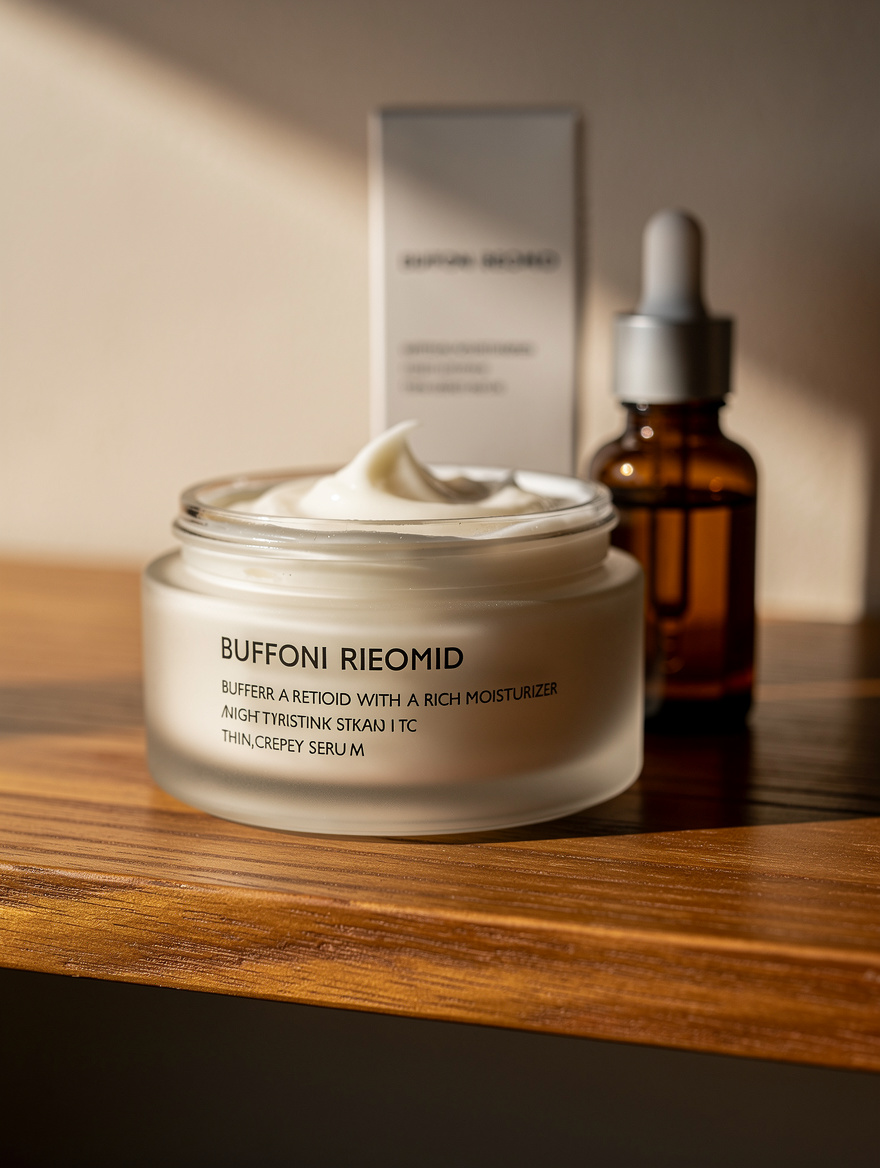
Try the sandwich method on retinoid nights: moisturizer, retinoid, then another light layer of moisturizer. This approach can make a routine easier to maintain when skin is dry, thin, or newly sensitive.
CeraVe Skin Renewing Night Cream, often around $19, brings ceramides, hyaluronic acid, and peptides into one fragrance-free cream. It will not lift loose skin, but consistent hydration can make dehydration-related crinkling and surface roughness look less pronounced.
5. Build Recovery Nights Around Barrier Lipids
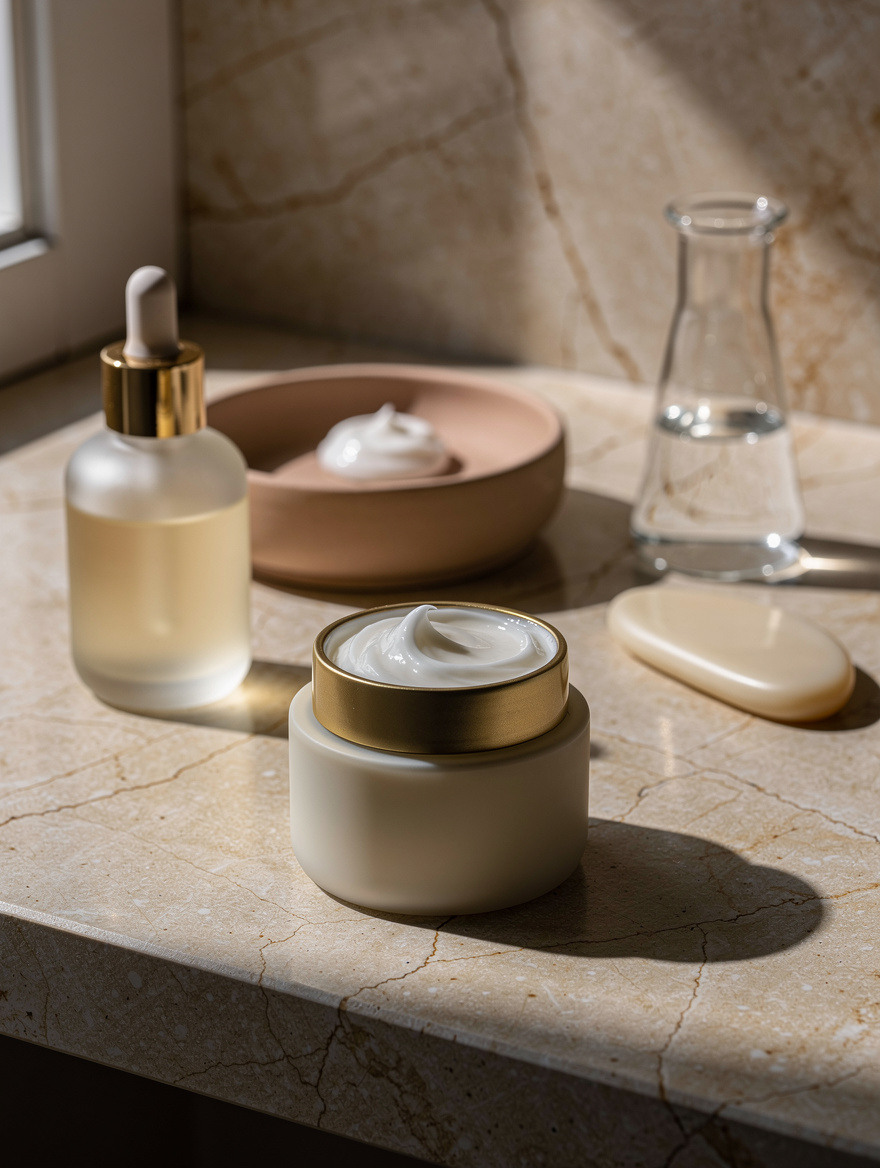
On the nights between retinoid use, keep the routine simple: cleanse, apply an optional hydrating serum, then use a generous moisturizer. A formula with glycerin, ceramides, cholesterol, fatty acids, squalane, or petrolatum is more useful here than another strong active.
La Roche-Posay Toleriane Dermallergo Night Moisturizer, typically around $30, is a good fragrance-free choice for skin that dislikes complicated formulas. For persistently dry patches, press a few drops of squalane or a thin veil of petrolatum over the cream, rather than coating acne-prone areas automatically.
6. Pause Exfoliation Until Your Skin Feels Steady
Skip glycolic acid, lactic acid, salicylic acid, scrubs, and at-home peels on retinoid nights, especially during the first several weeks. Those combinations can lead to scaling, burning, and redness, all of which exaggerate a crepey look.
After roughly three to four weeks without persistent stinging or peeling, increase retinol only if your skin is comfortable. Paula’s Choice Clinical Retinol + Bakuchiol Treatment, with 0.3% retinol and 2% bakuchiol, is a higher-cost option at about $65 list price, and I would reserve it for skin that has already shown it can handle retinol.
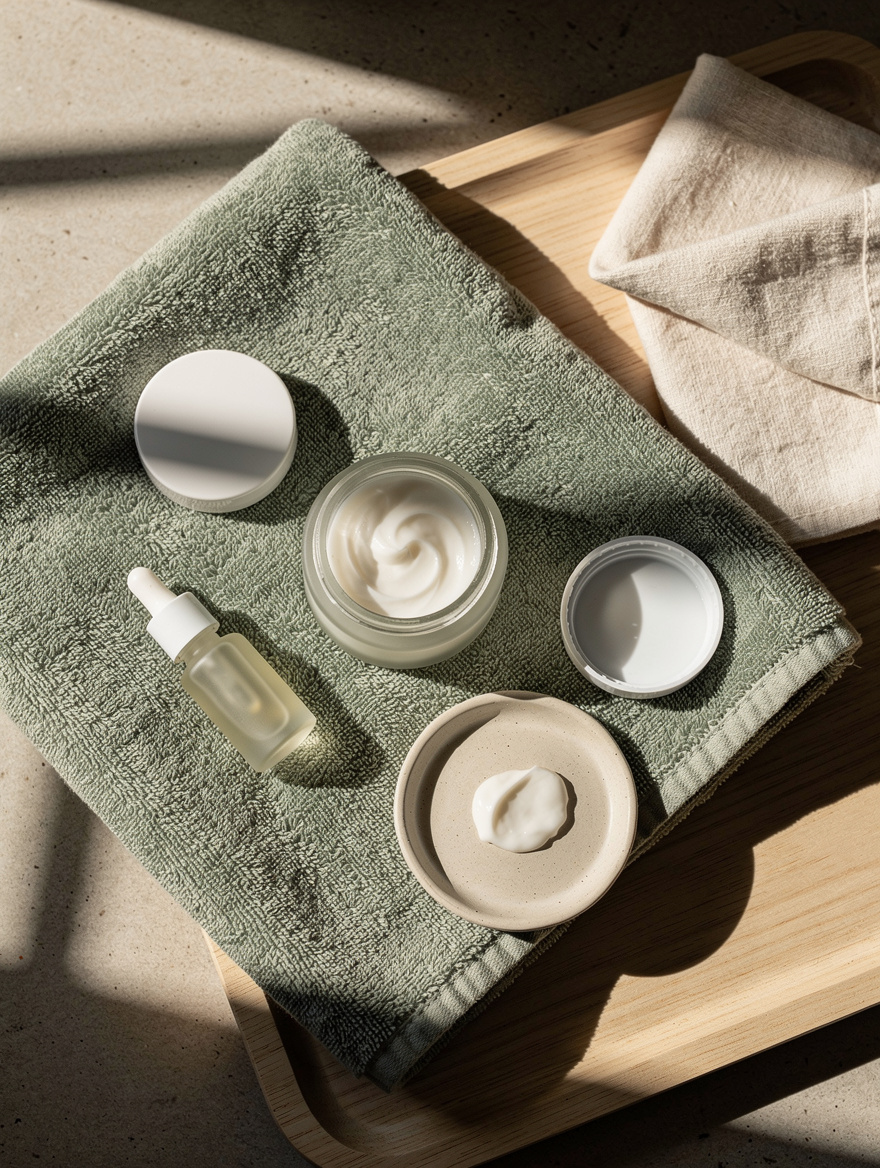
Begin with the least dramatic swap: a gentle cleanser, a rich fragrance-free moisturizer, and 0.1% retinol once weekly. Expect modest texture and fine-line changes over about three to six months, and see a dermatologist for any spot that bleeds, changes shape, or does not heal.