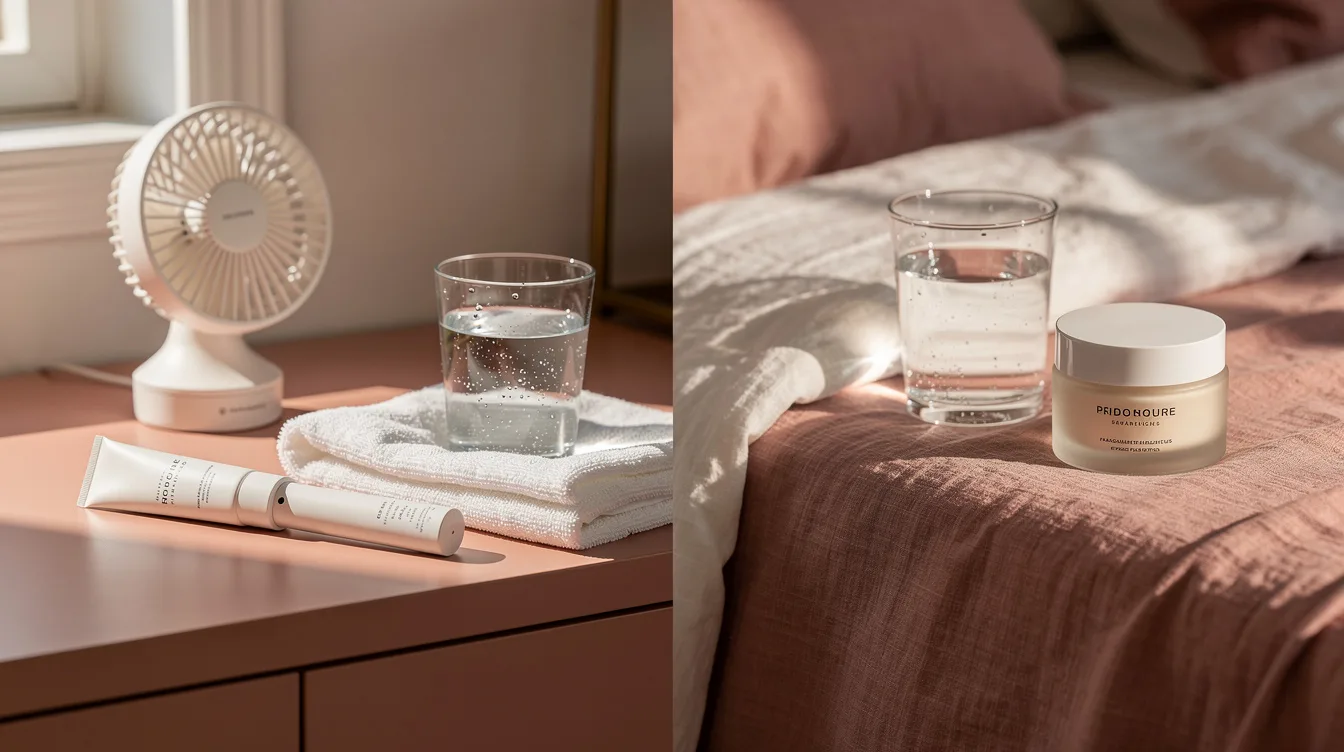
The bathroom mirror can feel rude at 2 a.m., especially when your face is suddenly hot, red, and prickly while the rest of your routine sits there doing nothing. A typical 0.3% retinol product may be useful in the right routine, but it is not the answer to a whole-body hot flash.
Hot flashes are menopausal vasomotor symptoms, so a cream cannot switch them off. Skincare can make the facial discomfort less dramatic and help protect a reactive barrier while you address the bigger issue with a clinician.
What you will find inside
- 1. Cool the Moment, Not Your Entire Routine
- 2. Pause Strong Actives When Skin Is Burning
- 3. Build Around Barrier-Supporting Ingredients
- 4. Wear Mineral Sunscreen Every Morning
- 5. Separate a Hot Flash From Rosacea
- 6. Discuss the Treatment That Targets the Flashes
1. Cool the Moment, Not Your Entire Routine
Keep a fan nearby, sip a cold drink, and wear layers you can remove quickly when a flush starts. Heat, alcohol, spicy food, hot beverages, and stress are common personal triggers, so a brief symptom note can reveal patterns worth acting on.
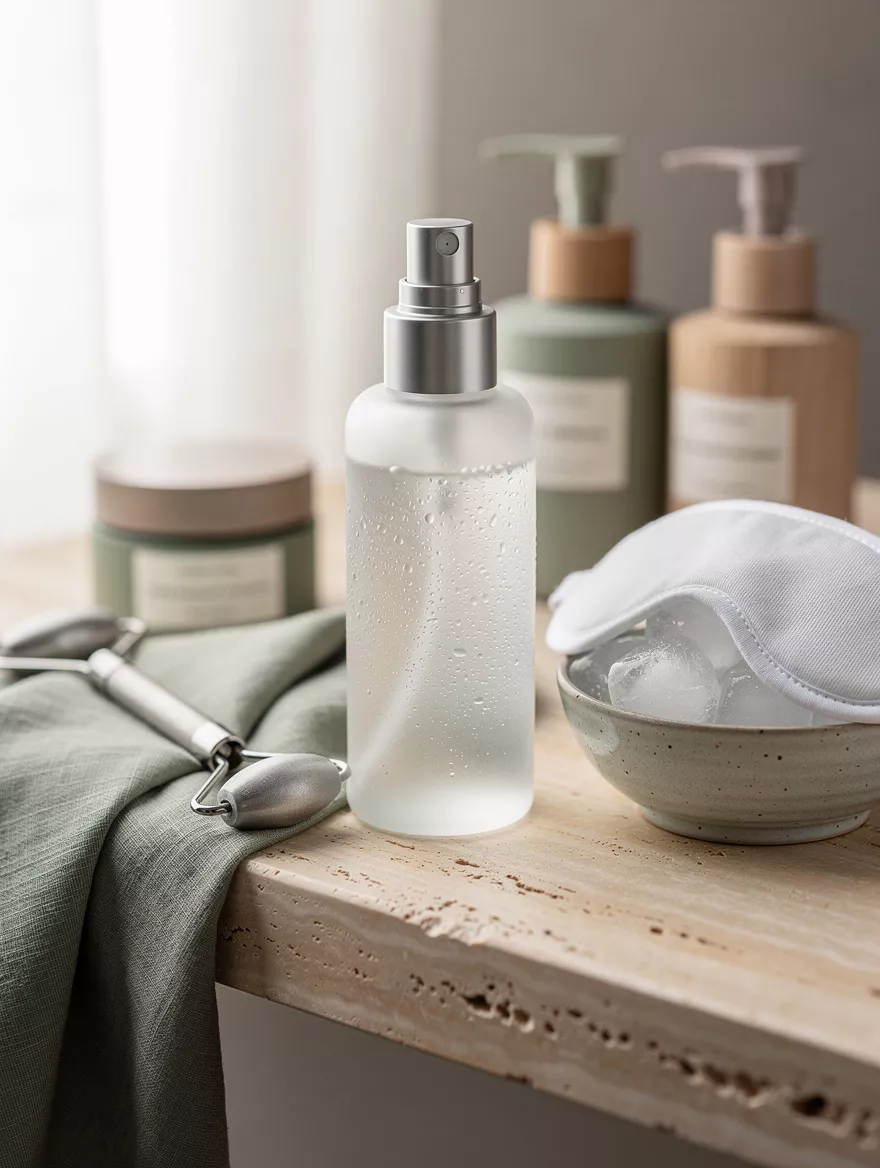
I would skip icy face plunges during a flare. A cool compress held gently against the cheeks is kinder to a sensitized barrier, and La Roche-Posay Toleriane Dermallergo Cream, typically around $25, is a sensible follow-up when skin feels tight.
2. Pause Strong Actives When Skin Is Burning
A flush is a poor time for scrubs, acids, fragrance, or a retinoid experiment. Lower estrogen can leave skin drier and less resilient, and a familiar active can start stinging when the barrier is under pressure.
Use a plain cleanser and moisturizer for a few days instead. CeraVe Hydrating Facial Cleanser, often about $16, is a practical drugstore pick because it cleans without the stripped, squeaky feeling that redness-prone skin rarely enjoys.
3. Build Around Barrier-Supporting Ingredients
Look for ceramides, glycerin, squalane, and dimethicone in a cream you will actually use twice daily. These ingredients are formulated to reduce moisture loss and make dry, reactive skin feel more comfortable, which is a valuable goal even when they do not treat the hot flash itself.
Vanicream Moisturizing Cream, usually around $14 to $18 depending on size, is deliberately boring in the best way. It is my pick for a short reset when your face suddenly objects to everything else.
4. Wear Mineral Sunscreen Every Morning
Heat and sunlight can intensify the look of redness, and daily broad-spectrum protection also matters for skin that is becoming thinner and more easily irritated. Choose a formula that feels comfortable enough to reapply, rather than buying the most ambitious one on the shelf.
Zinc oxide is often a good fit for reactive skin, though every formula is different. EltaMD UV Clear SPF 46, commonly around $43, has a loyal following, but patch-test first if your skin is currently stinging.
5. Separate a Hot Flash From Rosacea
Temporary flushing that arrives with a wave of heat is different from redness that lingers between episodes, burns, stings, or comes with visible vessels or acne-like bumps. Dermatologists sort out that distinction before recommending treatment, because persistent facial redness may need its own plan.
Do not assume a “redness relief” label settles the question. Azelaic acid is an ingredient dermatologists may use in rosacea care, but ongoing symptoms deserve an appointment instead of a crowded routine built from guesses.
6. Discuss the Treatment That Targets the Flashes
For moderate-to-severe hot flashes, menopausal hormone therapy has the strongest evidence when it is appropriate for the individual. Prescription nonhormonal options also exist, including Veozah 45 mg once daily, SSRIs or SNRIs, gabapentin, and oxybutynin, with the choice depending on your health history and other medicines.
Veozah is not a cosmetic shortcut: it carries an FDA boxed warning for rare serious liver injury and requires liver blood tests before treatment, monthly for the first three months, then at months 6 and 9. Hormone therapy also needs an individualized clinician conversation, particularly with a history of certain cancers, clots, stroke, unexplained bleeding, or significant liver disease.
Start with the least complicated move: keep your cleanser and moisturizer bland, then book a clinician visit if flashes are disrupting sleep or daily life. See a dermatologist promptly for any spot that bleeds, changes shape, or does not heal.