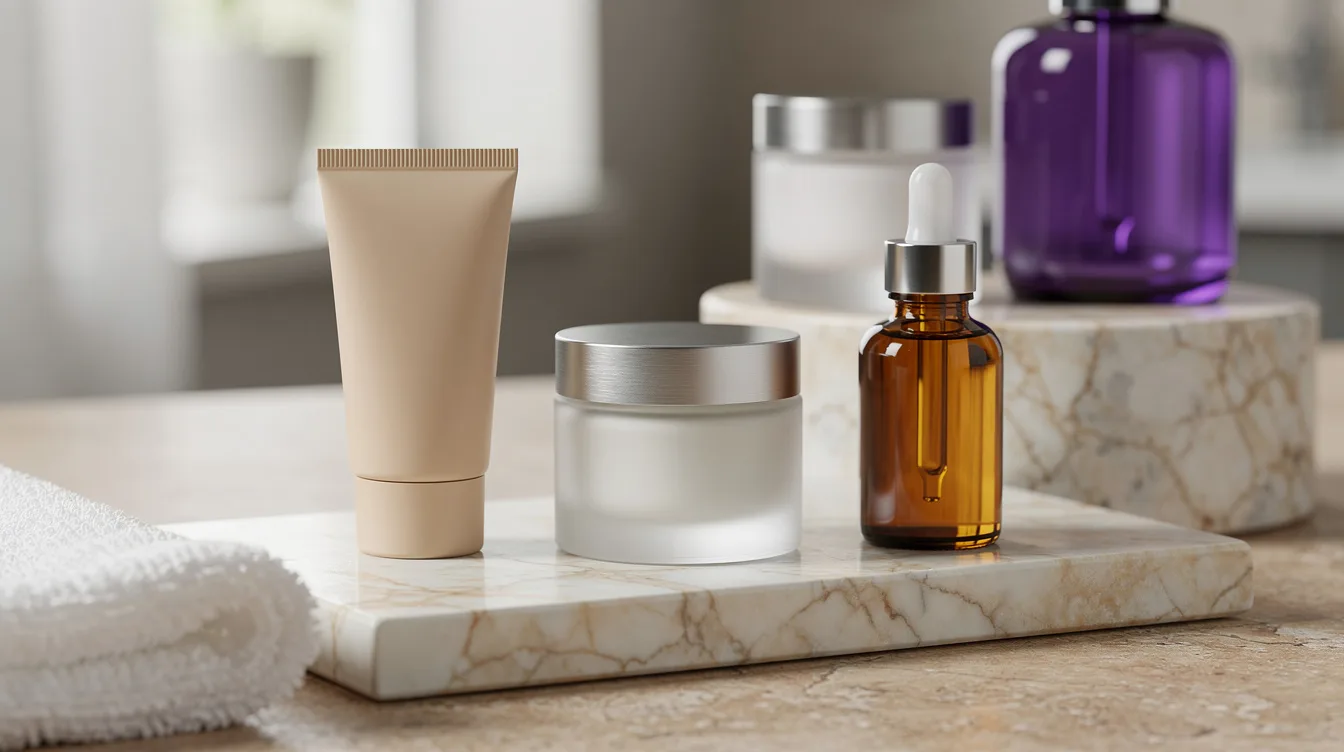
The warning sign is often small: your dependable moisturizer suddenly stings around your mouth, yet you respond by adding another corrective serum. A typical 0.3% retinol can be useful, but layering it with acids and strong vitamin C can leave midlife skin feeling tight and reactive.
Lower estrogen, less oil production, and slower cell turnover can make the outer barrier less forgiving. The goal isn’t to give up proven ingredients; it’s to spend a limited active budget where it can actually be tolerated.
What you will find inside
- Stop Treating Stinging as a Sign It’s Working
- Choose One Retinoid Night Instead of a Stack
- Separate Acids From Retinoid Evenings
- Lower the Vitamin C Starting Strength
- Build the Routine Around Barrier Support
- Make Daily Sunscreen the Non-Negotiable Active
Stop Treating Stinging as a Sign It’s Working
Burning, persistent redness, flaking, and a taut, shiny feeling usually point to irritation, not a productive adjustment period. Repeated inflammation can make texture look more obvious and may leave uneven tone lingering longer, particularly on deeper skin tones.
Put strong leave-on products aside when your barrier feels compromised and use a plain moisturizer such as CeraVe Moisturizing Cream, typically about $15 to $20. Its ceramides and humectants make it a sensible reset product, even if it isn’t exciting.
“Purging” is often used too loosely online. New bumps, a rash around the mouth, or soreness after adding products deserves a pause, and a dermatologist can sort out irritation, acne, rosacea, or contact dermatitis when it doesn’t settle.
Choose One Retinoid Night Instead of a Stack
A retinoid can support smoother-looking texture and more even-looking tone over time, but tolerance matters more than bravado. Use one retinoid at night, begin every other night or less often, and give your skin several weeks before considering more frequency.
A pea-sized amount of retinol is enough for the whole face, avoiding eyelid corners and the creases beside the nose. Applying it to fully dry skin, often 20 to 30 minutes after cleansing, can reduce the sting that tempts people to quit.
I would skip a glycolic acid toner, exfoliating pads, and a peel on the same evening. The more compelling routine is the one you can repeat comfortably, not the one with the longest ingredient list.
Separate Acids From Retinoid Evenings
AHAs and BHAs can be helpful for dullness or clogged pores, yet they are easy to overuse when skin is already dry. Combining them routinely with retinoids can cause redness and scaling faster than it improves surface smoothness.
If you want an exfoliant, reserve one night a week at first for a product with an AHA or BHA, then assess your skin the next morning. Skip it entirely during a dry, itchy, windburned, or post-procedure phase unless your clinician tells you otherwise.
Physical scrubs deserve the same caution. Rough particles and repeated rubbing can turn a little flaking into a larger barrier problem, especially when your cleanser, serum, and moisturizer already contain active ingredients.
Lower the Vitamin C Starting Strength
Vitamin C is a reasonable morning option for someone who tolerates it, but a higher percentage isn’t automatically a smarter choice for reactive mature skin. Start with one antioxidant product and keep the rest of the morning routine deliberately quiet.
Timeless 10% Vitamin C + E Ferulic Acid Serum is typically about $26.95 and is a more practical starting point than a 20% formula for dry or easily irritated skin. Introduce it a few mornings a week before deciding whether daily use feels comfortable.
On vitamin C mornings, avoid adding exfoliating toner just because both products promise brightness. A gentle cleanser, moisturizer, and sunscreen give the antioxidant room to earn its place without turning your face into a chemistry experiment.
Build the Routine Around Barrier Support
After 50, a moisturizer isn’t a consolation prize after the “real” treatment products. Glycerin, ceramides, and, for very dry areas, petrolatum help support the stratum corneum, the outer layer that holds water in and helps keep irritants out.
Use CeraVe Hydrating Facial Cleanser, usually about $15 to $20, if foaming washes leave your cheeks squeaky or uncomfortable. Then apply moisturizer while skin is still slightly damp, which is a low-effort step with a noticeable comfort payoff.
You can also buffer a retinoid with moisturizer if direct application causes irritation. That may feel less aggressive than social-media routines, but consistent use at a tolerable pace is the better bet for most skin.
Make Daily Sunscreen the Non-Negotiable Active
Broad-spectrum SPF 30 or higher is the foundation beneath every other effort to address sun-related uneven tone and fine lines. Without it, an elaborate active routine can keep creating sensitivity while leaving daily sun exposure unaddressed.
EltaMD UV Clear SPF 46 is typically around $45, while its tinted version is roughly $47. The tinted option can be appealing for discoloration because iron oxides may add visible-light protection, but the best sunscreen is one you’ll apply generously and reapply when needed.
Choose a formula that doesn’t sting your eyes or pill under makeup, then keep it by your toothbrush or coffee maker. Sunscreen belongs in the routine every morning, including on days when you skip every serum.
Start by stripping the routine back to gentle cleansing, broad-spectrum SPF 30+, and a barrier moisturizer for a week or two. Add one nighttime retinoid only after your skin feels calm; see a dermatologist for any spot that bleeds, changes shape, or does not heal.