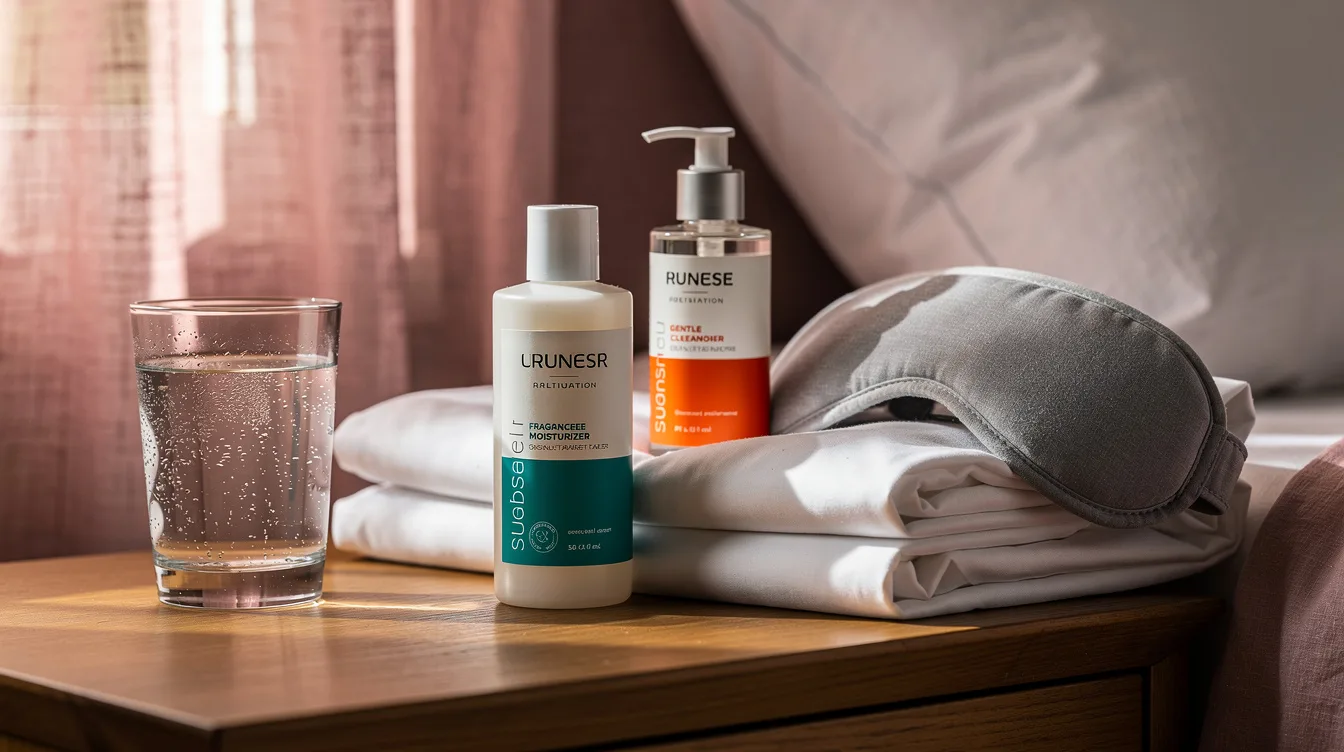
Waking up overheated can leave the pillowcase damp, the face tight, and a once-reliable cleanser suddenly sting. A typical 0.3% retinol may need a slower schedule when sleep disruption, sweat, and repeated washing are already stressing the skin barrier.
Night sweats don’t call for a harsh detox. They call for less friction, gentler cleansing, and moisture that stays put.
What you will find inside
- 1. Treat New Night Sweats as a Health Question First
- 2. Wash Sweat Away Without Stripping Everything Else
- 3. Apply Humectants to Slightly Damp Skin
- 4. Choose Barrier Lipids Over a Ceramide Percentage
- 5. Keep Niacinamide in Its Useful Range
- 6. Seal Small Dry Patches and Slow Down Actives
1. Treat New Night Sweats as a Health Question First
Perimenopause and menopause commonly cause night sweats, yet persistent, drenching, new, or unexplained episodes deserve a clinician’s assessment. Menopause hormone therapy can be an effective option for qualifying women with bothersome symptoms, while nonhormonal prescription choices also exist.
Book a visit sooner for fever, unexplained weight loss, a persistent cough, swollen lymph nodes, unusual bruising, or vaginal bleeding after menopause. Skin care can make a rough night easier on your face, but it shouldn’t replace care for symptoms that regularly disrupt sleep.
2. Wash Sweat Away Without Stripping Everything Else
Use lukewarm water and a mild, fragrance-free cleanser after a sweaty night, rather than a scrub, cleansing brush, or a second “deep cleanse.” CeraVe Hydrating Facial Cleanser, typically around $16, is the kind of low-foam formula we prefer when skin feels dry or reactive.
Sweat itself isn’t dirty enough to require aggressive washing. Pat with a soft towel instead of rubbing, especially around the nose, eyelids, and neck where damp fabric and friction can leave skin feeling raw.
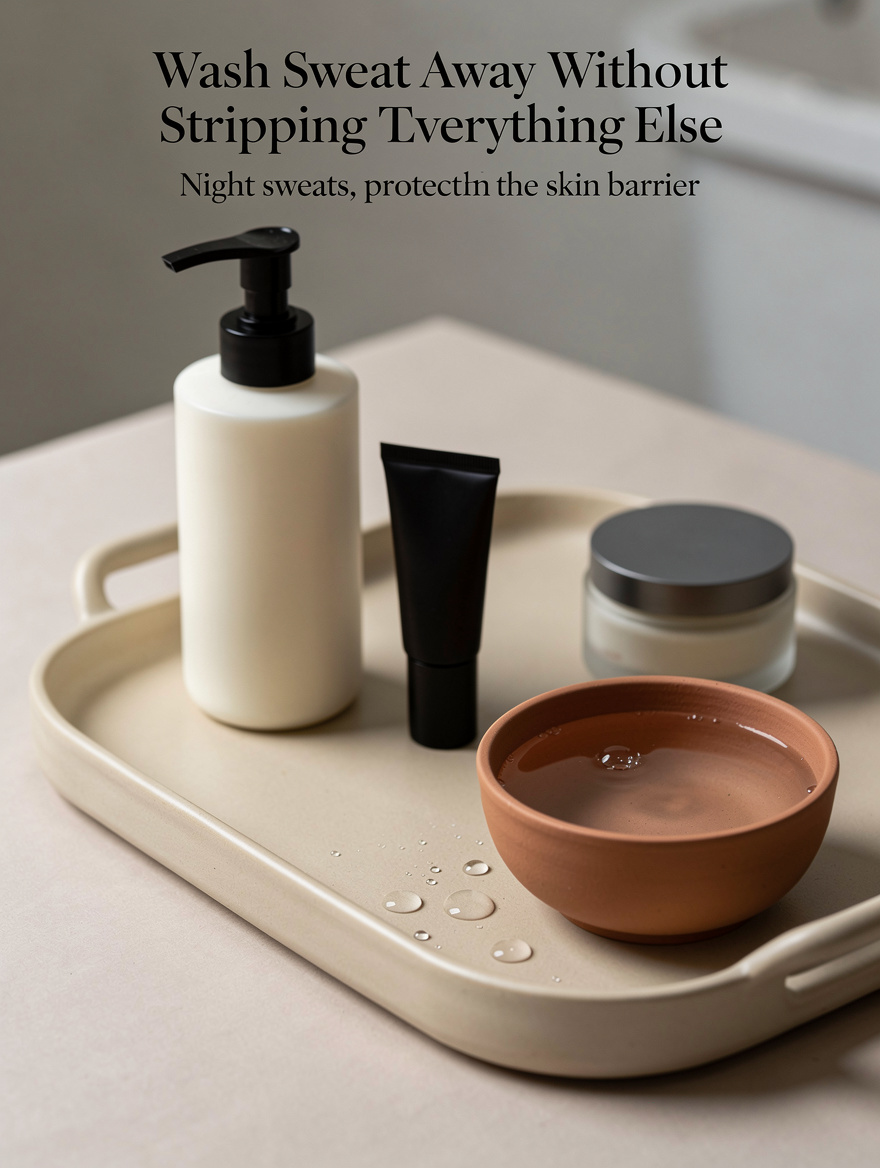
3. Apply Humectants to Slightly Damp Skin
After cleansing, apply a humectant while skin is slightly damp, not dripping wet, then follow it with cream. Glycerin is one of the most dependable moisture-binding ingredients, and it is often more useful than chasing a complicated serum lineup.
For a dry body, a lotion with urea in the typical 5% to 10% range can be helpful for rough areas. Keep stronger-feeling formulas away from cracked or actively irritated facial skin, where even sensible ingredients can sting.
4. Choose Barrier Lipids Over a Ceramide Percentage
Lower estrogen is associated with changes in ceramides and the skin’s lipid organization, which can contribute to greater water loss. Look for a fragrance-free cream with ceramides, cholesterol, and fatty acids, rather than assuming a large number on the front label proves better performance.
La Roche-Posay Toleriane Double Repair Face Moisturizer, often about $23, is a practical option when a lighter cream is enough. For very dry cheeks or hands, a richer cream is usually a better night-sweat swap than adding another active serum.
5. Keep Niacinamide in Its Useful Range
Niacinamide at a typical 2% to 5% can support barrier function and may be well suited to a simplified routine. We would not rush toward 10% formulas during a stinging phase, since more isn’t automatically more comfortable for reactive skin.
Olay Regenerist Micro-Sculpting Cream Fragrance-Free is commonly priced around $30 and combines moisturizing ingredients with niacinamide. Introduce one new product at a time, so a flare does not turn into a guessing game.
6. Seal Small Dry Patches and Slow Down Actives
Use a thin layer of petrolatum over the driest spots as the final nighttime step, especially around the mouth or on chapped hands. Aquaphor Healing Ointment, usually around $14, is better reserved for small areas than applied heavily across a sweat-prone face.
Pause scrubs and strong exfoliating acids during irritation, and reduce retinoid nights until skin feels comfortable again. In the morning, finish with broad-spectrum SPF 30 or higher, because a compromised barrier still needs everyday sun protection.
Start with the pillowcase-to-sink transition: rinse or cleanse gently, apply a plain barrier cream, and save retinoids for nights when your skin is calm. If the sweats keep interrupting sleep, put a clinician conversation ahead of another product purchase.