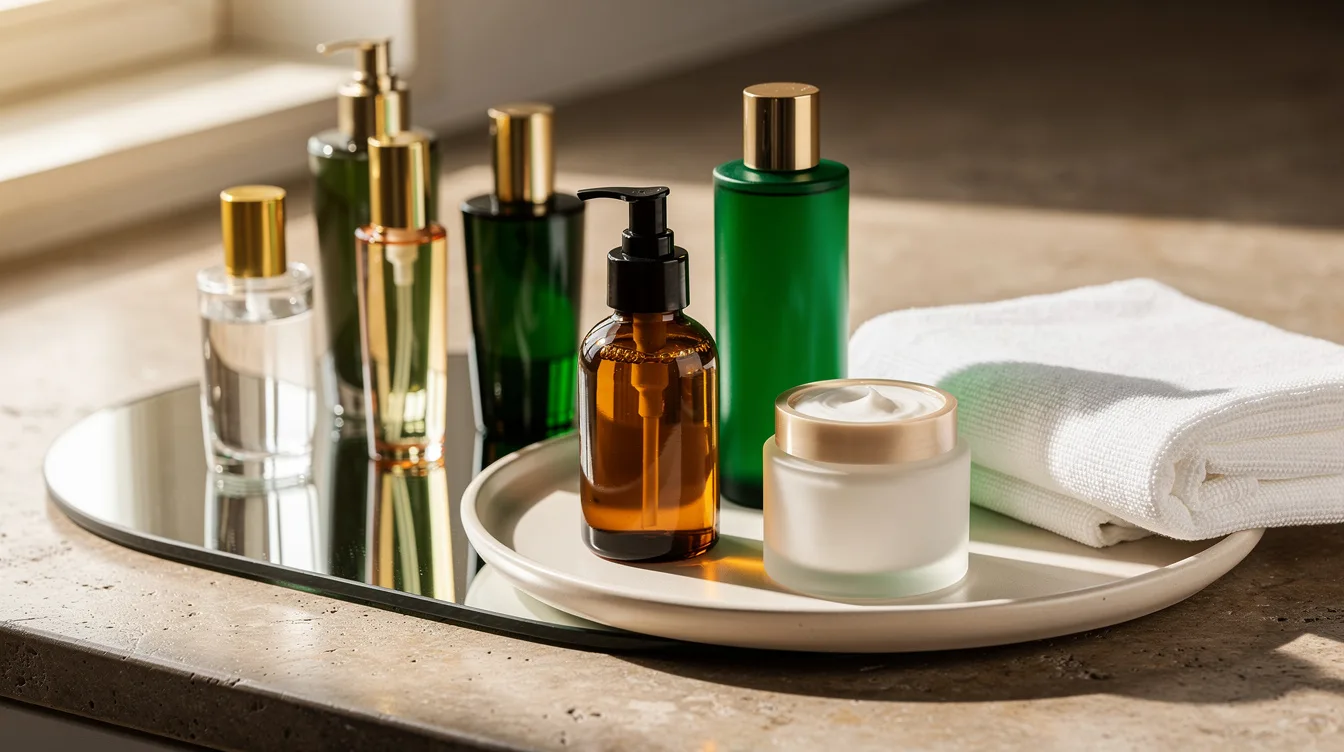
The mirror test is familiar: a favorite exfoliating pad suddenly leaves the cheeks tight, shiny, and oddly rough by morning. For mature skin, a typical 5% lactic acid formula used once a week is often a steadier starting point than a daily “glow” routine.
Lower estrogen, less oil, and a slower-turning barrier can change tolerance even when a product once felt fine. We’d rather see comfortable, moisturized skin than chase a temporary sting.
What you will find inside
- Start With One Chemical-Exfoliation Night
- Choose Lactic Acid or PHAs Before Stronger Acids
- Increase Only When Skin Stays Quiet
- Set a Realistic Ceiling at Two or Three Uses
- Keep Exfoliation Away From Other Irritants
- Pause at the First Sign of Barrier Stress
Start With One Chemical-Exfoliation Night
Make your first move one evening a week, preferably on a night with no retinoid, scrub, or strong vitamin C in the same routine. Give that schedule roughly 2 to 4 weeks before judging whether your skin wants more.
A gentle leave-on formula such as The Ordinary Mandelic Acid 10% + HA, typically around $10, can suit some resilient complexions, though a lower-strength lactic or PHA option is often kinder for dry cheeks. Apply a thin layer, then follow with a plain moisturizer, because comfort is the useful metric here.

Choose Lactic Acid or PHAs Before Stronger Acids
Lactic acid and polyhydroxy acids, often called PHAs, are sensible first choices when skin feels dry, reactive, or newly unpredictable. Their formulas are generally chosen for gentler surface exfoliation, while glycolic acid tends to feel more intense on a compromised barrier.
The Inkey List PHA Toner, usually about $14 at Sephora, is a practical once-weekly option for someone who finds standard acid toners too sharp. A soft washcloth used with a gentle cleanser is also a reasonable alternative when every leave-on acid causes discomfort.
Increase Only When Skin Stays Quiet
Move to twice weekly only when there is no lingering redness, peeling, tightness, burning, or extra sensitivity between applications. Twice a week is enough for many women who want a smoother-looking surface and less obvious dullness.
Paula’s Choice Skin Perfecting 2% BHA Liquid Exfoliant, commonly around $37, may be useful once or twice weekly on a congested T-zone, not necessarily across dry cheeks. Salicylic acid is better reserved for blackheads and oilier areas than treated as a whole-face requirement.
Set a Realistic Ceiling at Two or Three Uses
For many mature, dry, or sensitized complexions, 2 to 3 times weekly is a practical upper limit for at-home exfoliation. Daily use is usually unnecessary and can show up as persistent dryness, stinging, redness, or makeup that suddenly clings.
A product labeled 8% glycolic acid is not automatically wrong, but it asks for restraint and sunscreen habits, especially if you are testing your tolerance. We consider lower frequency the smarter trade for skin that already produces less cushioning oil than it did years ago.
Keep Exfoliation Away From Other Irritants
Use an acid night as its own lane: cleanse, apply the exfoliant, moisturize, and stop there. Pairing it with a retinoid, benzoyl peroxide, facial scrub, or several active serums makes it harder to know what your skin is reacting to.
CeraVe Skin Renewing Night Cream, often about $19, is the kind of no-drama moisturizer worth keeping beside an exfoliant because it focuses on barrier support. Broad-spectrum sunscreen matters every morning, since AHAs can increase sun sensitivity during use and for about a week after stopping.
Pause at the First Sign of Barrier Stress
Burning is not proof that an exfoliant works, and a “purge” is not a catchall explanation for an angry face. Stop the acid when skin is cracked, sunburned, actively irritated, or healing after a procedure, then return to gentle cleansing and moisturizer.
La Roche-Posay Toleriane Dermallergo Cream, generally around $30, can be a useful comfort-focused reset while the barrier settles. See a dermatologist for a spot that bleeds, changes shape, or does not heal, and ask for professional guidance before escalating to stronger peels or prescription plans.
Start with one gentle chemical-exfoliation night each week, then let comfort decide whether twice weekly earns a place in your routine. A modest acid and a reliable moisturizer cost less, and ask less of your skin, than repeatedly repairing an overdone routine.