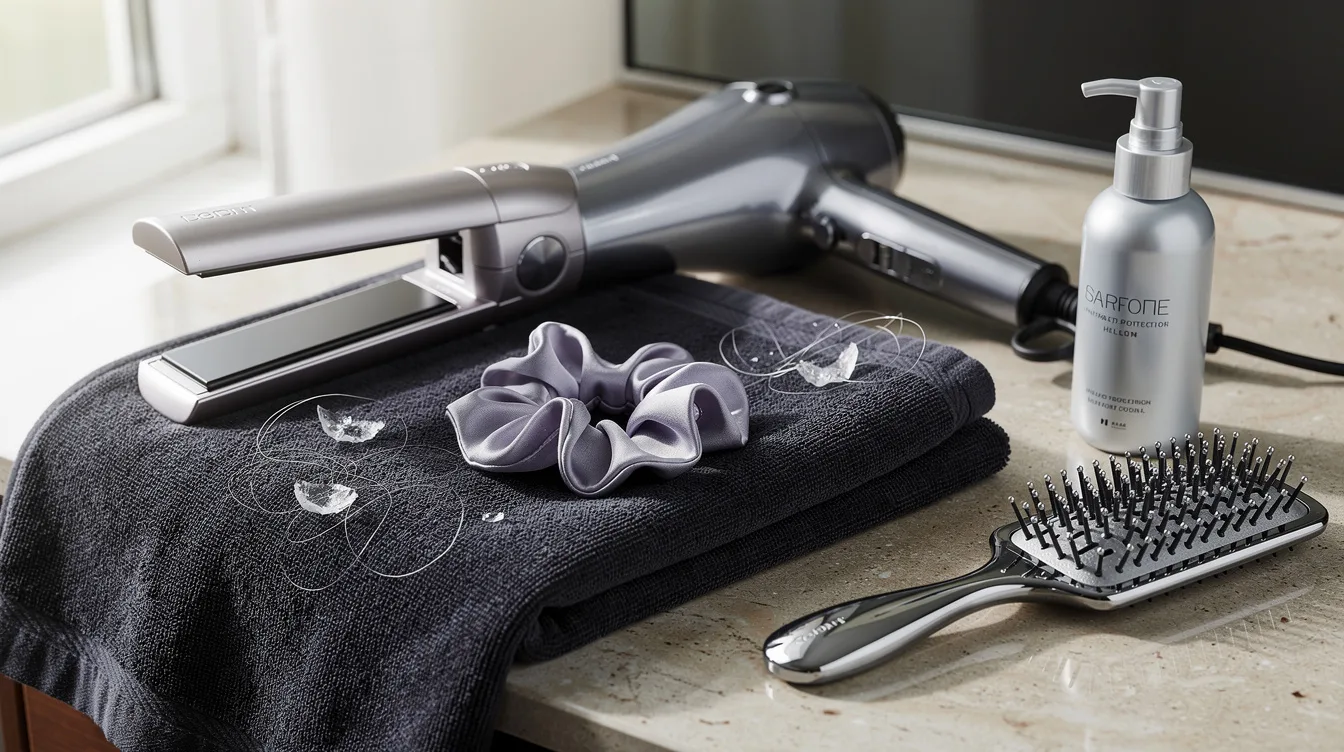
The warning sign arrived at the mirror: a smooth blowout looked polished at breakfast, then turned dry and fuzzy by late afternoon. We found that a typical 400°F flat iron setting can be a harsh trade for fine, highlighted hair that already feels less stretchy than it once did.
For mature hair, the biggest issue is cumulative stress, especially direct heat, chemical processing, and constant pulling. A careful blow-dry is usually a different category from repeatedly pressing a hot plate onto the same fragile ends.
What you will find inside
- Stop Layering Bleach With High Heat
- Lower the Flat-Iron Temperature
- Treat Hot Brushes Like Direct-Heat Tools
- Keep the Dryer Moving and Back It Away
- Skip the Stiff Spray and Aggressive Teasing
- Release Tension at the Temples and Crown
Stop Layering Bleach With High Heat
Bleach, relaxers, perms, and repeated chemical straightening top our damage watch list because they alter the hair fiber before a styling tool even enters the picture. That can leave processed lengths more vulnerable to roughness, snapping, and the wiry frizz that no finishing cream fully disguises.
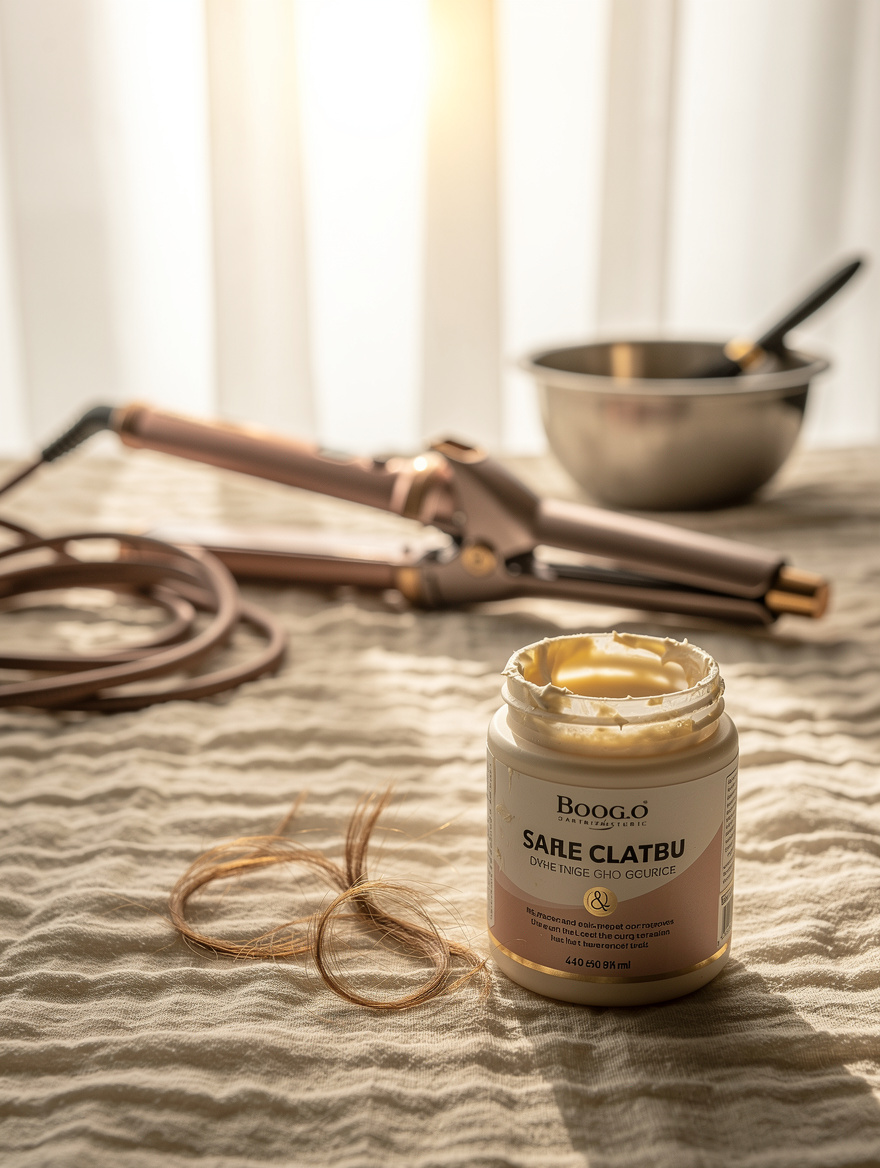
We’d avoid scheduling aggressive lightening and then relying on a hot tool to make the result look healthy. A bond-focused treatment such as K18 Leave-In Molecular Repair Hair Mask may improve cosmetic feel and manageability, but it cannot restore a severely damaged strand to its original condition.
Lower the Flat-Iron Temperature
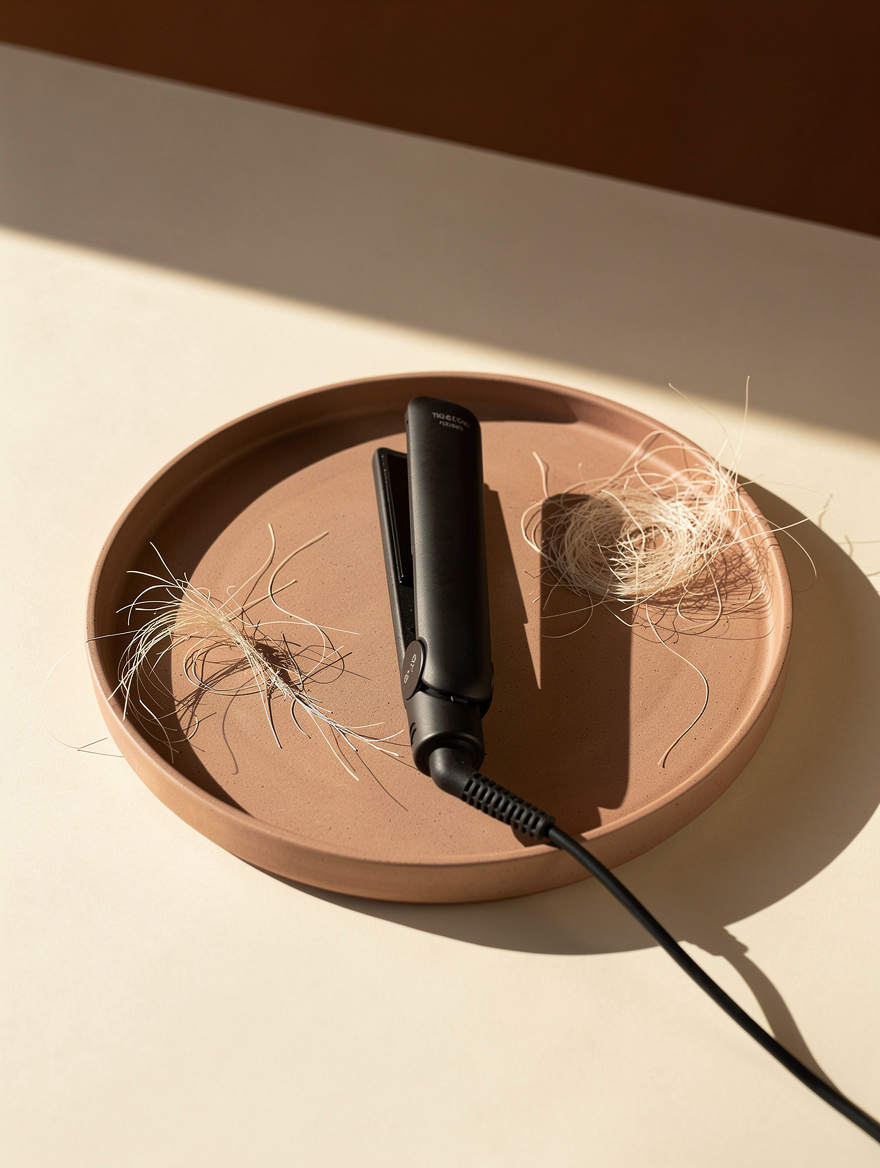
Flat irons, hot combs, curling irons, and wands deliver heat and pressure directly to the shaft, which is why they can create more visible breakage than a moving dryer. Dermatologists commonly advise using a flat iron only on completely dry hair, choosing low or medium heat, and giving hair days off between sessions.
Our opinion is firm: several slow passes at the highest setting are rarely worth it for mature hair. Use a heat protectant such as CHI 44 Iron Guard Thermal Protection Spray, then make one deliberate pass on a small, dry section instead of chasing perfect glassy straightness.
Treat Hot Brushes Like Direct-Heat Tools
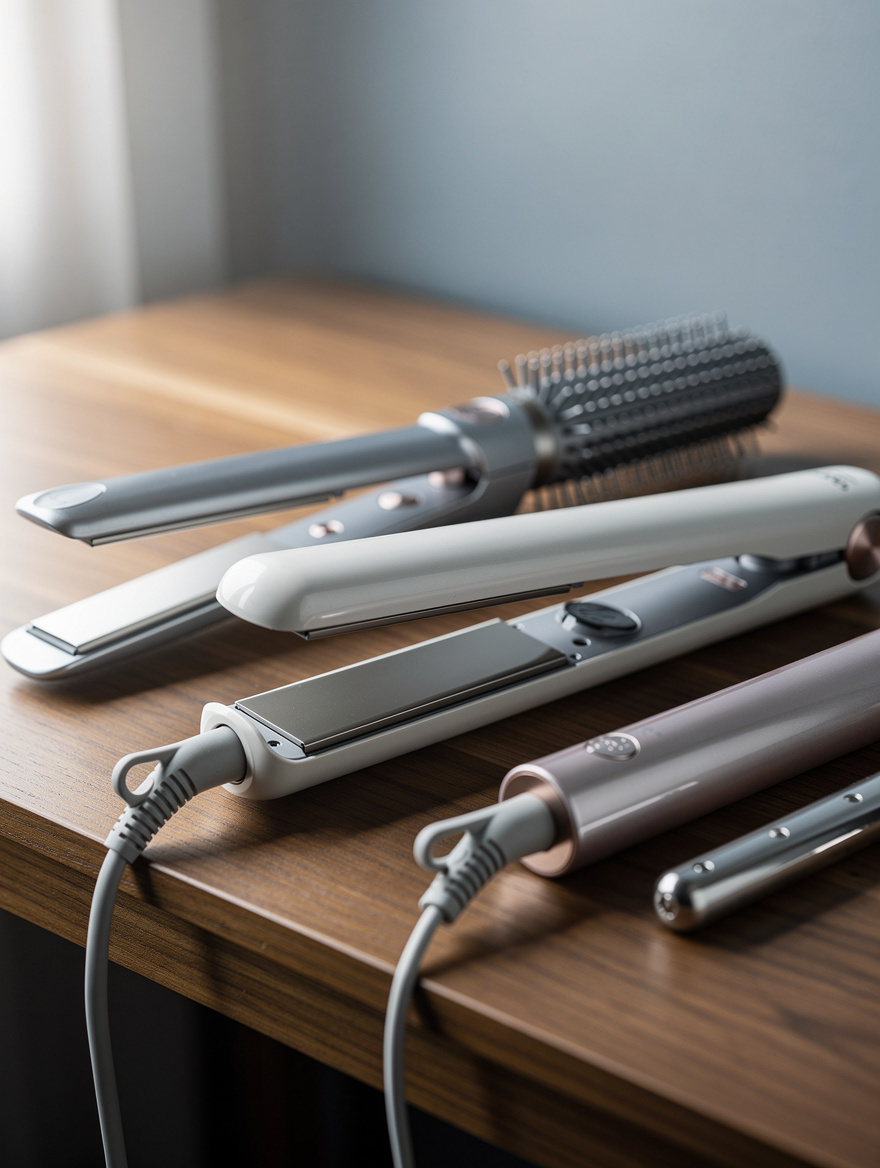
A hot-air brush can look gentler than a flat iron, yet it still combines heat, friction, and pulling from root to tip. Fine, dry, color-treated hair can take a beating when a daily blowout involves multiple high-heat passes through the same crown and hairline sections.
The popular Revlon One-Step Volumizer Original is useful for a quick style, but we would reserve its higher settings for occasional use rather than making them a morning default. Start with hair mostly air-dried or rough-dried, use a lower setting, and let each section cool before deciding whether it truly needs another pass.
Keep the Dryer Moving and Back It Away
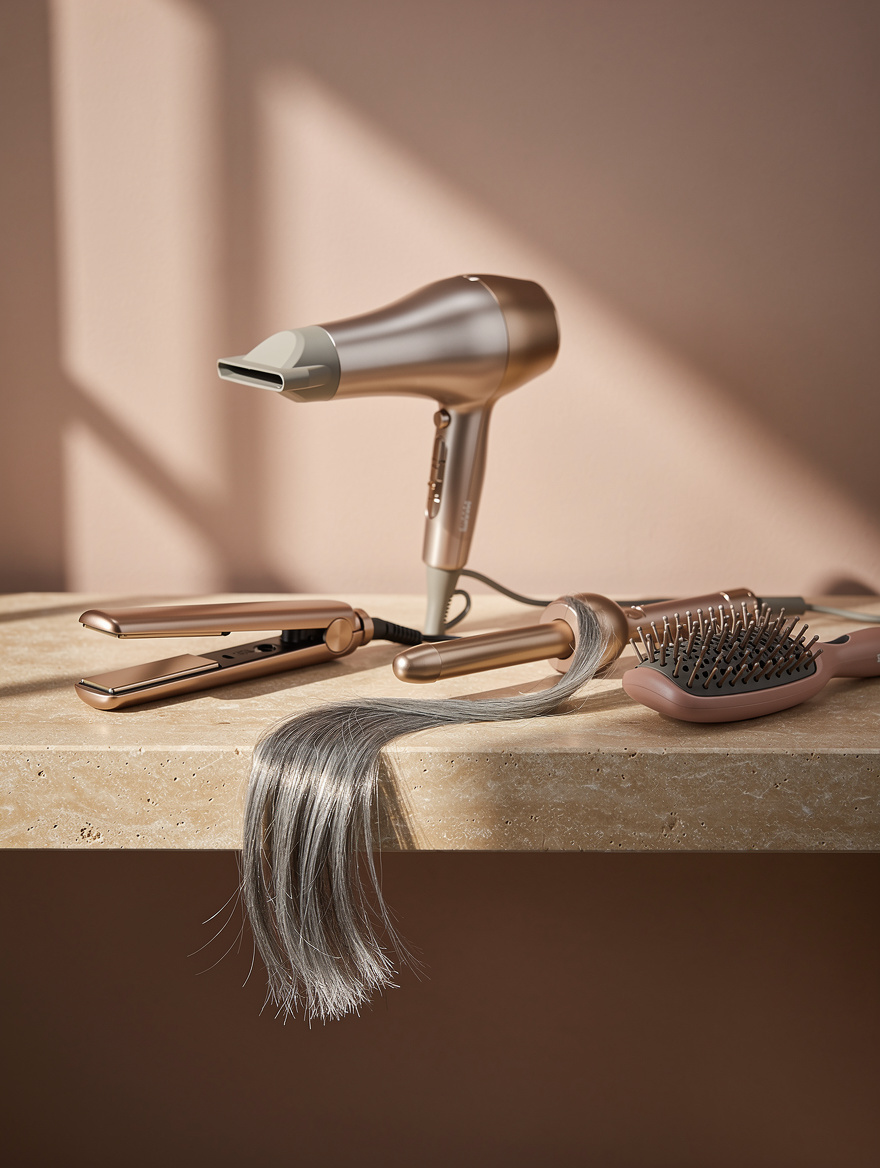
A blow dryer is lower risk than direct-contact tools when it stays in motion and does not sit inches from one spot until the hair feels hot. Trouble begins with maximum heat, a nozzle aimed at the hairline for too long, or a brush pulling hard against already dry ends.
We prefer a dryer with adjustable heat, such as the Conair InfinitiPRO, used on medium heat with the airflow directed down the hair shaft. Dry until the hair is nearly finished, then use a cool setting to settle the style instead of repeatedly reheating the same section.
Skip the Stiff Spray and Aggressive Teasing
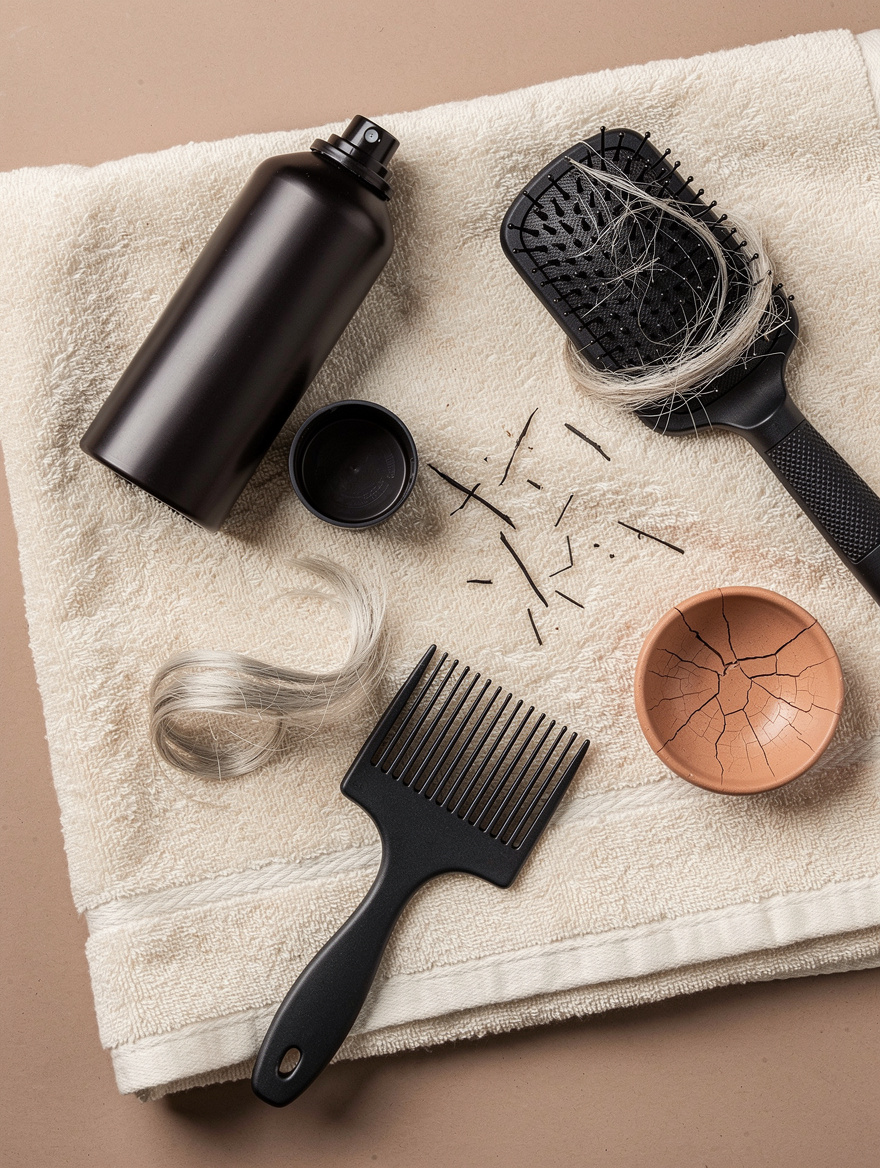
Long-lasting hold products can make hair more likely to snap when they are brushed out, particularly when combined with daily teasing or hard brushing of wet strands. The damage here is often mistaken for shedding, because broken pieces collect in the brush and around the sink.
We’d choose flexible hold over a lacquered finish, and use a wide-tooth comb or a gentle detangling brush such as The Wet Brush Original Detangler on damp hair. Save backcombing for the rare event, and never rake a stiff layer of hairspray from roots to ends at the end of the day.
Release Tension at the Temples and Crown
Tight ponytails, buns, braids, and heavy extensions are styling choices that can create chronic traction at the temples and crown. Pain is useful feedback here: a style that feels tight enough to cause a headache is putting more force on the hair and scalp than we’d accept.
Swap a tight elastic for a loose Invisibobble coil or a soft scrunchie, and vary where you place your part and ponytail. If thinning is sudden, patchy, accompanied by scalp symptoms, or continues despite gentler styling, a dermatologist can help sort out breakage from hair loss that needs medical attention.
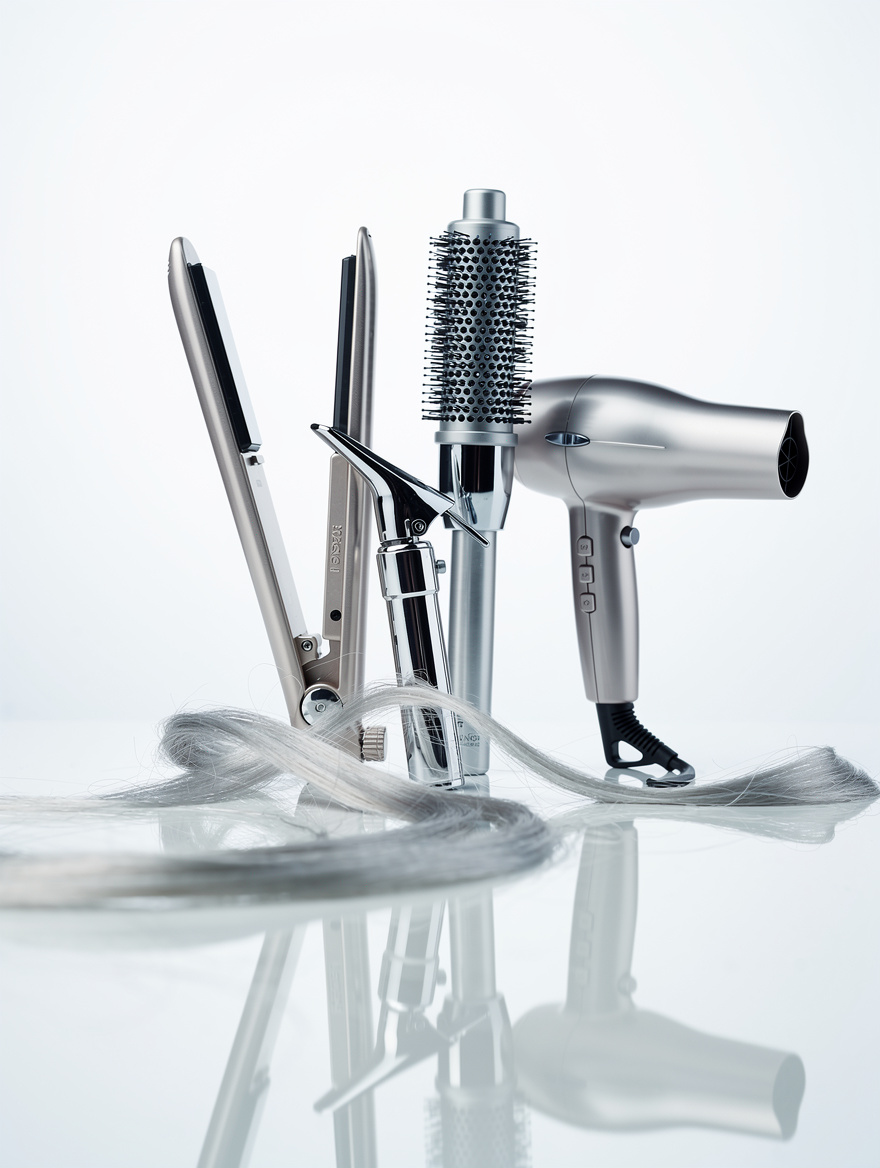
Start by lowering the temperature and frequency of your most direct-contact tool for two weeks, then assess the ends before adding another repair product. The cheapest change is usually fewer hot passes, not a crowded cabinet of treatments.