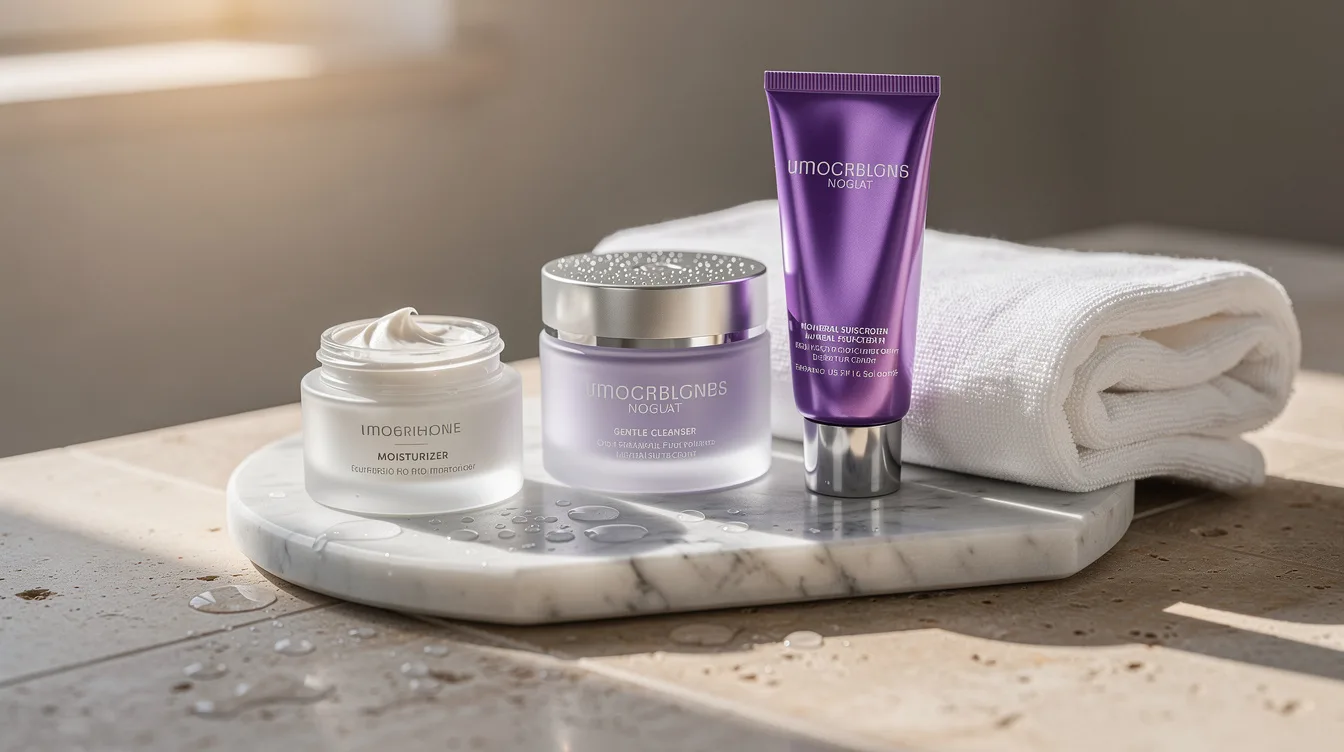
The clue often appears at the bathroom mirror: the moisturizer you’ve used for years suddenly stings, and makeup catches on dry patches by lunchtime. A typical 0.3% retinol can be useful for some skin, but discomfort that keeps building is a signal to reassess the routine.
After menopause, lower estrogen is associated with drier, thinner skin and a less resilient barrier. That can make a formerly easy routine feel far too intense without meaning you must give up every active ingredient.
We’d treat persistent burning, redness, peeling, or tightness as a reason to simplify, not as proof a product is “working.”
What you will find inside
- Notice Stinging From Basic Products
- Stop Chasing That Tight, Squeaky Feeling
- Treat Persistent Redness as a Pause Sign
- Scale Back When Flaking Ignores Moisturizer
- Separate Breakouts From a Need for More Acid
- Protect Your Reset With Daily Sunscreen
Notice Stinging From Basic Products
A bland moisturizer, gentle cleanser, or sunscreen shouldn’t routinely burn or tingle on application. The American Academy of Dermatology advises stopping an over-the-counter product that stings, burns, or tingles, because irritation can make skin look older.
Try a pause from exfoliating acids, retinoids, scrubs, and fragranced treatments while your skin settles. A simple CeraVe Moisturizing Cream, typically around $16 at mass retailers, is the kind of rich, fragrance-free cream texture we’d reach for during a reset.
Do not push through escalating discomfort in pursuit of an adjustment period. Mild dryness can happen when introducing a retinoid, but persistent pain calls for a different frequency, formula, or active.
If swelling, a rash, eye-area irritation, or significant discomfort continues, seek advice from a dermatologist. Prescription treatment may be appropriate for some concerns and should never be delayed because a skincare routine is being tested.
Stop Chasing That Tight, Squeaky Feeling
Skin that feels tight immediately after cleansing has likely lost more surface lipids than it can comfortably spare. Hot water, a cleansing brush, and twice-daily foaming washes can turn one ordinary habit into a daily source of barrier stress.
Switch to lukewarm water and a low-foam cleanser such as CeraVe Hydrating Facial Cleanser, often about $15. Our opinion: one careful evening cleanse is enough for many dry or reactive complexions, with a water rinse in the morning if that feels better.
Pat skin dry instead of rubbing it with a towel, then apply moisturizer while it is still slightly damp. This small change is more useful than adding another treatment serum to a routine that already feels stripped.
A clean feeling is fine, but a pulled, papery feeling is not a skincare goal. Your cleanser should leave skin comfortable enough that you do not race to apply cream.
Treat Persistent Redness as a Pause Sign
Redness or warmth that lingers after washing can look like a windburned flush, especially around the nose, mouth, and cheeks. It may follow overuse of acids, retinoids, strong vitamin C formulas, or fragranced products.
Set aside newly introduced actives and keep the routine deliberately plain for a couple of weeks. A fragrance-free option such as La Roche-Posay Toleriane Dermallergo Cream can suit a minimal routine, although comfort still matters more than a brand name.
Do not add a stronger exfoliant because rough, red skin appears dull. Inflammation can leave skin looking uneven and, in deeper skin tones, may be followed by darker marks.
Rosacea-like bumps, persistent flushing, or redness that worsens deserves professional evaluation rather than a trial-and-error shopping spree. A dermatologist can help distinguish irritation from conditions that need targeted care.
Scale Back When Flaking Ignores Moisturizer
Flakes around the nose, chin, mouth, or eyelids that remain despite moisturizer suggest the routine may be outpacing your barrier. Peeling after every active night is not a prize for being disciplined.
Use a cream-based moisturizer rather than relying only on a light lotion. Olay Regenerist Micro-Sculpting Cream, commonly around $30, has a richer feel, though a basic fragrance-free cream may be the smarter choice when skin is actively irritated.
For now, skip physical scrubs, peeling pads, and at-home acid combinations. Exfoliation can be reintroduced slowly only after skin feels calm, smooth, and comfortable for a sustained stretch.
Cracks that are painful or bleed are beyond ordinary dryness. Pause new products and get clinical advice, particularly if an area does not heal.
Separate Breakouts From a Need for More Acid
Dry skin can still develop acne-like bumps, and irritation can make the impulse to scrub even stronger. That response often adds more redness and flaking instead of clearing the situation.
Keep your base routine to cleanser, moisturizer, and daytime sun protection before deciding whether an acne treatment belongs back in the mix. A gentle mineral option such as Neutrogena Sheer Zinc SPF 50 may work for some sensitive skin, while others prefer a chemical formula they will actually wear consistently.
Introduce only one active product at a time, starting on separate nights rather than layering treatments together. This makes it much easier to identify what your skin tolerates.
New clusters around the mouth, nose, or eyes, especially with burning, should be assessed by a clinician. Stronger exfoliation is not an automatic answer.
Protect Your Reset With Daily Sunscreen
When the barrier is stressed, sunlight can make redness and uneven tone harder to manage. Daily broad-spectrum, water-resistant SPF 30 or higher is the steady foundation, and sunscreen should be reapplied about every two hours during outdoor exposure.
Choose a formula that does not sting and that fits your actual morning. EltaMD UV Clear SPF 46 is widely available through major US retailers and dermatology offices, but the best sunscreen is the one your skin accepts every day.
Do not restart retinol, exfoliating acids, and brightening treatments all at once after a reset. Add one product, use it sparingly, and give your skin time to show whether it remains comfortable.
Consistency beats intensity here. A calm routine with moisturizer and sunscreen generally supports skin better than a crowded shelf of products you can barely tolerate.
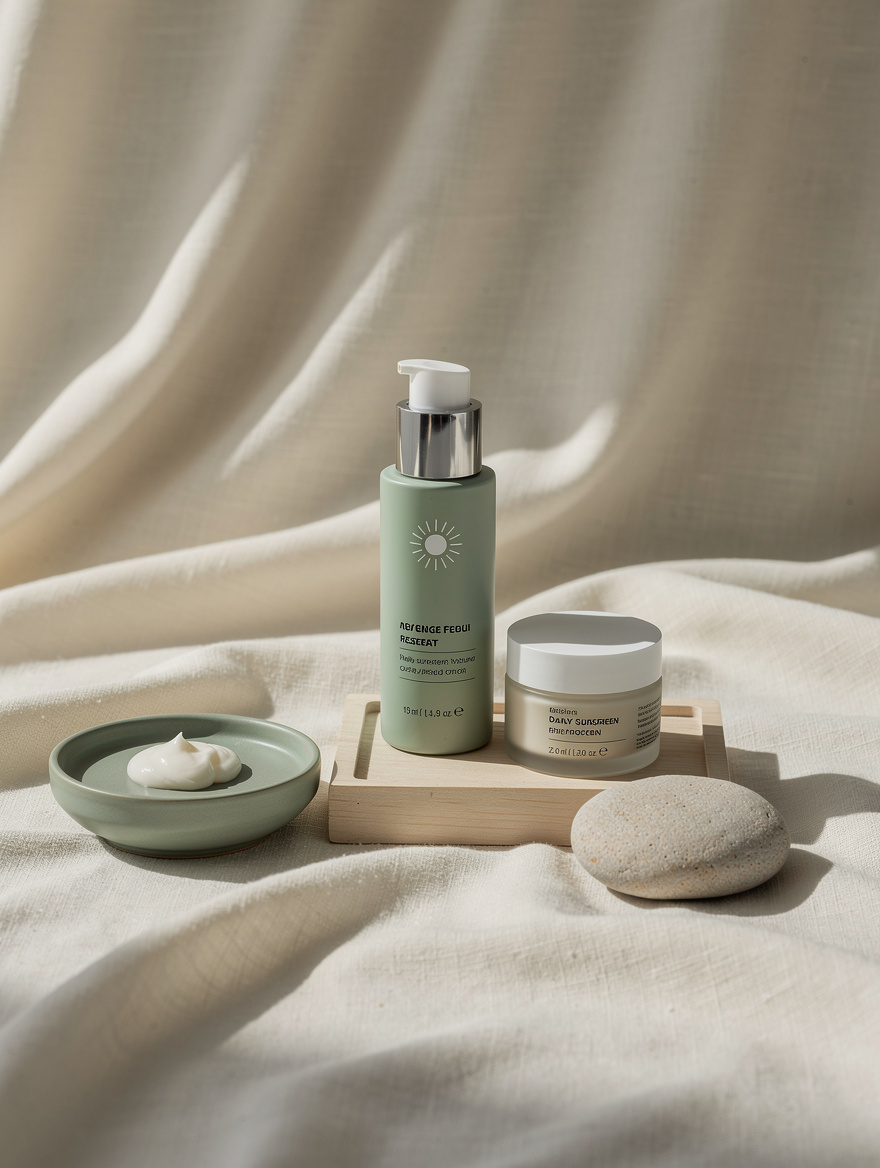
Start with the order that matters most: a gentle cleanser, a rich fragrance-free moisturizer, and a comfortable broad-spectrum sunscreen. Keep everything else paused until the stinging and persistent tightness have clearly eased.
Anything that bleeds, changes shape, or does not heal needs a dermatologist’s attention, not another over-the-counter active.