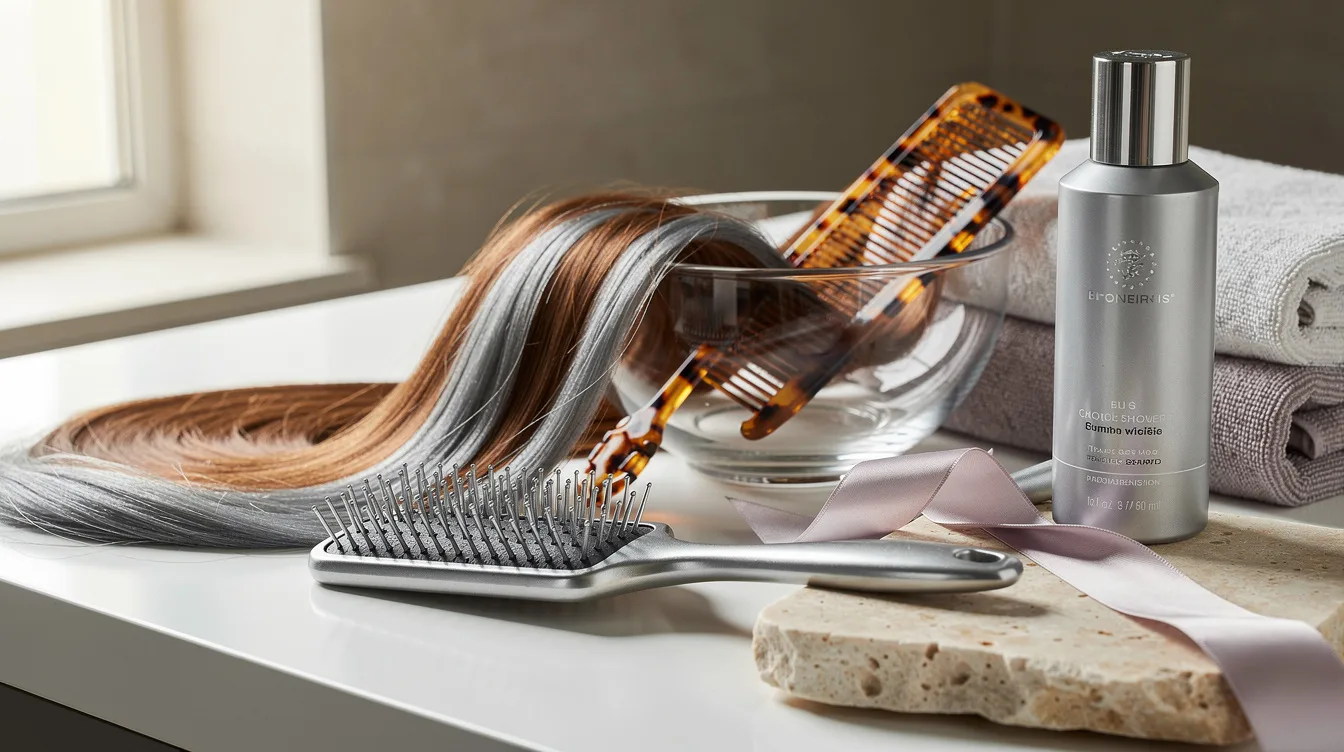
The harsh line usually shows up under the bathroom light first: a bright silver part against a solid dark band that suddenly makes every new half-inch visible. Hair typically grows about 0.5 inch a month, so the goal is to soften contrast while the old color is trimmed away.
For hair over 50, which can be drier and more porous, a gradual plan is often easier on the fiber than repeated full permanent color. Gray hair does not need fixing, but the transition can look far more intentional with a few smart swaps.
What you will find inside
- 1. Trade Opaque Permanent Color for a Sheer Gloss
- 2. Break Up the Band With Fine Highlights
- 3. Add Lowlights Instead of Chasing Full Coverage
- 4. Protect the New Texture From Excess Heat
- 5. Trim the Old Dark Ends on a Real Schedule
- 6. Patch-Test Dye and Take Scalp Reactions Seriously
1. Trade Opaque Permanent Color for a Sheer Gloss
Ask for a low-lift demi-permanent service or deposit-only gloss close to your emerging gray depth, rather than another dark all-over permanent application. dpHUE Gloss+ is a useful at-home option for adding tone between appointments, though it will not lighten previously darkened hair.
A sheer formula lets silver strands show through, which breaks up the obvious root boundary instead of drawing a hard stripe around the hairline. We would choose a slightly softer, lighter-looking shade over an attempt to recreate the dark color from years ago.
2. Break Up the Band With Fine Highlights
Fine highlights placed around the part, temples, and face can visually connect new silver growth to darker lengths. A colorist may use balayage or very narrow foils, then tone the result so it looks blended rather than streaky.
This is especially helpful when the old color is deep brown or black and the incoming gray is bright. Skip wide, high-contrast stripes: they can make the grow-out look more deliberate in the wrong way and add avoidable processing to fragile ends.
3. Add Lowlights Instead of Chasing Full Coverage
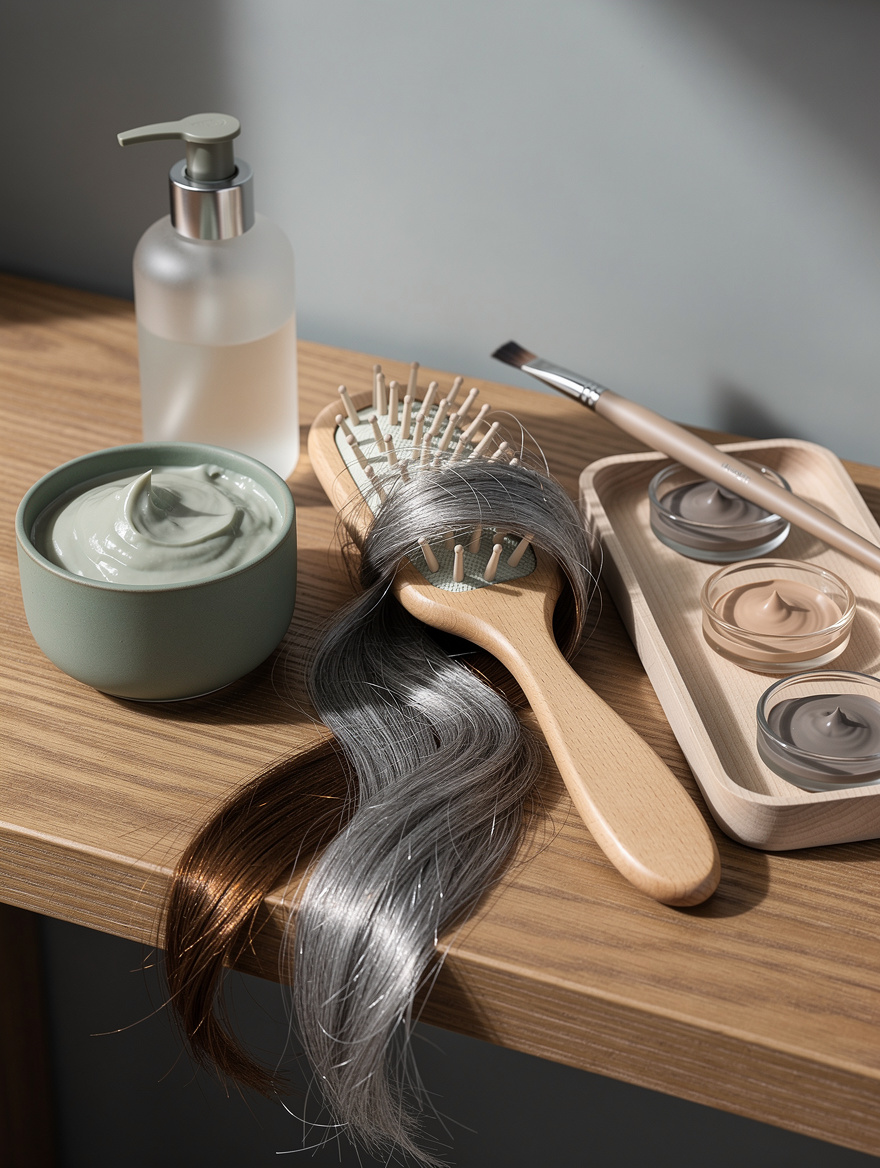
When most of the hair is already silver, scattered lowlights can create dimension without covering every gray strand. A colorist can place a soft taupe, mushroom brown, or gray-blending shade through selected lengths, leaving plenty of natural brightness visible.
The technique works because it distributes depth across the hair instead of concentrating dark color at the roots. A semi-permanent formula such as Clairol Natural Instincts can be a gentler-looking bridge for some people, but a salon consultation is worth it when old permanent dye needs correction.
4. Protect the New Texture From Excess Heat
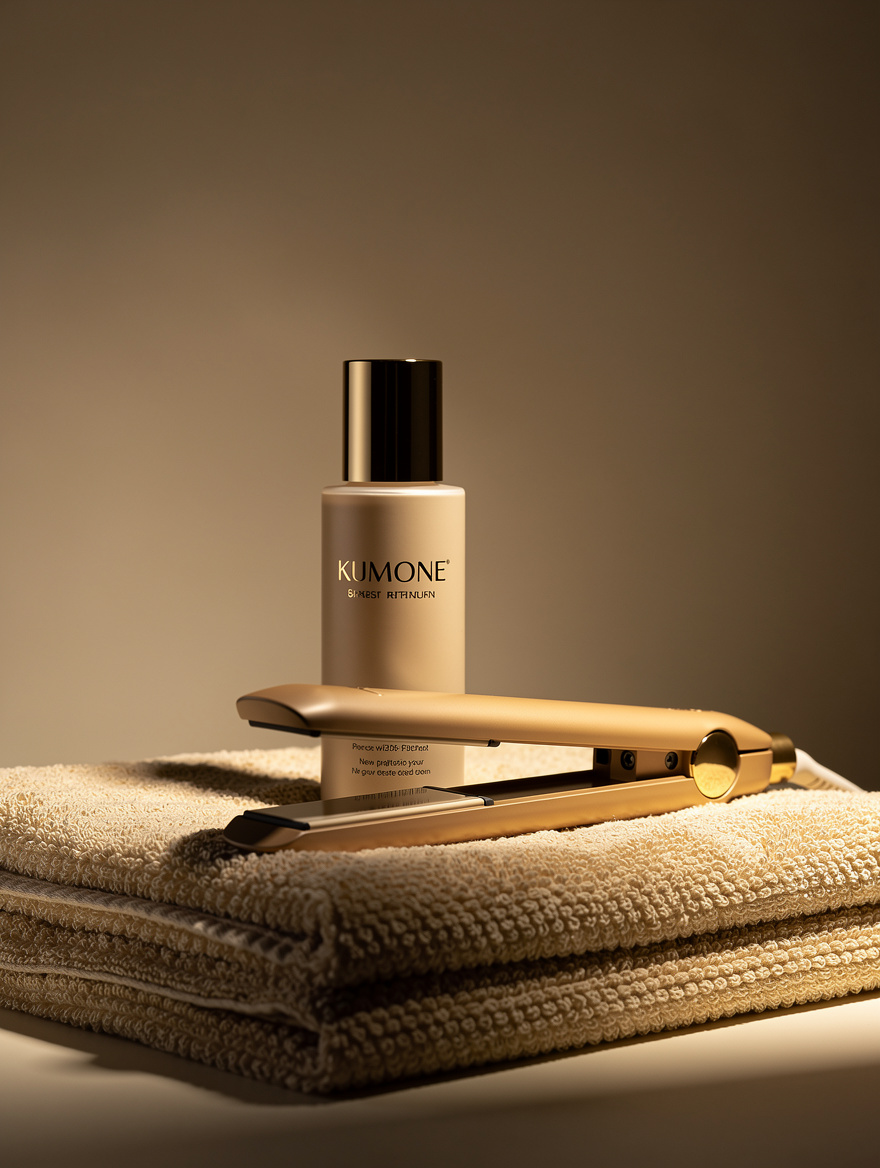
Gray hair can feel wiry while also being more vulnerable to dryness and breakage, particularly after years of coloring. Use a heat protectant, lower the tool setting, and treat hot tools as occasional styling help rather than a daily requirement.
A product such as Olaplex No. 6 Bond Smoother can help hair feel more manageable before blow-drying, although it cannot undo every kind of chemical or heat damage. We prefer a smoother finish over trying to force silver hair into the texture it had decades ago.
5. Trim the Old Dark Ends on a Real Schedule
Color blending hides the boundary, but trims are what eventually remove the old permanent color. Booking a small trim roughly every eight to ten weeks can keep worn ends from taking over the shape while preserving enough length for the transition to feel manageable.
Bring a photo of the silver tone you want to emphasize, not a photo of your former base color. A simple precision bob, soft layers, or a collarbone-length cut often makes the mix of gray and old color look polished during the in-between months.
6. Patch-Test Dye and Take Scalp Reactions Seriously
Permanent oxidative dyes commonly contain PPD or related ingredients that can trigger allergic contact dermatitis in susceptible people. Itching, rash around the ears or eyelids, facial swelling, blistering, or neck irritation are reasons to stop using the product and seek medical advice.
Follow the manufacturer’s patch-test directions before coloring, especially after a past reaction, and do not assume a familiar brand is automatically safe. A dermatologist can evaluate recurrent reactions with patch testing, and they can also advise if graying is unusually early or rapidly changing alongside other symptoms.
Start with one appointment devoted to a softer gloss or fine gray-blending highlights, then commit to trims that steadily remove the old dark length. That approach makes the transition feel like a color choice, not a waiting period.