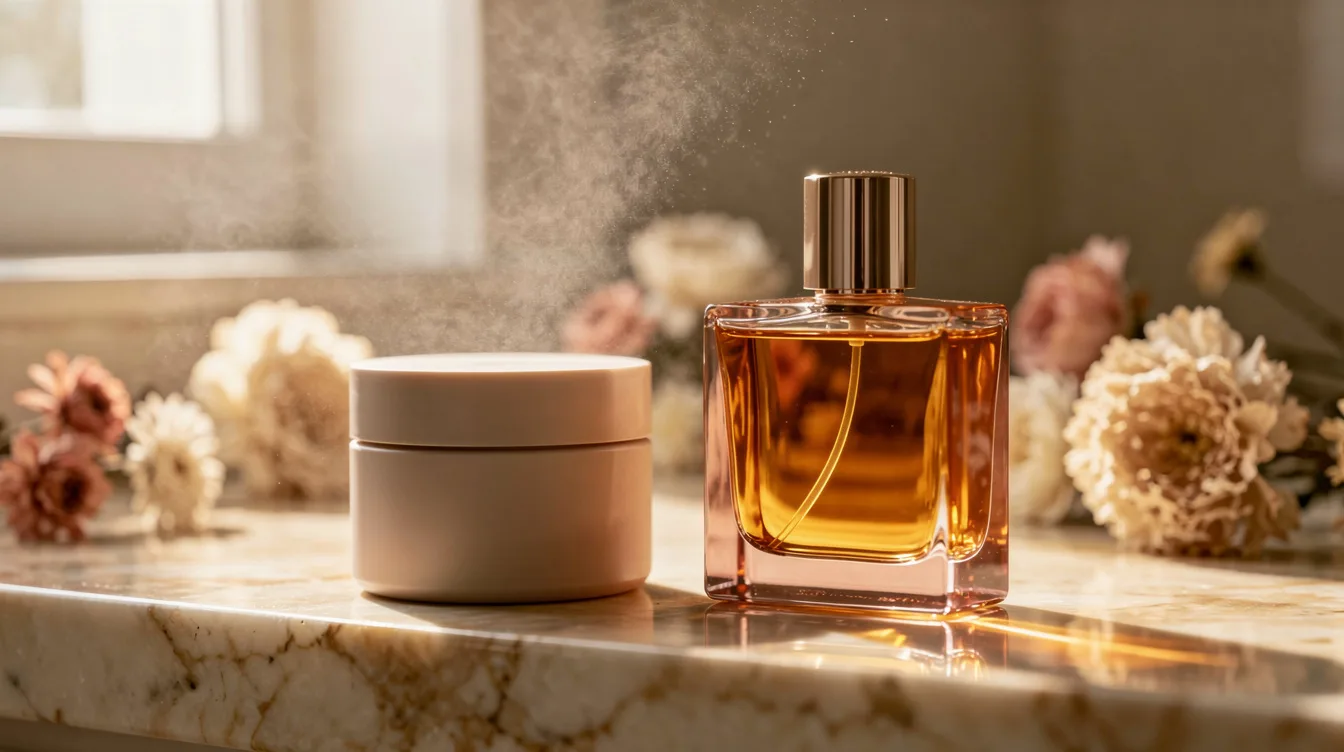
One minute a familiar spray seemed quiet, then a hot flash turned it sharp and conspicuous across the room. We found that a brief rise in skin temperature can make top notes bloom for several minutes, while lower estrogen often changes the dry, reactive skin beneath the fragrance.
That distinction matters because a perfume that suddenly feels different doesn’t automatically need replacing. Our desk’s view is simple: adjust where and how you apply it before blaming your favorite bottle.
What you will find inside
- Move Fragrance Away From Heat Zones
- Moisturize Before You Spray
- Treat Stinging As Useful Feedback
- Use Fabric for a Steadier Scent Cloud
- Choose the Opening You Actually Enjoy
- Reapply in Small, Deliberate Doses
Move Fragrance Away From Heat Zones
A hot flash brings increased skin blood flow and warmth, which can speed the evaporation of volatile perfume materials. We skip the center chest and front of the neck when heat-triggered scent bursts feel distracting, especially with bright citrus top notes.
Try the outer forearms, the back of the shoulders, or clothing instead, using fewer sprays than usual. This is a practical comfort adjustment, not evidence that postmenopausal bodies run hot all day.
Moisturize Before You Spray
Less sebum, altered surface lipids, and lower hydration can leave fragrance feeling less rounded on skin. A plain layer of CeraVe Moisturizing Cream, typically around $16 depending on size and retailer, gives dry skin a more comfortable base.
Let the cream settle before spraying, rather than misting perfume onto wet lotion. We prefer an unscented moisturizer here because it keeps the fragrance’s opening easier to judge and limits competing aroma.
Treat Stinging As Useful Feedback
Alcohol-based perfume can sting when the barrier is dry, freshly shaved, irritated, or affected by eczema. That reaction deserves attention, particularly because fragrance ingredients can trigger contact dermatitis in susceptible skin.
Keep eau de parfum off compromised skin and do not keep testing a spot that burns or itches. A dermatologist can help with a persistent rash, and anything that bleeds, changes shape, or does not heal should be evaluated promptly.
Use Fabric for a Steadier Scent Cloud
Perspiration during vasomotor symptoms can create a stronger short-term scent cloud, then dilute or wash fragrance from the skin. A light spray on a scarf, jacket lining, or the hem of a dress can feel more predictable than repeated neck application.
Test an inconspicuous area first, since perfume oils may mark delicate fabric. We especially like this move for richer vanilla fragrances, which can become overwhelming when sprayed directly on warm chest skin.
Choose the Opening You Actually Enjoy
Warm skin tends to make quick-evaporating materials announce themselves faster, so an aldehydic, fruity, aromatic, or citrus opening may seem louder during a hot flash. That does not mean those fragrance families are wrong after menopause.
Instead, sample a scent through an ordinary day and one warmer moment before buying a full bottle. A travel-size Maison Margiela REPLICA spray, often around $35 depending on the format, is a sensible way to test wear without overcommitting.
Reapply in Small, Deliberate Doses
Perfume performance depends on formula, humidity, clothing, air movement, dose, and changing smell perception, alongside the condition of skin. There is no credible universal rule that menopause makes every fragrance disappear or that dry skin reduces projection by one fixed percentage.
Keep a small atomizer in your bag and use one measured spray when the scent has truly faded. We favor this over layering several products at once, because fragrance-free body care makes it easier to notice what your perfume is actually doing.
Start by moving one favorite perfume from the chest to moisturized forearms or fabric for a week. If it still feels wrong, test a smaller spray dose before deciding the formula has changed.