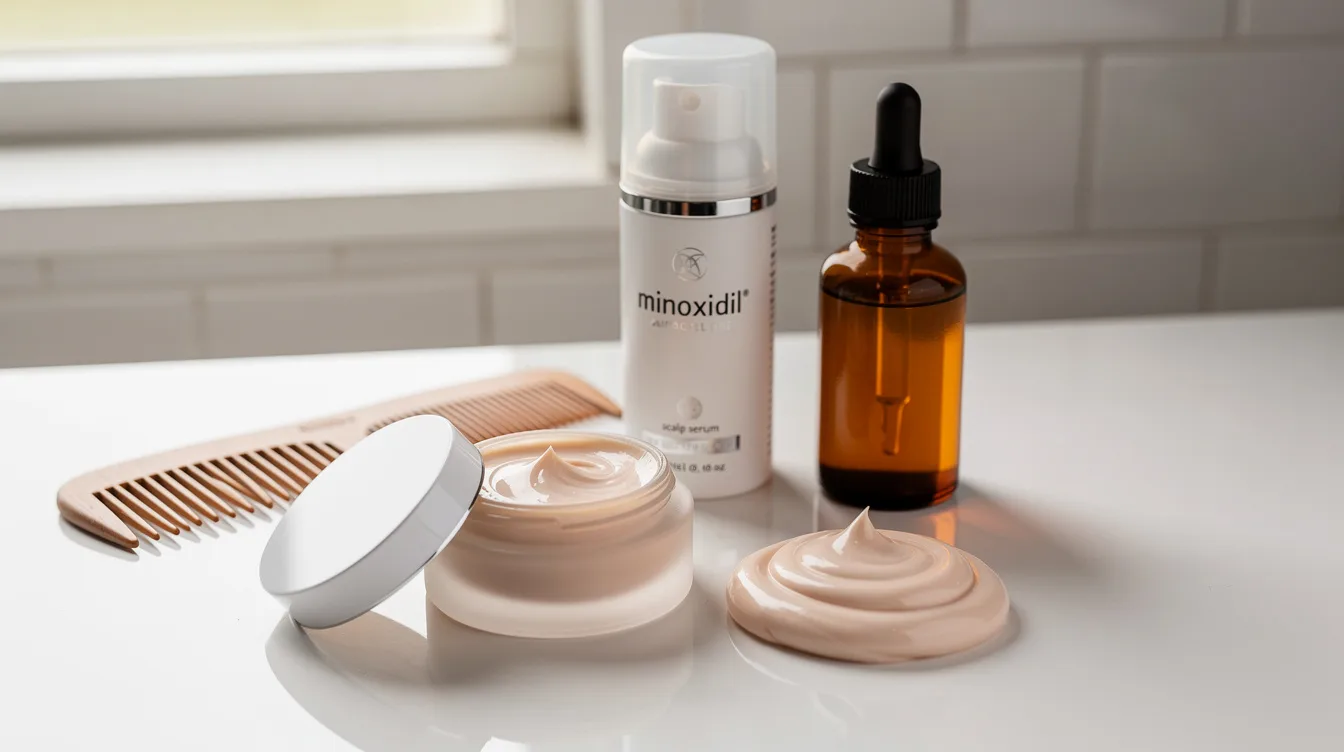
The wider part in the bathroom mirror can make a pricey “growth factor” serum feel urgent, especially when a two-month supply of Women’s Rogaine 5% Minoxidil Foam costs about $30. For many women after menopause, gradual crown thinning is female-pattern hair loss, a follicle-miniaturization process that needs a clear diagnosis more than a glamorous bottle.
Growth factors are biologically active signaling proteins, and the phrase sounds persuasive on a label. The research behind cosmetic scalp serums is still far less convincing than the evidence for established hair-loss treatment.
What you will find inside
- 1. Start With the Pattern, Not the Serum
- 2. Put Minoxidil Before Growth Factors
- 3. Use the Version You Can Keep Using
- 4. Give Hair Cycling Enough Time
- 5. Treat Growth Factor Serums as Optional
- 6. Escalate Red Flags Instead of Layering Products
1. Start With the Pattern, Not the Serum
A slowly widening center part, less ponytail density, and finer hairs across the top often fit female-pattern hair loss, while the frontal hairline may stay fairly intact. Menopause can make inherited follicle sensitivity more visible as estrogen declines and the relative influence of androgens shifts.
Sudden heavy shedding two to four months after illness, surgery, major stress, restrictive dieting, or a medication change can point toward telogen effluvium instead. A board-certified dermatologist can sort out overlapping causes, including iron deficiency, thyroid disease, medication effects, inflammatory scalp disease, and patchy alopecia that needs different care.
2. Put Minoxidil Before Growth Factors
The best-supported “growth factor” approach for female-pattern hair loss is not a cosmetic growth factor at all: it is minoxidil. Dermatologists commonly recommend topical minoxidil first because it has meaningful clinical evidence and FDA-approved options for women.
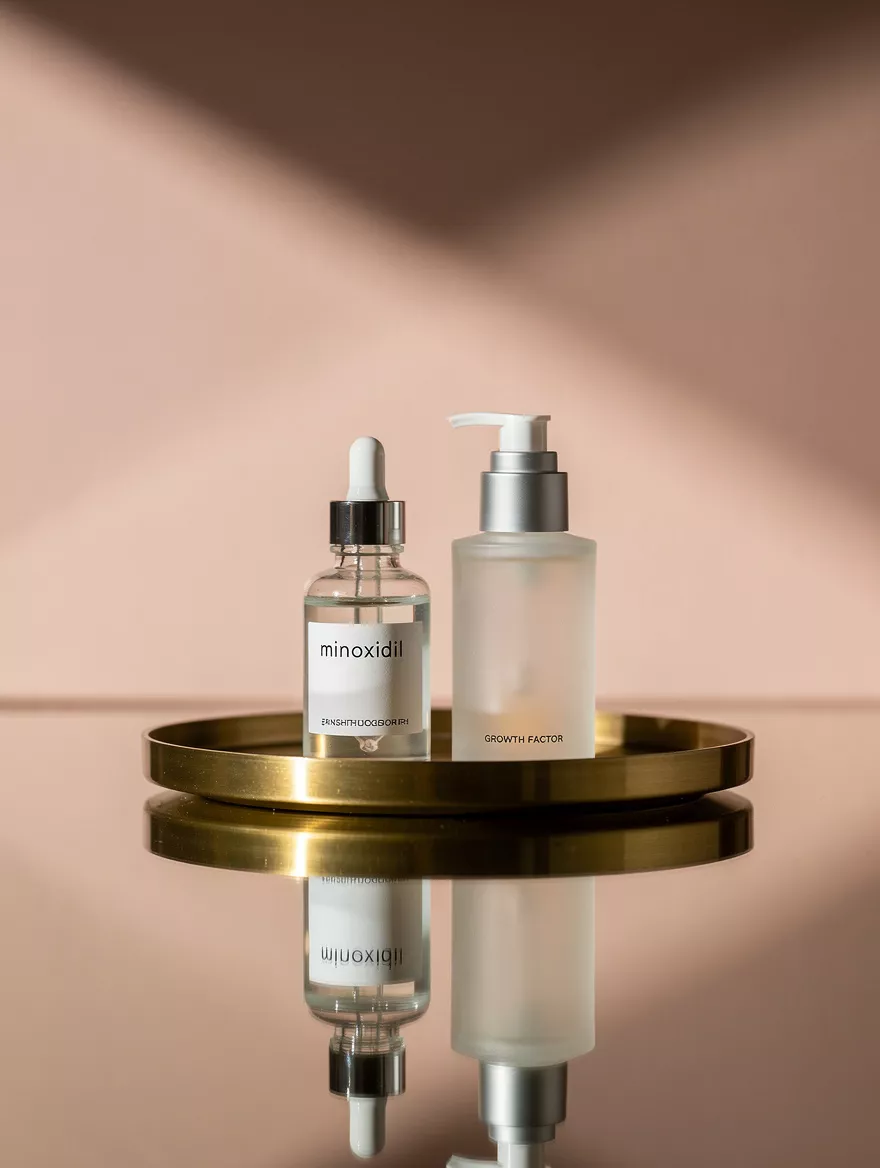
Both 2% minoxidil and 5% minoxidil are FDA-approved for female-pattern hair loss. Our opinion is plain: a serum calling itself stem-cell, peptide, or growth-factor powered should never displace a treatment with stronger evidence unless a clinician has a specific reason.
3. Use the Version You Can Keep Using
Women’s Rogaine 5% Minoxidil Foam is typically used once daily on a dry scalp and is a practical over-the-counter starting point for many women. The foam can be easier to fit into a routine than a twice-daily solution, although the right choice depends on scalp comfort, hair styling, and the product label.
Women’s Rogaine 2% Minoxidil Solution usually costs roughly $15 to $35 a month, depending on pack size and retailer. Generic 5% foam or solution from Kirkland Signature, Equate, Up&Up, CVS Health, or Walgreens may cost around $15 to $50 monthly, and the vehicle and consistent use matter more than the logo.
4. Give Hair Cycling Enough Time
A temporary increase in shedding during the first 2 to 8 weeks of topical minoxidil can happen as follicles shift through the hair cycle. It deserves attention if it feels severe or comes with scalp symptoms, but it does not automatically mean the treatment has failed.
Judge progress after roughly 6 to 12 months, not after a single hair-wash week. If minoxidil helps, continued use is generally needed to maintain that benefit, so choose a format and budget that feel realistic for the long haul.
5. Treat Growth Factor Serums as Optional
Topical growth factor products may contain peptides, conditioned media, plant extracts, or lab-derived signaling ingredients, but marketing language often runs ahead of independent human research. Small studies, brand-sponsored testing, and before-and-after photos do not establish that a cosmetic serum can reliably treat female-pattern hair loss.
A product such as The Ordinary Multi-Peptide Serum for Hair Density may be pleasant to use as a cosmetic scalp serum, but it should be viewed as optional rather than a substitute for proven treatment. We would not spend premium-serum money before covering the basics: diagnosis, minoxidil if appropriate, and gentle scalp care.
6. Escalate Red Flags Instead of Layering Products
Itching, thick scale, redness, pain, shiny areas, or sharply defined bald patches call for medical evaluation rather than more actives. Scarring and inflammatory forms of hair loss can require earlier specialist treatment, and cosmetic growth factors are not a safe detour.
Stop self-experimenting and seek dermatology care promptly for a scalp area that bleeds, changes shape, or does not heal. A dermatologist can also discuss prescription options when appropriate, which matters because topical products do not suit every diagnosis or every person.
Start by taking clear photos of your part in the same lighting, then book a dermatology visit if the loss is new, fast, patchy, painful, or accompanied by scalp changes. For gradual diffuse thinning, ask whether 5% topical minoxidil fits your diagnosis before adding a growth factor serum to the cart.