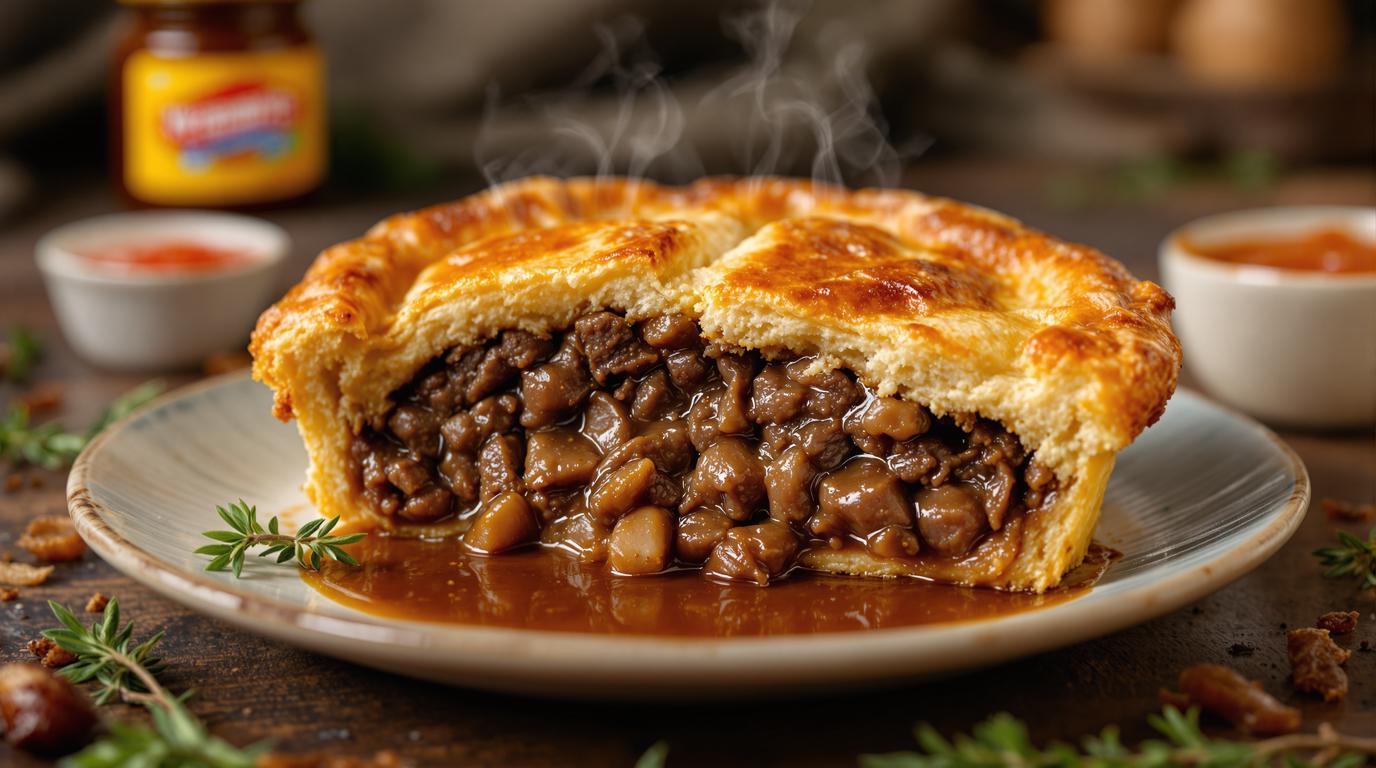
The first time I tasted an authentic Australian meat pie was during my culinary exchange in Melbourne twenty years ago. Standing outside the Melbourne Cricket Ground, I bit through that golden, flaky crust into a rich, savory filling that changed my understanding of comfort food forever. While Americans have their pot pies, Aussies have perfected the hand-held meat pie – a national icon that deserves a place in every home cook’s repertoire. The secret? A touch of Vegemite for that distinctive umami depth that makes this simple dish extraordinary. 🇦🇺
The Story Behind Authentic Australian Meat Pies 📖
Australian meat pies originated in the 19th century as portable lunches for laborers and have since become a beloved stadium food and late-night staple. My Australian grandmother-in-law taught me that the best meat pies balance a perfectly flaky exterior with a rich, savory filling that’s neither too dry nor too soupy. The texture should be somewhere between a gravy and a stew – substantial enough to satisfy but tender enough to yield with each bite. What distinguishes the authentic Aussie version is the addition of Vegemite, Australia’s iconic spread that adds an undefinable umami complexity to the filling.
As I’ve shared this recipe across my restaurants over the years, even Vegemite skeptics become converts once they taste how it transforms the filling. And yes, I’ve seen similar techniques in other comfort foods across cultures – that touch of fermented magic that elevates simple ingredients to something extraordinary.
Essential Ingredients 🧾
For the pastry, you’ll need:
- 3 sheets frozen puff pastry, thawed (about 375g/13oz total)
- 1 egg, beaten (for egg wash)
For the filling, gather:
- 500g (1.1 lb) beef mince (ground chuck, 80/20 lean-to-fat ratio)
- 1 large onion, finely diced
- 2 tablespoons all-purpose flour
- 4 cups (1L) beef stock
- 1 teaspoon Worcestershire sauce
- 2 teaspoons Vegemite (or 1 tablespoon blackstrap molasses as substitute)
- 1 bay leaf
- Salt and freshly ground black pepper
Chef’s Note: Can’t find Vegemite? While it’s the authentic choice, you can substitute with 1 tablespoon soy sauce plus 1 teaspoon brown sugar for similar depth. The flavor profile won’t be identical, but you’ll still achieve that necessary umami foundation.
Step-by-Step Instructions 📝
1. Prepare the pastry base: Preheat your oven to 200°C (400°F). Line a 9-inch pie dish with 1½ sheets of puff pastry, gently pressing into the corners without stretching the dough. Trim excess pastry but leave a small overhang. Refrigerate while preparing the filling.
2. Create your filling base: Heat a tablespoon of oil in a large, deep skillet over medium-high heat. Add the beef mince, breaking it apart with a wooden spoon. Cook until no pink remains (about 5-7 minutes), then drain excess fat, leaving about a tablespoon in the pan.
3. Develop the flavor foundation: Add the diced onion and bay leaf to the meat. Cook until the onion softens and becomes translucent, about 3-4 minutes. The moisture from the onions will help release the flavorful brown bits from the bottom of the pan – that’s culinary gold right there!
4. Build your gravy: Sprinkle the flour over the meat mixture and stir continuously for 1-2 minutes to cook out the raw flour taste. This creates what we call a roux – the thickening foundation for your gravy. Gradually add the beef stock while stirring, then mix in the Worcestershire sauce and Vegemite until fully incorporated.
5. Simmer to perfection: Bring the mixture to a gentle simmer and cook for 10-15 minutes, stirring occasionally, until the liquid reduces and thickens to a rich gravy consistency. You want it spoonable but not watery. Remove the bay leaf and season with salt and pepper to taste.
6. Assemble your pie: Allow the filling to cool slightly (hot filling can make the pastry soggy), then pour it into your pastry-lined dish. Cover with the remaining 1½ sheets of pastry, pressing the edges to seal with the base. Trim any excess and crimp the edges decoratively with a fork. Cut a small vent in the center and brush the top generously with beaten egg.
7. Bake in stages: Bake for 15 minutes at 200°C (400°F), then reduce heat to 180°C (350°F) and bake for another 20 minutes until the crust is deeply golden and crisp. This two-stage baking ensures the bottom crust cooks properly without burning the top.
Chef’s Secret Techniques 🤫
The key to an exceptional meat pie lies in the gravy consistency. Professional kitchens would use a demi-glace, but our home version relies on reducing the stock properly and using Vegemite for that professional depth. Another crucial technique: let your pie rest for 10 minutes before slicing – just like you would with a steak. This allows the filling to set slightly and ensures your first slice holds together beautifully.
I’ve found this approach works beautifully when making Italian comfort foods as well – the patience required for proper resting time rewards you with perfect presentation.
Serving & Presentation Tips 🍽️
In Australia, meat pies are traditionally served with tomato sauce (similar to ketchup but slightly less sweet), mashed potatoes, and mushy peas on the side. For a more elegant presentation, serve a wedge with a small ramekin of gravy and a simple green salad. Pair with a medium-bodied Australian Shiraz to complete the experience.
This hearty dish makes a wonderful addition to casual gatherings, and can be made alongside other international street foods like Turkish kebabs for a global comfort food feast. For summer gatherings, consider serving with a refreshing peach thyme vodka lemonade to balance the richness.
Whether you’re recreating memories of Australian travels or simply exploring global comfort foods, this meat pie delivers satisfaction in every bite. Just as I discovered outside that Melbourne cricket ground years ago, some foods transcend their humble ingredients to become something truly special. As we say in professional kitchens, the magic isn’t just in the recipe – it’s in the love and care you bring to the process. Happy cooking! 🥧