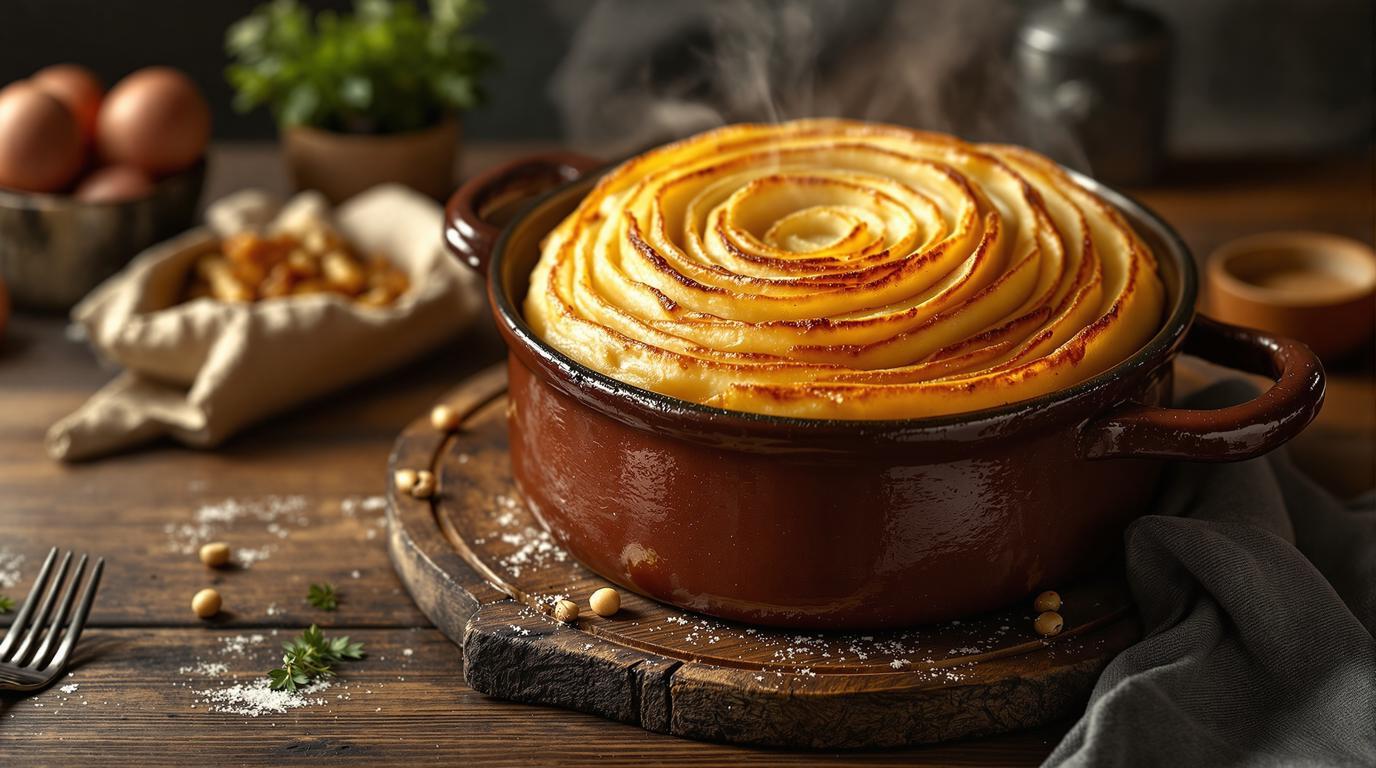
The first time I prepared Lancashire hotpot was during my apprenticeship at a small countryside inn outside Manchester. The head chef—a gruff Lancashire native with hands like weathered oak—insisted we make it the traditional way: lamb neck, thinly sliced onions, and a crown of overlapping potatoes that would crisp beautifully in the oven. “This isn’t fancy food,” he’d say, “but it’s honest food that tells our story.” That lesson has stayed with me for decades—sometimes the simplest dishes carry the deepest traditions.
The Story Behind Lancashire Hotpot 📖
Lancashire hotpot emerged from northern England’s industrial heartland, where working families needed hearty, economical meals that could simmer unattended while they labored in the mills and mines. The dish’s genius lies in its simplicity—tough cuts of lamb transformed through slow cooking into tender morsels beneath a protective golden potato crust. Every Lancashire family claims their version is definitive, but the essentials remain constant: lamb, onions, and that signature potato topping that should never, ever be stirred into the stew.
Essential Ingredients 🧾
- 1 kg (2.2 lbs) lamb shoulder or neck, cut into 1-inch cubes
- 4 medium onions, thinly sliced
- 4 medium carrots, sliced into rounds
- 800g (1.76 lbs) waxy potatoes, sliced very thin (about ⅛ inch)
- 4 tbsp butter + 2 tbsp vegetable oil
- 500ml (2 cups) beef or lamb stock
- 2 bay leaves
- 1 tbsp Worcestershire sauce (optional but recommended)
- 2 tbsp all-purpose flour
- Salt and freshly ground black pepper
Step-by-Step Instructions 📝
1. Preheat your oven to 160°C (320°F). Season the lamb generously with salt and pepper.
2. In a heavy-bottomed Dutch oven, heat 2 tablespoons of butter and the oil over medium heat. Working in batches, brown the lamb pieces until they develop a rich caramel color (about 5 minutes per batch). Transfer to a plate.
3. In the same pot, add the sliced onions and cook until they begin to soften and caramelize, about 8-10 minutes. The slow caramelization builds essential flavor foundations.
4. Sprinkle flour over the onions and stir constantly for 2 minutes to cook out the raw flour taste.
5. Gradually add the hot stock, stirring continuously to prevent lumps. Return the lamb to the pot, add bay leaves and Worcestershire sauce if using. Bring to a gentle simmer.
6. Layer the sliced carrots over the simmering mixture, then arrange the potato slices in overlapping circles on top, working from the outside edge inward.
7. Melt the remaining butter and brush it over the potato surface. This creates that irresistible golden crust we’re after.
8. Cover with a tight-fitting lid and transfer to the oven. Cook for 1½ hours, then remove the lid and increase the temperature to 200°C (400°F) for a final 30 minutes until the potatoes turn crispy and golden.
Chef’s Note: The traditional Lancashire hotpot was cooked in a tall earthenware pot with sloping sides. If you don’t have one, any heavy casserole dish with a tight-fitting lid will work beautifully. The key is slow, gentle heat that allows the flavors to meld without boiling vigorously.
Chef’s Secret Techniques 🤫
The genius of hotpot lies in its layering technique. When I prepare this dish for special occasions, I take extra care with the potato topping. I use a mandoline to ensure uniform slices—ideally about 3mm thick. Too thin, and they’ll disintegrate; too thick, and they won’t cook through properly.
Also, resist the urge to peek too often during cooking. Each time you lift the lid, you release precious steam and heat that’s essential for proper tenderizing of the lamb. This is particularly important if you’re using neck, which needs that slow, constant heat to break down properly.
Serving & Presentation Tips 🍽️
Lancashire hotpot should be served directly from its cooking vessel to maintain that perfect temperature contrast between the crispy potato top and the steaming stew beneath. A side of pickled red cabbage offers the perfect tangy counterpoint to the rich lamb—this pairing has been traditional for generations and for good reason.
For a complete traditional Lancashire experience, serve with a robust red wine like Cabernet Sauvignon or, if you prefer something lighter, a dry Riesling provides wonderful contrast to the hearty flavors.
This humble dish has sustained generations of hardworking families through cold northern winters. When I make it, I’m not just preparing food—I’m continuing a culinary tradition that connects us to our ancestors and their resourcefulness. Sometimes the most profound cooking doesn’t require fancy ingredients or complicated techniques—just respect for tradition and understanding of how humble ingredients transform with time and care. That’s the true essence of a Lancashire hotpot.