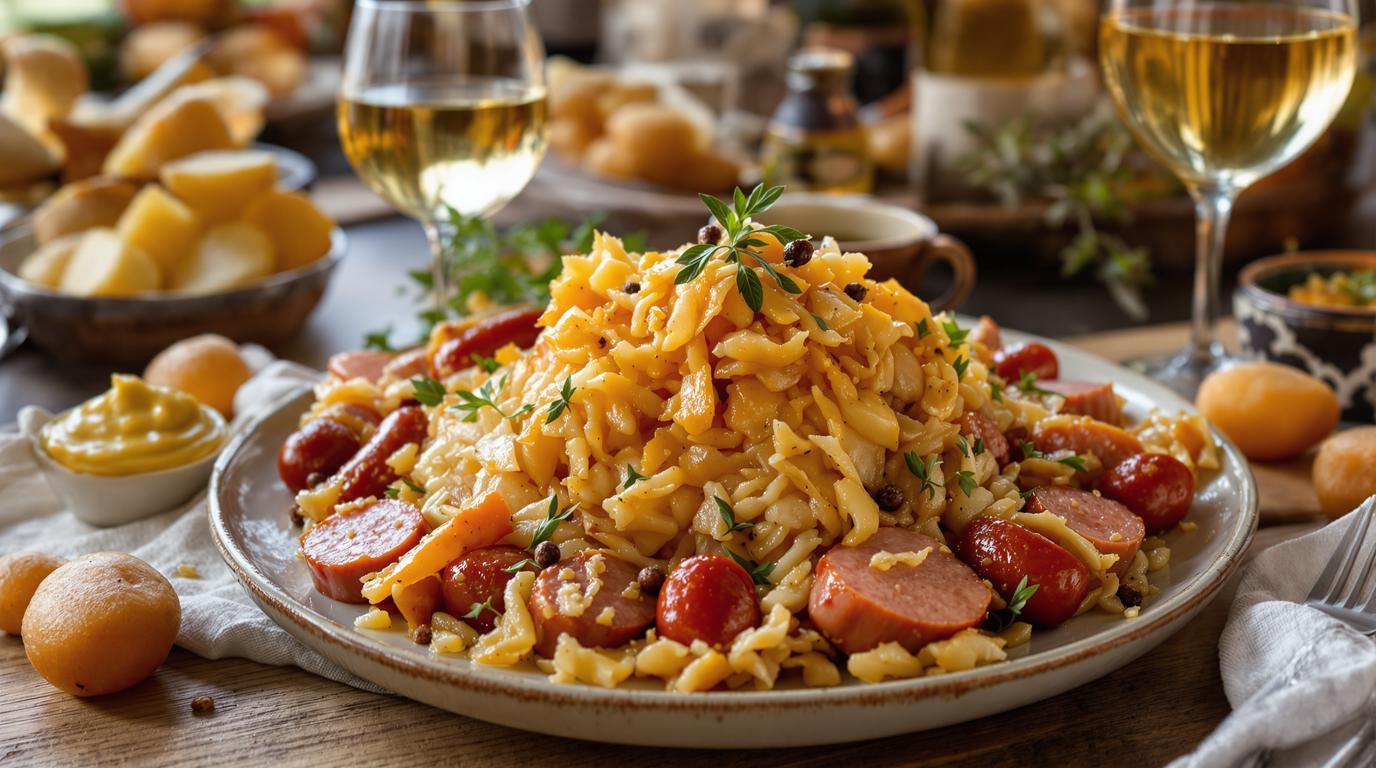
The first time I encountered authentic Choucroute Garnie was in a small Alsatian village near the French-German border. Snow was falling outside while my host’s grandmother lovingly tended to a massive pot that filled the kitchen with aromas of juniper, wine, and smoked meats. This wasn’t just dinner—it was culinary heritage in action. “This recipe hasn’t changed in four generations,” she told me, slicing into perfectly tender smoked pork. What captivated me most wasn’t just the harmonious marriage of tangy sauerkraut and rich meats, but how this humble peasant dish—born of necessity and preservation techniques—had transformed into a celebration of regional identity that crosses borders. Today, I’m sharing her traditional method, with all the secrets that make this dish truly special.
The Soul of Alsatian Comfort: Traditional Choucroute Garnie 🍲
Choucroute Garnie (literally “dressed sauerkraut”) emerged from the Alsace region’s unique position between French and German culinary traditions. What began as a practical winter preservation method evolved into a cornerstone dish that showcases the region’s exceptional pork products. The genius lies in how the acidity of fermented cabbage perfectly balances rich, smoky meats while the slow braising process harmonizes all flavors into something far greater than its parts.
My mentor always insisted that proper Choucroute requires time and patience—this isn’t fast food, but rather a meditation on tradition. Like many grandmother recipes, the magic happens during that unhurried simmer when aromatic juniper berries (the secret weapon of authentic Choucroute) infuse throughout, cutting through richness with their subtle pine-like essence.
The Essential Ingredients 🧾
For the meat assortment:
• 3 pounds (1.4kg) smoked pork loin, uncooked
• 1 large chunk salt pork, soaked overnight in cold water
• 12 frankfurters
• 6 knockwurst or kielbasa sausages
• Optional: 1 pound (450g) pork ribs or smoked kassler ribs
For the sauerkraut base:
• 3 pounds (1.4kg) sauerkraut, rinsed and drained
• 1 large onion, thinly sliced
• 2-3 garlic cloves, sliced
• 10 juniper berries (absolutely essential)
• 2 bay leaves
• ½ teaspoon coriander seeds
• 3 cups (720ml) chicken stock
• 1 cup (240ml) dry Riesling wine
• 3 tablespoons goose fat or duck fat (or butter in a pinch)
• 12 medium potatoes, for serving
Grandmother’s Method 👵
- Prepare the aromatics: In a large Dutch oven, melt the goose fat over medium heat. Add sliced onions and cook until translucent but not browned, about 5 minutes. Stir in garlic, juniper berries, bay leaves, and coriander seeds, allowing them to toast slightly and release their essential oils—about 90 seconds.
- Build the braising liquid: Add rinsed sauerkraut to the pot, along with the soaked salt pork. Pour in chicken stock and white wine, stirring gently to combine. Bring to a gentle simmer, then reduce heat to very low, cover, and let cook for 45-60 minutes. The sauerkraut should remain intact—not mushy—while absorbing the aromatic flavors.
- Prepare the meats: While sauerkraut simmers, roast the smoked pork loin in a 325°F (165°C) oven for approximately 25 minutes per pound until it reaches an internal temperature of 170°F (77°C). About 20 minutes before serving, nestle the sausages into the sauerkraut to warm through without overcooking.
- Finish the dish: Boil potatoes separately until tender, then peel and halve. When ready to serve, arrange a mountain of sauerkraut on a large platter. Slice the pork loin and arrange meat varieties artfully around the sauerkraut with the potatoes. Serve immediately with a quality Dijon or spicy German mustard.
Chef’s Note: The real secret to exceptional Choucroute Garnie isn’t ingredient quality alone (though that matters tremendously)—it’s patience. The gentle simmer allows flavors to meld without destroying the integrity of the sauerkraut. As my mentor would say: “Rush the braise, ruin the dish.”
Essential Techniques for Authentic Results 🤫
Always rinse store-bought sauerkraut thoroughly unless using a high-quality artisanal version. This removes excess brine that can overpower the dish. Similarly, soaking the salt pork overnight is non-negotiable—skip this step and your Choucroute will be inedibly salty.
For those unable to source juniper berries (though I strongly recommend seeking them out—try specialty spice vendors), a careful combination of one star anise pod and a small sprig of rosemary can approximate the resinous quality, though nothing truly replaces juniper’s signature contribution.
Like my other slow-marinated recipes, Choucroute actually improves when made a day ahead, allowing flavors to deepen overnight. Simply reheat gently before serving—perfect for entertaining without last-minute fuss.
Serving Traditions & Modern Pairings 🍽️
The traditional accompaniment to Choucroute Garnie is undoubtedly a crisp Alsatian Riesling—its bright acidity perfectly cuts through the dish’s richness. For beer lovers, a German-style lager works beautifully. If you’re feeling adventurous, my grilled pineapple recipe makes a surprisingly delightful palate cleanser between bites.
While traditional with potatoes, I sometimes serve mine with crusty rye bread and a simple green salad dressed with apple cider vinaigrette to balance the meal. For a vegetable-forward variation, my smoky BBQ cauliflower technique pairs wonderfully alongside.
For dessert, consider something light and fruit-forward rather than heavy—perhaps banana chocolate chip muffins using my waste-reducing technique.
Whenever I prepare this dish, I’m transported back to that snow-covered Alsatian kitchen. The beauty of Choucroute Garnie isn’t just its magnificent flavors—it’s how it brings people together around a shared table to celebrate both tradition and togetherness. As my mentor’s grandmother would say with a knowing smile: “A good Choucroute takes time, but time spent around the table is never wasted.”