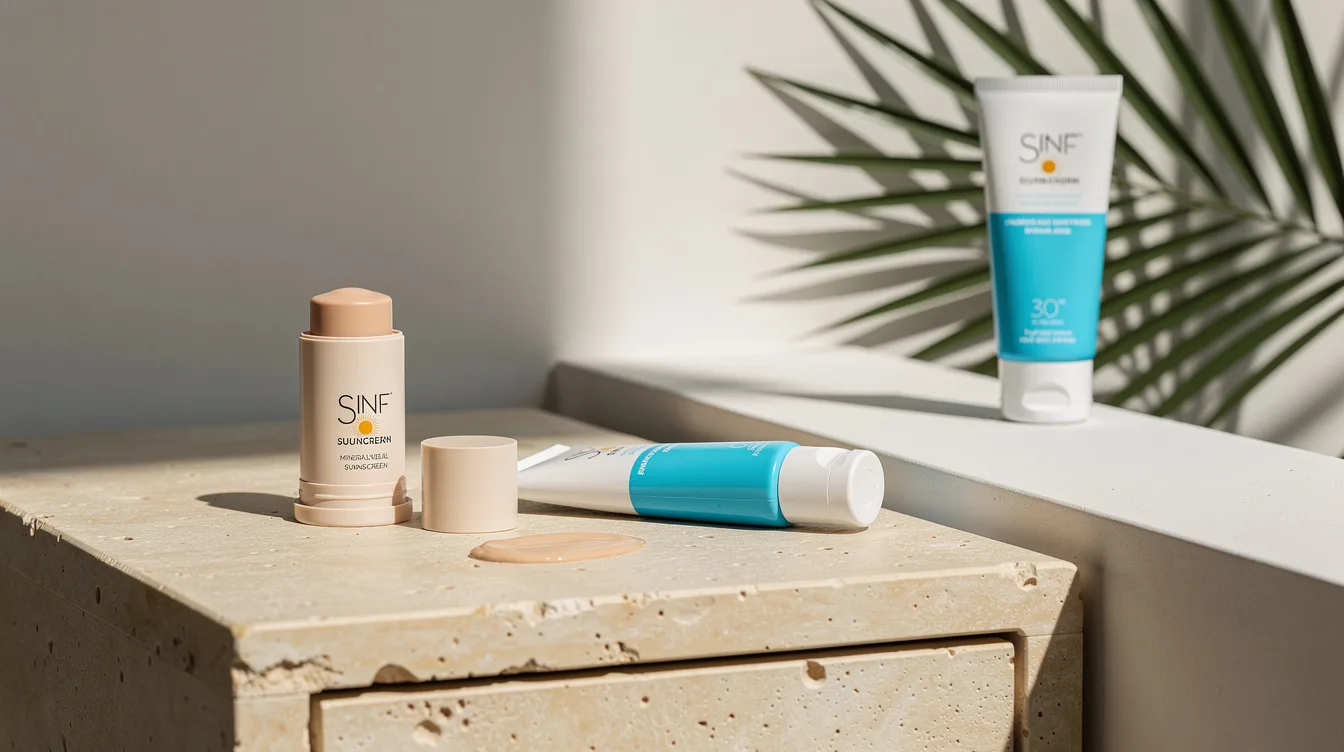
The mirror can look perfectly polished at 8 a.m., then reveal a dry-looking stripe along the hairline by lunch. A sunscreen stick helps with those hard-to-reach spots, but one casual swipe rarely gives the protection printed on the tube.
That gap matters because real-world stick use has measured roughly 0.35 mg of product per area tested, far below the amount used in sunscreen testing. Treat the stick as a precise second layer and reapplication tool, not your entire morning SPF plan.
What you will find inside
- Build a Creamy SPF Base First
- Choose a Creamier Stick Formula
- Divide Your Face Into Small Zones
- Make Four Overlapping Passes Per Zone
- Warm and Press Instead of Dragging
- Pair Clear Sticks With Tint When Needed
Build a Creamy SPF Base First
Start with a moisturizing broad-spectrum SPF 30 to SPF 50+ lotion, cream, or fluid across the face, ears, neck, and upper chest. For dry mature skin, this base layer is usually more comfortable and more dependable than trying to cover every contour with a stick alone.
Use moisturizer first if your skin needs it, then let it settle briefly before sunscreen. Dermatologists commonly suggest a nickel-sized amount for the face alone, while broader face, ear, and neck coverage needs more product.
Choose a Creamier Stick Formula
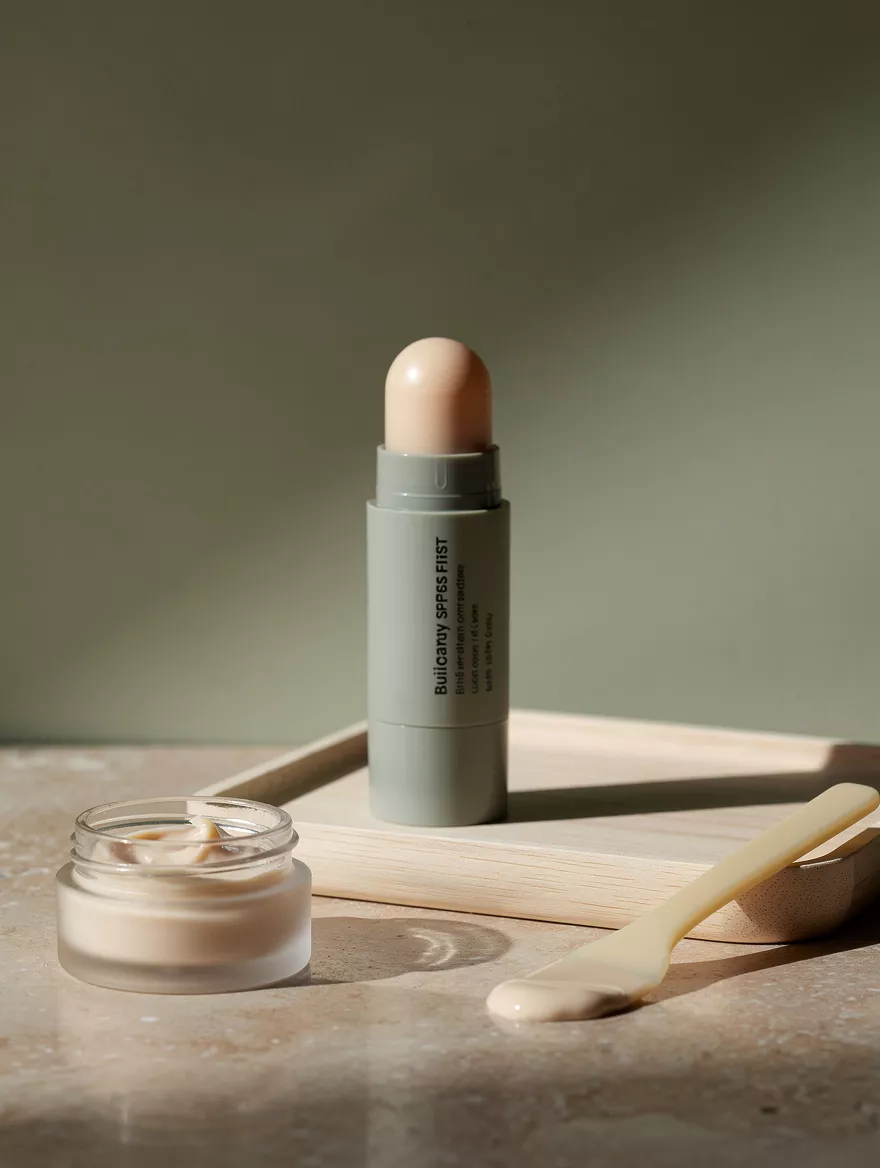
Look for a broad-spectrum SPF 50+ stick that feels creamy rather than powdery, stiff, or aggressively matte. The best formula is the one you can apply generously without dragging delicate skin or making dry patches look louder.
Zinc oxide can be a useful mineral filter, especially for easily reactive skin, but its percentage alone does not tell the whole protection story. The tested SPF, UVA coverage, even film formation, and how much you apply all count.
Divide Your Face Into Small Zones
Work section by section: left cheek, right cheek, forehead, central face, chin and jaw, then ears and neck. This sounds methodical, yet it prevents the rushed, uneven application that leaves the temples and sides of the nose exposed.
Use the stick on the hairline, brow bone or eyelids only if the label permits, lip perimeter, part line, neck creases, and backs of hands. A water-resistant 80-minute formula is a practical pick for walks, workouts, swimming, or humid days.
Make Four Overlapping Passes Per Zone
For each small zone, make four deliberate back-and-forth passes with slight overlap. That technique is more realistic than trusting one stripe of sunscreen stick to create an even protective film.
Press or gently smooth the product afterward to close visible gaps. Skip hard rubbing, which can irritate a thinner-feeling barrier, disturb makeup, and catch on flaky areas around the nose or mouth.
Warm and Press Instead of Dragging
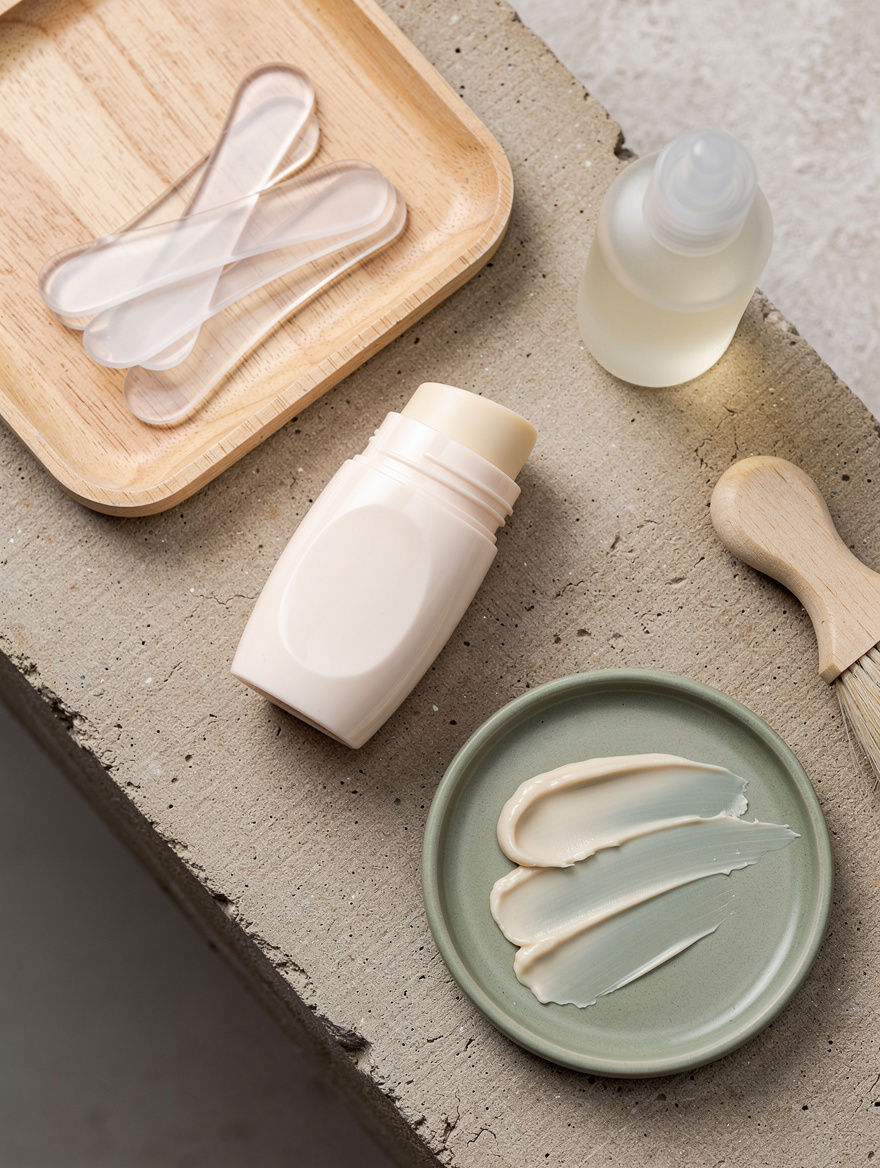
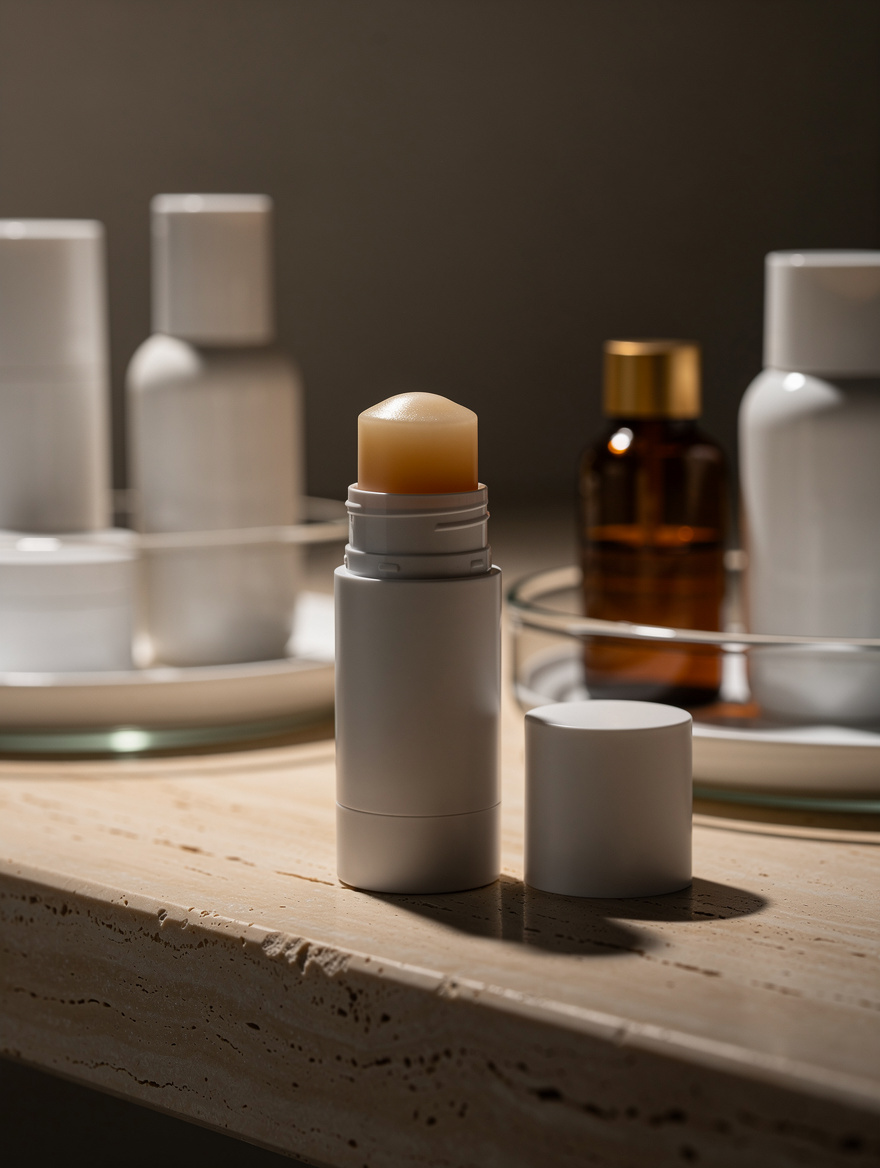
Hold the stick against the skin for a moment before gliding it, especially when the formula feels firm. Light pressure helps an emollient formula move across dry skin without turning application into a tug-of-war.
For touch-ups over makeup, tap the product in with clean fingertips or press it in with a soft makeup sponge. A fragrance-free formula with barrier-friendly ingredients such as ceramides may be a more comfortable match when skin is prone to stinging.
Pair Clear Sticks With Tint When Needed
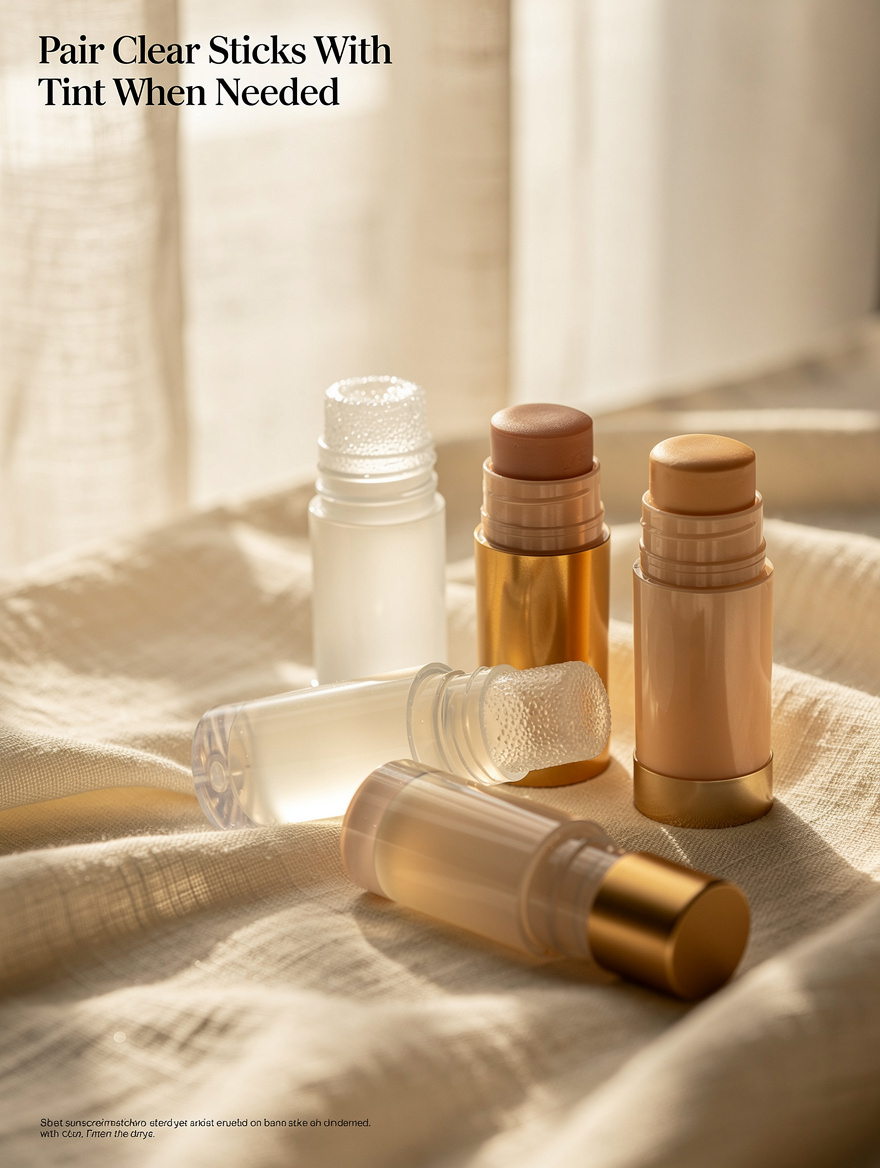
If dark spots or melasma are a concern, use a tinted morning sunscreen containing iron oxides beneath your stick. These pigments can add visible-light protection, which is relevant because visible light can contribute to uneven-looking pigmentation.
A clear stick remains useful for reapplying along the hairline, ears, neck, and hands, but many do not include iron oxides. Keep the routine simple: tinted fluid or cream as the full-face base, then a comfortable stick for targeted touch-ups.
Begin with the base sunscreen step, then use four overlapping passes on the places your routine usually misses. See a dermatologist about any spot that bleeds, changes shape, or does not heal.