The 5-Minute Fragrance Test Dermatologists Want After 50

The bottle that once felt like “you” can hit differently when your neck is dry, your wrists are touchy, or a favorite scent seems to linger too close. A typical eau de parfum carries roughly 15% to 20% fragrance concentration, so rediscovering a signature scent often starts with less spray and more attention to where it lands.

There is no mature-woman perfume rule worth following. The better filter is distinctive, wearable, and comfortable on your particular skin.

What you will find inside

Choose a Format Before You Choose a Fantasy

A fragrance counter can make every bottle feel urgent, especially when an old favorite suddenly seems too loud by lunchtime. Start with concentration: an eau de parfum typically contains about 15% to 20% fragrance, while an eau de toilette is commonly around 5% to 15%.

I’d treat a single light spray as the useful baseline, then decide whether you actually want more presence. Chanel Coco Mademoiselle EDP, typically $115 to $185 depending on size, has the polished citrus, floral, patchouli, and amber shape many women recognize, but it does not need a cloud of overspraying to make its point.

Choose a Format Before You Choose a Fantasy

Test the Scent Away From Reactive Skin

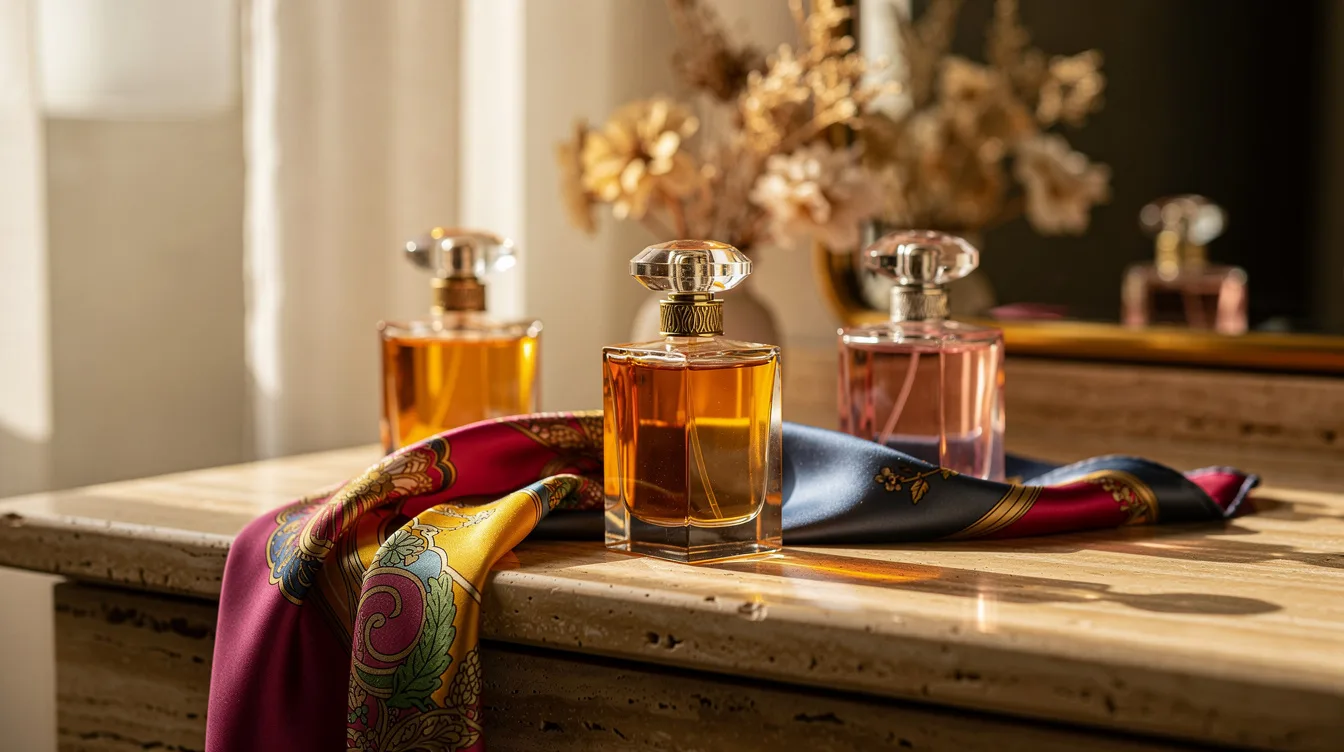
Post-menopausal skin can be drier, itchier, and less tolerant of friction or fragranced products because estrogen changes can affect the barrier. That makes a low-contact approach sensible: try Dior J’adore EDP, often about $185 for a larger bottle, on clothing or a scarf first if your neck and chest tend to sting.

Fine fragrance is optional pleasure, not skincare, and the practical question is whether your own skin tolerates it. Keep your face routine fragrance-free when irritation is a concern, and apply perfume only after your moisturizer has fully settled.

Test the Scent Away From Reactive Skin

Read the Label Like a Skin Clue

“Unscented” is not always the same as fragrance-free, because an unscented product can use masking fragrance. For a dry or reactive routine, a straightforward moisturizer such as CeraVe Moisturizing Cream, typically around $16 to $20 depending on size and retailer, can keep the base of your routine simple while fragrance stays a separate choice.

On fragrance labels, ingredients such as linalool, limonene, citral, eugenol, cinnamal, coumarin, and benzyl salicylate are useful clues if you have reacted before. They are not a reason to panic or self-diagnose, but they can help you notice a repeat pattern with a specific bottle.

Read the Label Like a Skin Clue

Stop Reapplying When the Opening Fades

The first bright minutes of a perfume are not the whole wear, and chasing them with repeated sprays can create more skin contact than you intended. Give a scent a full day on fabric before deciding it disappears, particularly with Coco Mademoiselle, whose patchouli-led base is designed to unfold after the citrus opening.

A lighter eau de toilette can be the more comfortable daytime choice in warm weather, even if it does not last like an extrait. There is no age-based prize for maximum projection, and a signature scent can be noticed only when someone is close enough to ask what you’re wearing.

Stop Reapplying When the Opening Fades

Bring a Rash to a Dermatologist, Not a Search Bar

Fragrance sensitivity and fragrance allergy are different questions, and a persistent itchy, scaly, burning, or eczematous patch deserves a real evaluation. A dermatologist or contact-dermatology specialist can use patch testing, the diagnostic standard, to connect a positive result with your actual rash and exposure history.

Oxidized fragrance materials matter because air exposure can turn limonene and linalool into sensitizing hydroperoxides. Do not use clinical patch-test concentrations as a home experiment, and see a dermatologist for any spot that bleeds, changes shape, or does not heal.

Bring a Rash to a Dermatologist, Not a Search Bar

Start with one controlled wear: spray a familiar signature fragrance once on a washable scarf, live with it for a day, and note both the dry-down and your skin. That small test costs nothing and gives you better information than another impulse bottle.