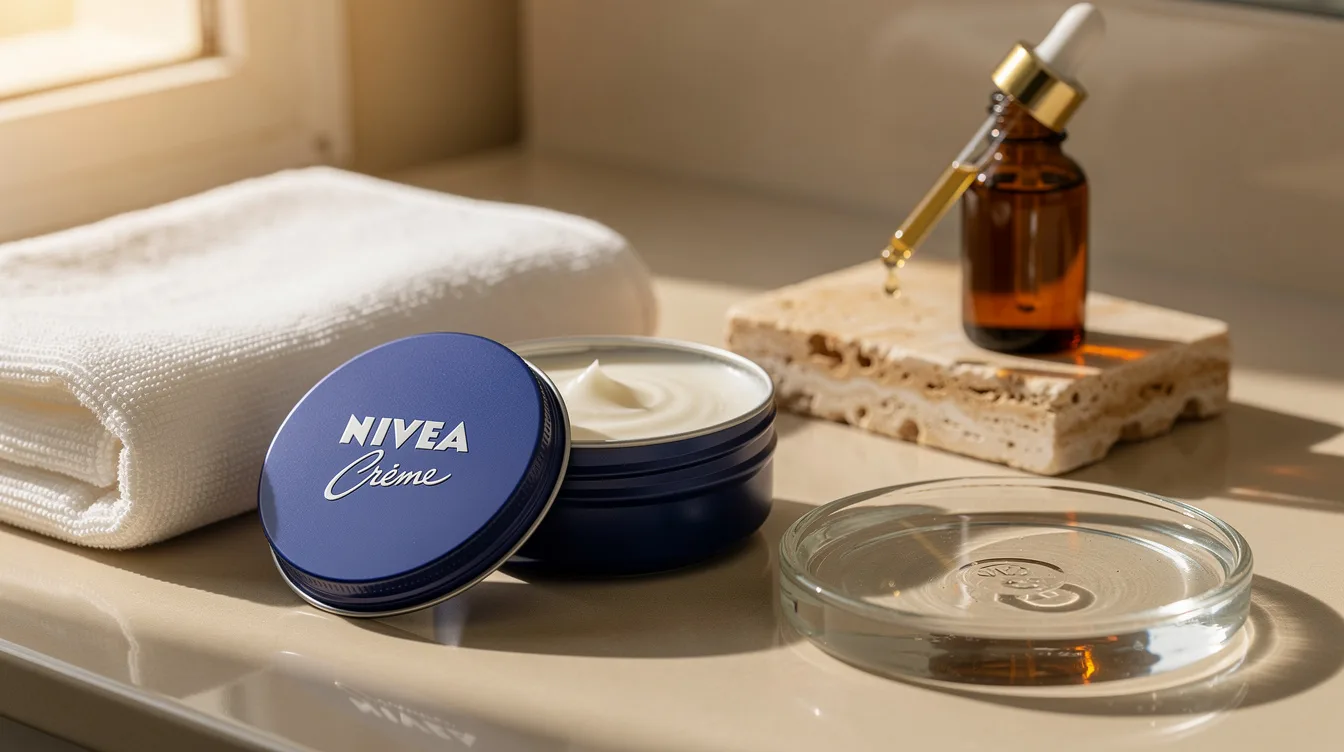
The blue tin can feel reassuring until you smooth it over your cheeks and wake up with a face that feels coated, itchy, or oddly congested. At roughly $6 to $10 depending on tin size and retailer, NIVEA Crème is a very good budget moisture sealer, but it needs a more specific job than “everything cream.”
For skin over 50, dryness can show up quickly after cleansing, showering, or a windy errand, especially as lower estrogen and slower oil production leave the barrier less forgiving. The useful question is where your skin needs an occlusive layer, not whether a classic tin can replace every modern treatment.
What you will find inside
- Use It Where Dryness Is Actually Stubborn
- Apply It On Slightly Damp Skin
- Stop Treating It Like A Complete Face Routine
- Keep It Off A Reactive Facial Barrier
- Do Not Assume Rich Means Acne-Friendly
- Pair It With Better Barrier Support When Needed
Use It Where Dryness Is Actually Stubborn
Petrolatum, mineral oil, paraffin, and waxes create a surface film that helps slow water evaporation from skin. That makes this cream a sensible pick for hands, shins, elbows, feet, cuticles, and the rough patches that lighter body lotion sometimes skims over.
Dermatologists commonly favor thick creams and ointments for very dry skin because texture matters to moisture retention. I think the blue tin earns its reputation on body skin, where its rich finish feels purposeful instead of excessive.
Apply It On Slightly Damp Skin
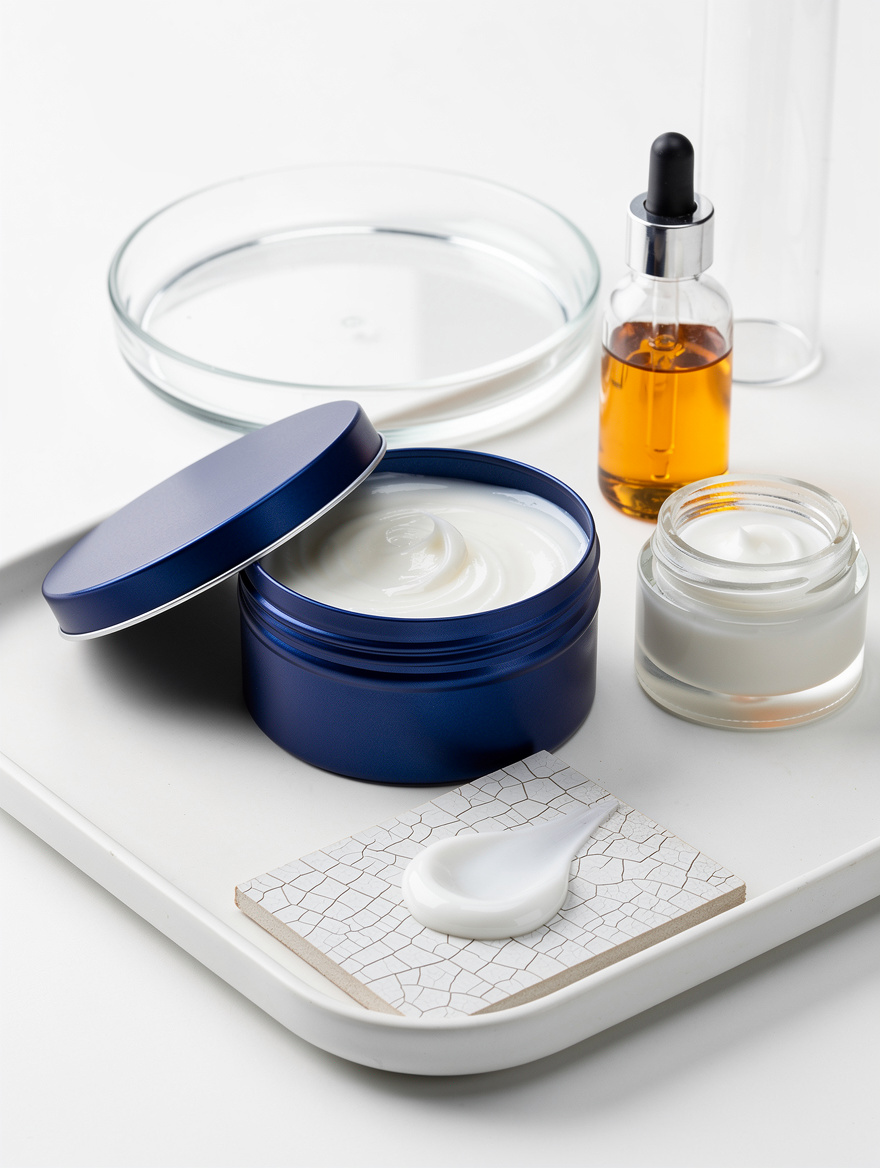
Put NIVEA Crème on within a few minutes of bathing or hand-washing, while skin is still a little damp, rather than waiting until it feels tight. Its glycerin helps hold water near the outer layer, while the heavier ingredients help keep that water from escaping as quickly.
A pea-sized amount may cover knuckles and cuticles, while heels and shins usually need more. Consistent use after the shower is more practical than rationing a luxury moisturizer for a “special” night.
Stop Treating It Like A Complete Face Routine
This formula is not a retinoid, sunscreen, exfoliant, peptide treatment, or prescription alternative. Its familiar richness can make skin look temporarily smoother because dry flakes lie flatter, but that is different from a long-term claim about lines or skin structure.
For daytime, a separate broad-spectrum SPF 30 or higher is the priority step. At night, a targeted product such as a typical 0.3% retinol can be considered if your skin tolerates it, with a dermatologist’s guidance when needed.
Keep It Off A Reactive Facial Barrier
The formula contains fragrance and lanolin alcohol, two ingredients that can be troublesome for some people with reactive, eczema-prone, rosacea-prone, or allergy-prone facial skin. That does not mean everyone will react, but a product that once felt fine can become less comfortable when the barrier is stressed.
For a dry, sensitive face, I would usually choose a fragrance-free option such as CeraVe Moisturizing Cream, often around $16, or a simple petrolatum ointment on isolated dry spots. Patch testing a new product on a small area first is a sensible low-drama precaution.
Do Not Assume Rich Means Acne-Friendly
A heavy, water-in-oil-style cream can feel suffocating on an acne-prone or easily congested face, particularly around the chin, nose, and jawline. Lanolin alcohol and the dense occlusive base are not automatically wrong, but they are a poor gamble if your skin regularly develops clogged pores.
Reserve the tin for body areas if your face gets bumps after rich creams, and use a lighter fragrance-free facial moisturizer instead. A cosmetic chemist would call this a formula-fit issue, not a verdict on whether the tin is “good” or “bad.”
Pair It With Better Barrier Support When Needed
A basic occlusive is excellent at sealing in moisture, but chronic dryness sometimes benefits from formulas with more than a protective film. Products with ceramides, glycerin, or natural moisturizing-factor ingredients can offer broader barrier-focused support, especially when your face stings after cleansing.
La Roche-Posay Lipikar AP+M Triple Repair Moisturizing Cream, typically around $20, is the kind of fragrance-free body-and-face alternative worth considering when comfort matters more than a nostalgic texture. Anything that bleeds, changes shape, or does not heal deserves a dermatologist’s evaluation rather than another layer of cream.
Start with the simplest test: use the blue tin on damp hands, shins, or heels for a week, then judge comfort rather than hype. Keep your face routine fragrance-free and targeted if sensitivity, breakouts, or persistent irritation are part of the picture.