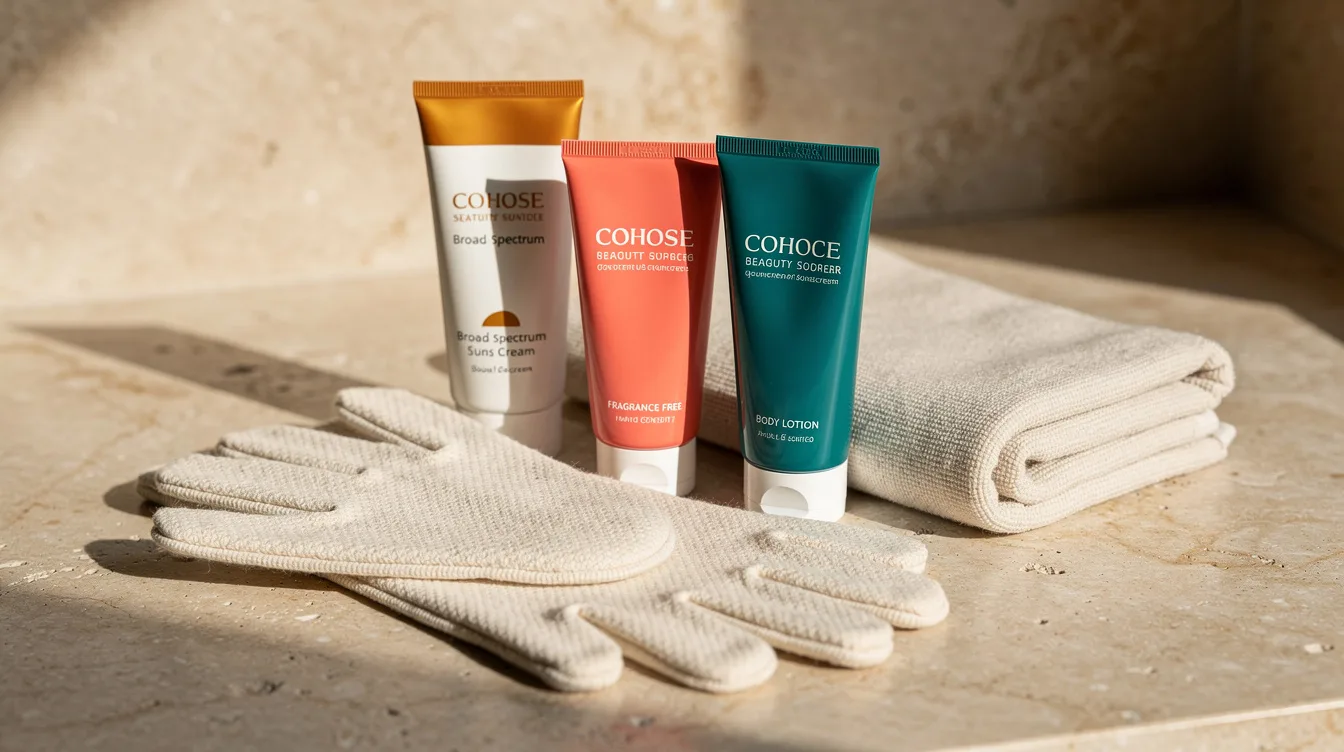
The mirror can be rude after a sink-side scrub: your face looks comfortable, while the backs of your hands suddenly look papery and uneven. A routine built around SPF 30, barrier cream, and patient nighttime care is more useful than another heavily scented lotion.
One option, 0.25% encapsulated retinol, is a sensible example of why hands need a gradual plan rather than an aggressive overhaul. Topicals can support smoother-looking texture and more even-looking tone, but they cannot replace lost volume or erase prominent veins and tendons.
What you will find inside
- Put Sunscreen Back on After Washing
- Start Retinoids With Less Frequency
- Choose Repair Ingredients Over Fragrance
- Seal Night Cream Into Damp Hands
- Use Exfoliating Acids on Separate Nights
- Keep Expectations Focused on Skin Quality
Put Sunscreen Back on After Washing
Use a generous layer of broad-spectrum SPF 30+ over the backs of your hands, fingers, and around the nails every morning. Daily driving, gardening, and window-side light all add exposure, and sunscreen is the step that helps limit new visible pigment and sun-related texture changes.
Reapply after handwashing when you will be outdoors, and at least every two hours during extended time outside. A sunscreen such as CeraVe Hydrating Mineral Sunscreen SPF 50 can work here if its feel suits you, but the best choice is the one you’ll actually reapply.
Start Retinoids With Less Frequency
Prescription tretinoin 0.05% has stronger evidence for photoaging than over-the-counter retinol, including research on sun-exposed forearm skin. It can also irritate thin, dry hand skin, so a dermatologist should guide its use, especially if you already have eczema, fissures, or a reactive barrier.
For an OTC route, Nécessaire The Hand Retinol contains 0.25% encapsulated retinol and is typically about $38. Because it also contains glycolic and mandelic acids, begin only two nights weekly on completely dry skin and stop escalating if persistent burning, redness, or peeling shows up.
Choose Repair Ingredients Over Fragrance
Hand cream earns its keep by reducing scaling, which can make fine lines catch less light and look less pronounced. Look for urea around 5% to 10%, glycerin, ceramides, dimethicone, or petrolatum, and skip fragrance when your hands sting after washing.
A cream with ceramides, such as CeraVe Therapeutic Hand Cream, is a practical daytime layer after each wash. It won’t restore underlying fat or change raised veins, but consistent barrier support can make dry hands look noticeably more comfortable and polished.

Seal Night Cream Into Damp Hands
After a non-retinoid night, apply hand cream, then smooth on a thin layer of petrolatum before bed. This simple seal helps reduce overnight water loss, which matters when lower estrogen has left the skin barrier less resilient.
For very dry hands, pull on soft cotton gloves after the final layer. Keep the routine deliberately boring: avoid putting retinoids or exfoliating acids on cracked skin, inflamed cuticles, or areas that are actively stinging.
Use Exfoliating Acids on Separate Nights
Rough, dull-looking hands may benefit from a cream with lactic acid or lower-strength urea on nights you are not using a retinoid. These ingredients can help loosen rough surface cells, but piling them onto a retinoid routine is a fast route to irritation.
Apply the exfoliating cream only where texture is rough, then follow with a plain moisturizer if needed. Treat tingling as feedback rather than proof that a product is working, and reduce frequency before your barrier gets visibly angry.
Keep Expectations Focused on Skin Quality
Topical care can support dryness, fine lines, rough texture, and uneven-looking pigment, while retinol and sunscreen work gradually. Pronounced brown spots, volume loss, and visible tendons usually respond more reliably to in-office options discussed with a board-certified dermatologist.
Have any spot that bleeds, changes shape, or does not heal checked rather than covering it with hand cream or sunscreen. A skincare routine belongs alongside medical care when needed, never in place of it.
Start with one dependable move: keep a fragrance-free hand cream by the sink, then apply SPF 30+ to the backs of your hands before you leave home. Add nighttime retinoid only after that daytime habit feels automatic.