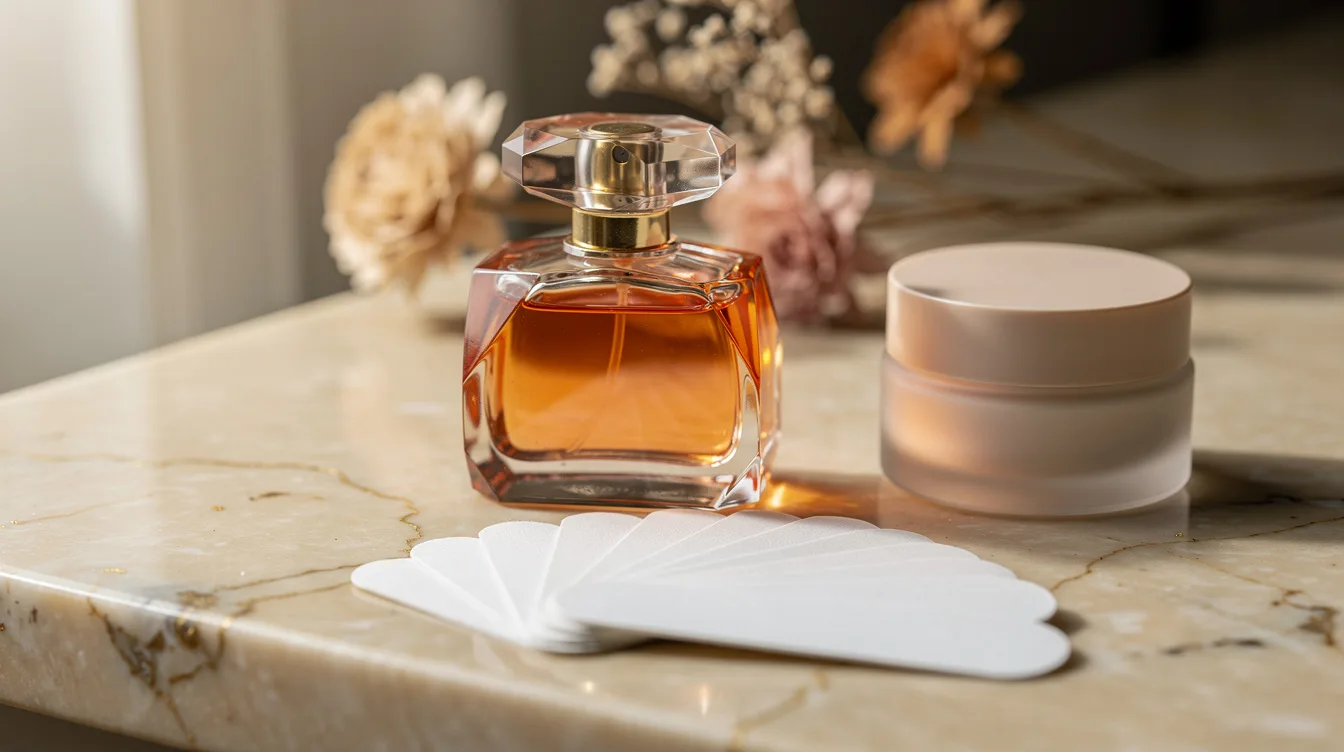
The fragrance counter can turn into a sting test when a scent that once felt easy suddenly burns on the wrist. With mature skin’s lower oil production and a slower-recovering barrier, a $95 bottle is worth testing with more care than a quick spray-and-rub.
Perfume does not literally pull moisture from skin like a harsh cleanser, but alcohol-heavy formulas and fragrance materials can irritate a compromised barrier. Our view: enjoy the scent, while making bare-skin exposure the smallest part of the experiment.
What you will find inside
- Start With a Blotter, Then Give It Time
- Limit Bare-Skin Testing to One Light Spray
- Moisturize Before You Test
- Move Your Favorite Scent to Fabric or Hair
- Skip Friction and High-Reactivity Moments
- Treat a Reaction as Useful Information
Start With a Blotter, Then Give It Time
Spray perfume blotters once, write the fragrance name and time on each strip, then smell them right away, after 15 to 30 minutes, and again two to four hours later. That simple pause reveals the opening, heart, and dry-down without asking your skin to absorb anything.
Bring home no more than a few labeled strips if the store allows it. A scent that seems perfect during the first 30 seconds can become powdery, sharp, or overly sweet hours later, so the blotter is a genuinely useful filter, not a lesser version of testing.
Limit Bare-Skin Testing to One Light Spray
If a blotter still appeals, use one light spray of the fragrance on the outer forearm, not the inner wrist. The outer forearm is a more practical trial spot because it is less delicate and easier to watch for a reaction.
Test only one scent on skin during a store visit. Layering several perfumes makes it impossible to know which formula caused a persistent sting, itch, red patch, or dry scaling, and it makes choosing a scent needlessly confusing.
Moisturize Before You Test
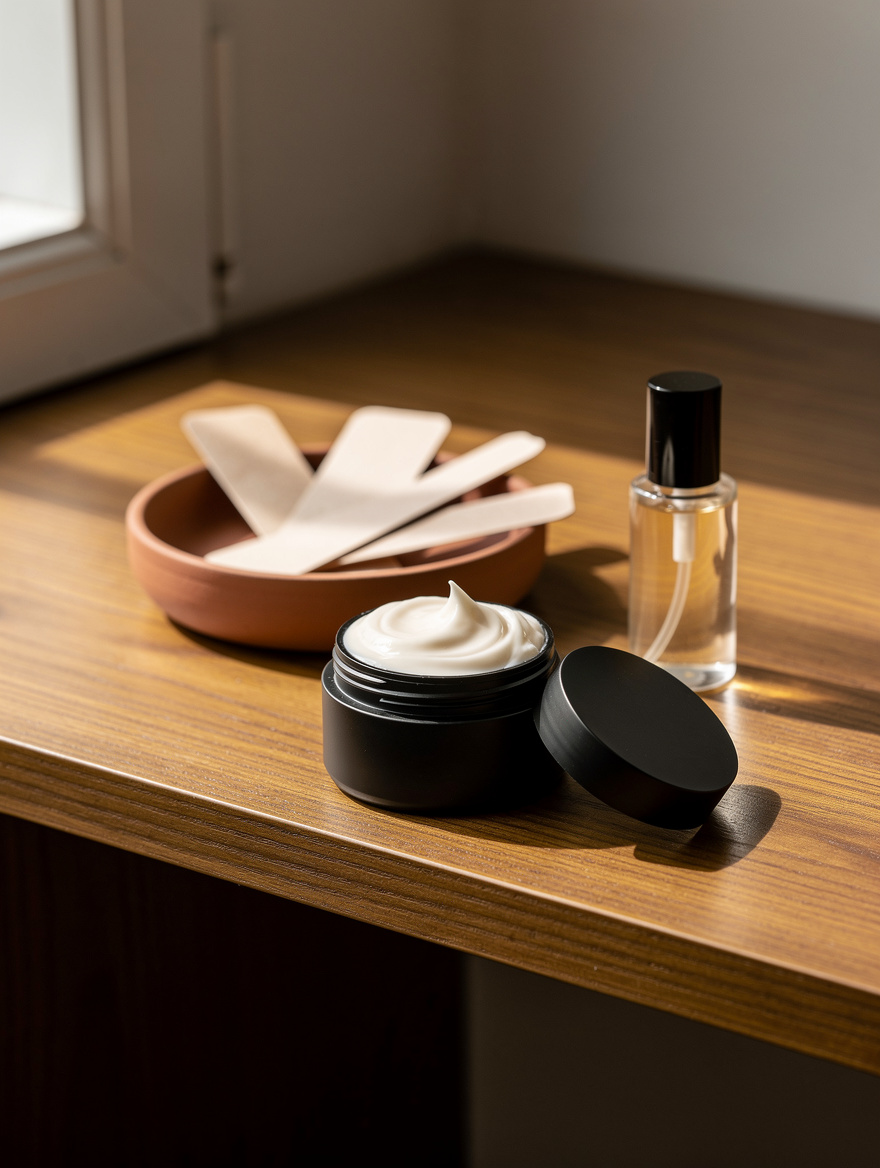
Apply a plain, fragrance-free moisturizer and let it absorb fully before a skin trial. A familiar option is CeraVe Moisturizing Cream, typically around $16 depending on size and retailer, because it gives dry skin a cushion without adding another perfume to the equation.
Wait until the cream no longer feels wet or tacky, then spray lightly over it. This does not prevent an allergy, but it may make an alcohol-based fragrance more comfortable on skin that feels dry or easily irritated.
Move Your Favorite Scent to Fabric or Hair
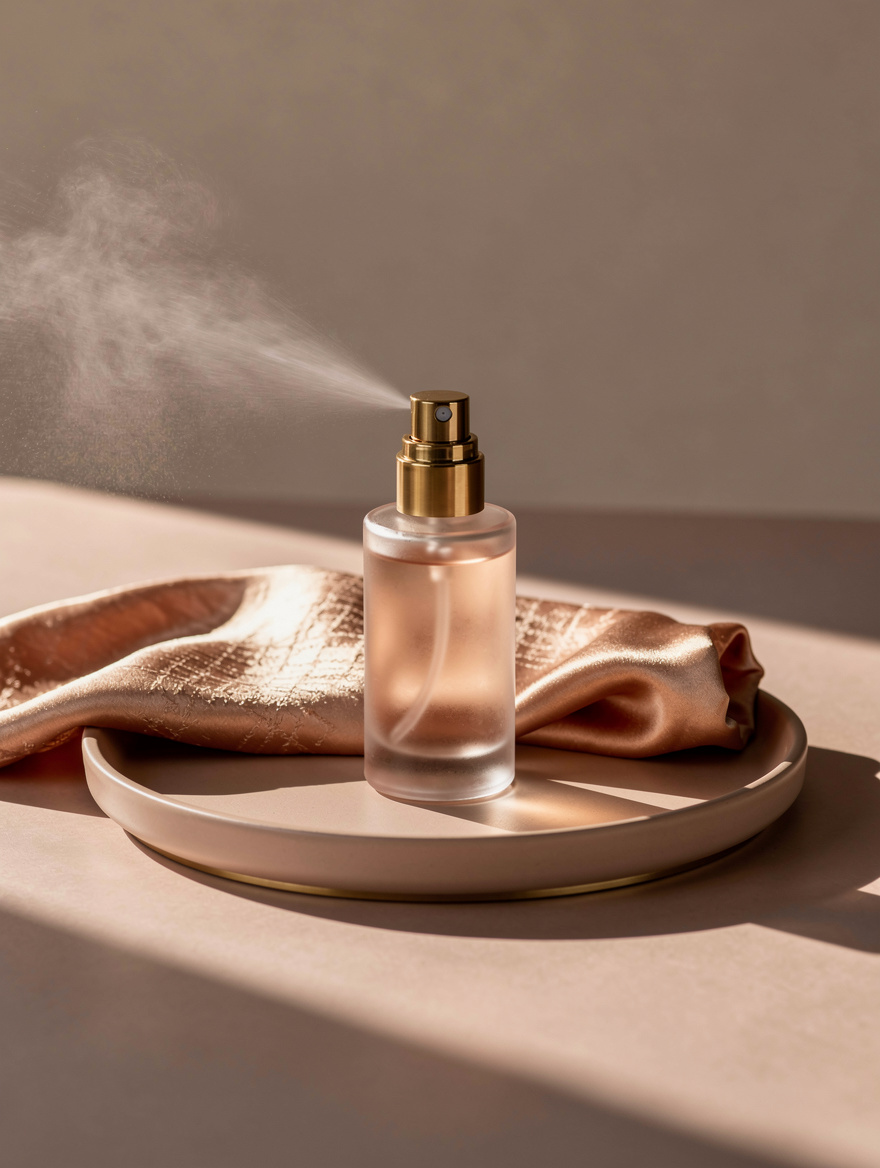
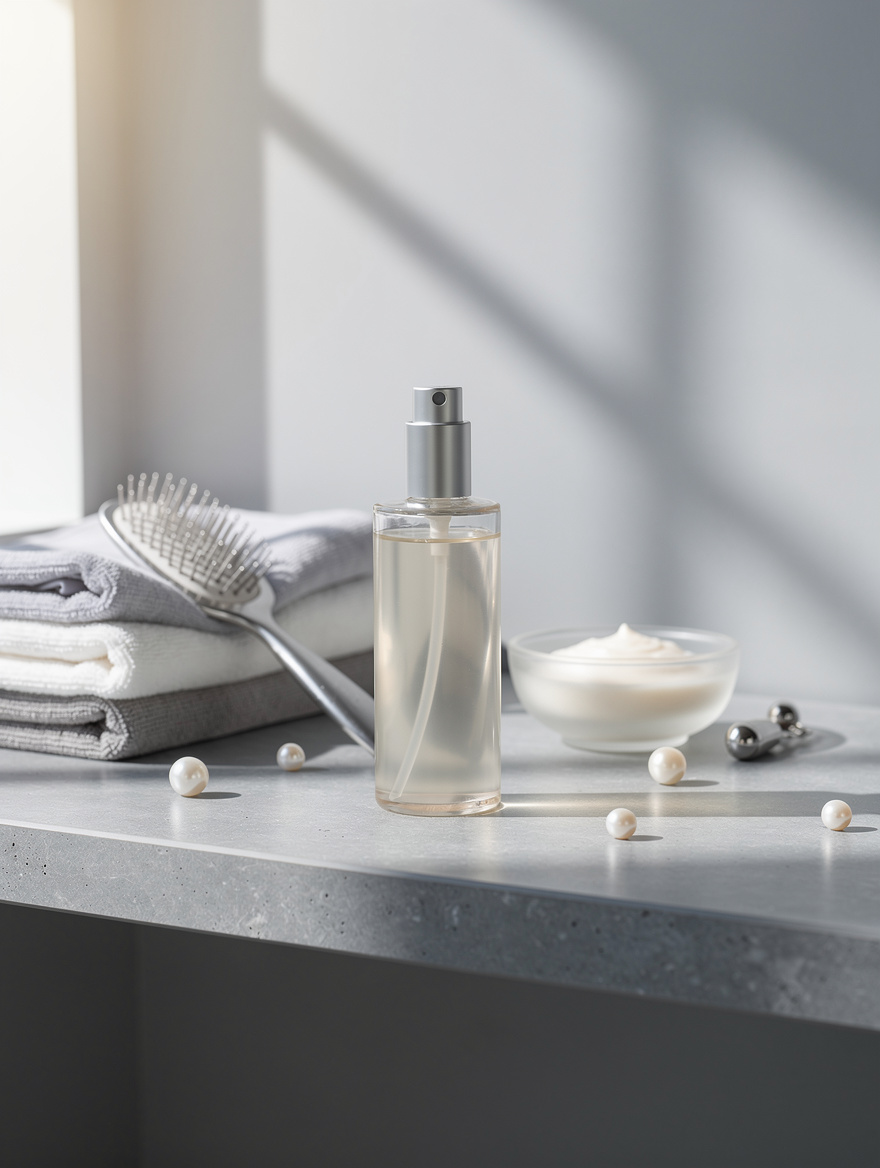
Once you know you like a perfume’s smell, indirect wear is often the lowest-dryness approach: use a small amount on clothing rather than repeatedly on bare skin. Spray from a little distance onto a scarf, jacket lining, or dress fabric first, and check an inconspicuous area because fragrance can stain delicate materials.
A light mist through the lengths of dry hair can also keep scent away from the face and neck folds, although alcohol can make already-dry hair feel rough. For frequent wear, a hair perfume or fragrance mist formulated for hair may feel more sensible than repeatedly spraying regular eau de parfum.
Skip Friction and High-Reactivity Moments
Do not rub wrists together after spraying. Friction can aggravate reactive skin and muddle the way a fragrance develops, so let the scent settle on its own.
Save testing for a calm-skin day, not after shaving, exfoliating, a hot shower, sunburn, a retinoid night, or an eczema flare. Avoid the face, neck folds, broken skin, and freshly shaved areas, where alcohol and fragrance materials are more likely to sting.
Treat a Reaction as Useful Information
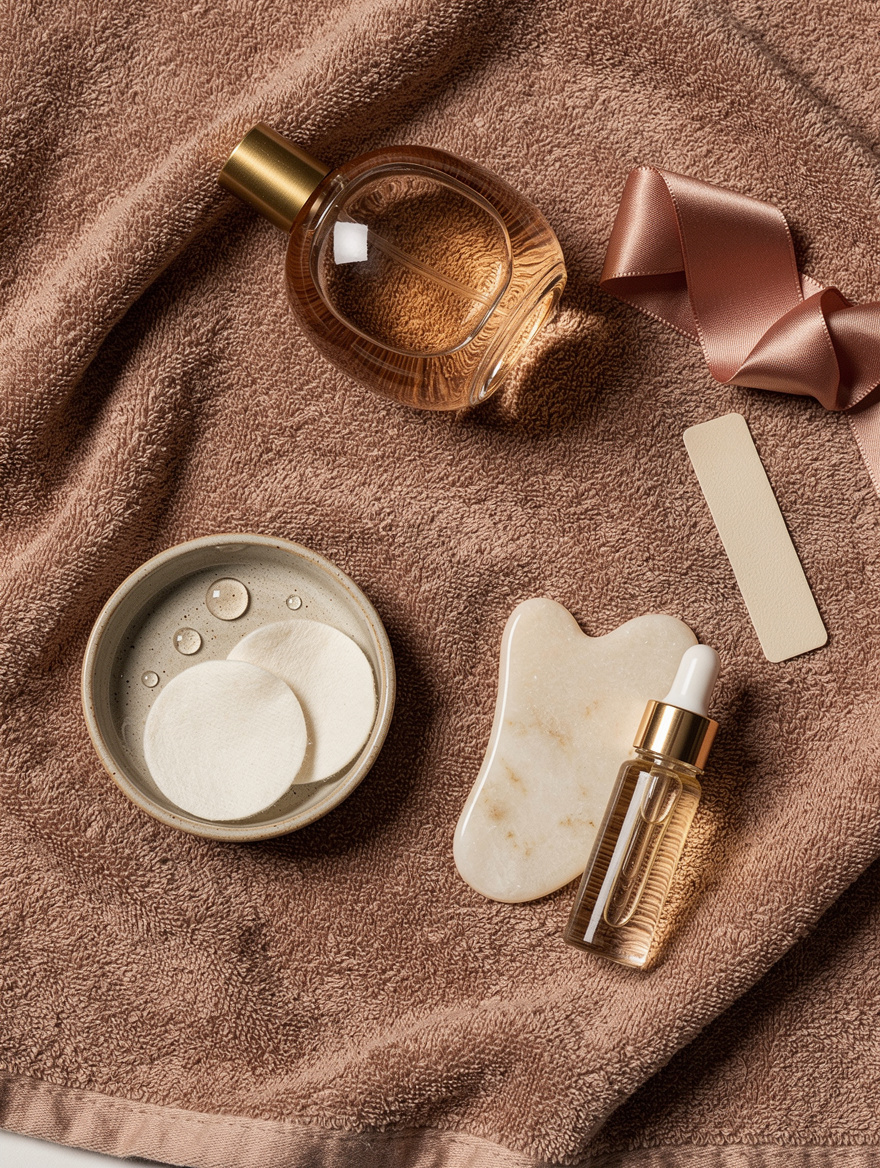
Fragrance-related allergens are common findings in people selected for dermatology patch testing, especially at older ages, but those clinic figures do not predict every woman’s risk. Redness, burning, itching, bumps, or scaly patches after perfume can reflect irritation or delayed allergic contact dermatitis, and repeated exposure to leave-on scented products is the bigger concern.
Stop using the fragrance at the first persistent symptom, and keep your cleanser, body lotion, face cream, sunscreen, and deodorant fragrance-free while the skin settles. An online “skin test” cannot diagnose allergy: a dermatologist can use formal patch testing, often including Fragrance Mix we, Fragrance Mix II, and balsam of Peru, when reactions keep recurring.
Begin with one labeled blotter and wait through its dry-down before putting anything on skin. See a dermatologist for a spot that bleeds, changes shape, or does not heal, and for a rash that persists after you stop the product.