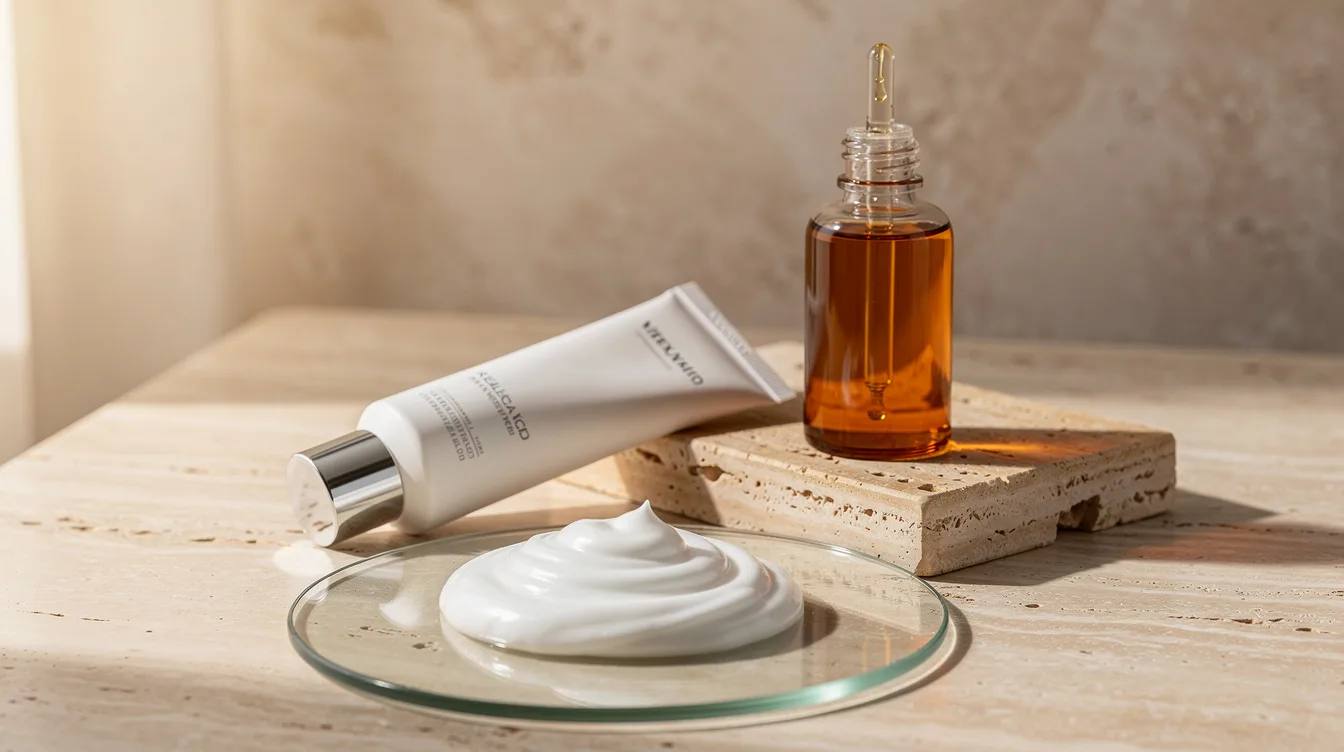
The frustrating part is when a familiar moisturizer suddenly stings, yet the red bumps keep arriving anyway. For papulopustular rosacea, the acne-like kind with inflammatory bumps and pustules, a typical 15% azelaic acid prescription is one of the better-supported topical options.
Skin after menopause often has less oil and a thinner, drier-feeling barrier, so the useful question is not whether you are “too old” for azelaic acid. It is whether your current rosacea features and tolerance make it a sensible fit.
What you will find inside
- Match It to Bumps, Not Every Kind of Redness
- Choose the Rosacea-Tested Strength First
- Start at a Pace Your Barrier Can Handle
- Give It a Fair 8 to 12 Weeks
- Pause the Other Irritants While You Test It
- Keep Azelaic Acid Away From Eye-Symptom Guesswork
Match It to Bumps, Not Every Kind of Redness
Azelaic acid is most compelling when redness comes with papules or pustules, the small inflamed bumps that can resemble acne. Dermatologists commonly use prescription Finacea 15% gel or foam for mild-to-moderate inflammatory rosacea, applied across the affected facial area rather than dabbed only on individual spots.
It may also help some redness that travels with those breakouts, but it is not a dependable answer for flushing alone or visible facial vessels. Persistent background redness, frequent heat-triggered flushing, and prominent vessels deserve a dermatologist’s tailored plan, which may include trigger management or other treatments.
That distinction saves money and disappointment. A $30-ish over-the-counter serum can be reasonable skincare, but it should not be expected to do the job of a rosacea treatment chosen for the wrong symptom.
Choose the Rosacea-Tested Strength First
For rosacea, 15% azelaic acid in a prescription gel or foam is the U.S. Standard with rosacea-specific labeling and clinical evidence. The 20% prescription cream is mainly approved for acne, and a larger number on the tube does not automatically make it the smarter choice for reactive skin.
Vehicle matters as much as the percentage when skin is dry or easily irritated. A foam, gel, or cream can feel very different on a compromised barrier, so a clinician can help select the format that you are most likely to keep using.
Most nonprescription options use 10% azelaic acid. Products such as The Ordinary Azelaic Acid Suspension 10% can be accessible ways to test tolerance, but they are not interchangeable with a prescribed 15% rosacea medication.
Start at a Pace Your Barrier Can Handle
Label directions for prescription azelaic acid commonly call for twice-daily use after cleansing, but mature, dry skin often benefits from a slower runway. Ask the prescriber whether once-daily or every-other-day application is appropriate before building up.
Use a thin layer on clean, dry skin, then follow with a plain barrier-supporting moisturizer such as CeraVe PM Facial Moisturizing Lotion. Its typical price is around $16, and this is the kind of unglamorous supporting step we would prioritize over adding a second active serum.
Mild tingling can occur at the start, but ongoing burning, marked swelling, hives, or worsening irritation merits a call to the prescribing clinician. Do not push through a reaction in the name of consistency.
Give It a Fair 8 to 12 Weeks
Rosacea products rarely earn a verdict after three nights. Assess azelaic acid over roughly 8 to 12 weeks, using the same basic routine and noting whether inflammatory bumps are becoming less frequent or less intense.
This is maintenance-minded care, not a one-and-done correction. Rosacea can return when treatment and trigger management stop, so the best routine is usually the one that remains comfortable enough to repeat.
Keep the rest of the lineup boring while you evaluate it: gentle cleanser, moisturizer, and broad-spectrum sunscreen. EltaMD UV Clear Broad-Spectrum SPF 46 is a commonly chosen mineral-chemical hybrid option for sensitive-looking skin, although any sunscreen you can wear consistently is the better pick.
Pause the Other Irritants While You Test It
Adding azelaic acid on top of a strong scrub, frequent peel pads, or a newly intensified retinoid is a fast route to confusion. Lower estrogen can leave the barrier less forgiving, and irritation itself can make rosacea look louder.
For the first few weeks, keep exfoliating acids and abrasive cleansing tools out of the same experiment. If you already use a retinoid, a dermatologist can help decide whether to alternate nights, reduce frequency, or pause it while azelaic acid settles in.
Fragrance, very hot water, and alcohol-heavy toners are also common comfort problems for reactive faces. A creamy cleanser such as La Roche-Posay Toleriane Hydrating Gentle Cleanser is a sensible example of the low-drama approach, not a requirement to buy another product.
Keep Azelaic Acid Away From Eye-Symptom Guesswork
Facial azelaic acid is not a treatment for gritty eyes, red eyelids, light sensitivity, or persistent eye dryness. Those symptoms can occur with ocular rosacea and warrant an eye-care or dermatology evaluation rather than experimentation near the lash line.
Likewise, a spot that bleeds, changes shape, repeatedly crusts, or does not heal needs a dermatologist’s assessment. Rosacea can coexist with other skin concerns, and a new or stubborn lesion should not be assumed to be another flare.
Prescription choices remain worth discussing if 10% products do little or if bumps are widespread. A clinician may recommend azelaic acid alone or pair it with other appropriate rosacea treatments based on the features actually present.
Start by identifying whether bumps and pustules are part of the picture, then ask a dermatologist about 15% azelaic acid before building a crowded routine. Add one bland moisturizer and give the plan roughly twelve weeks of steady, comfortable use.