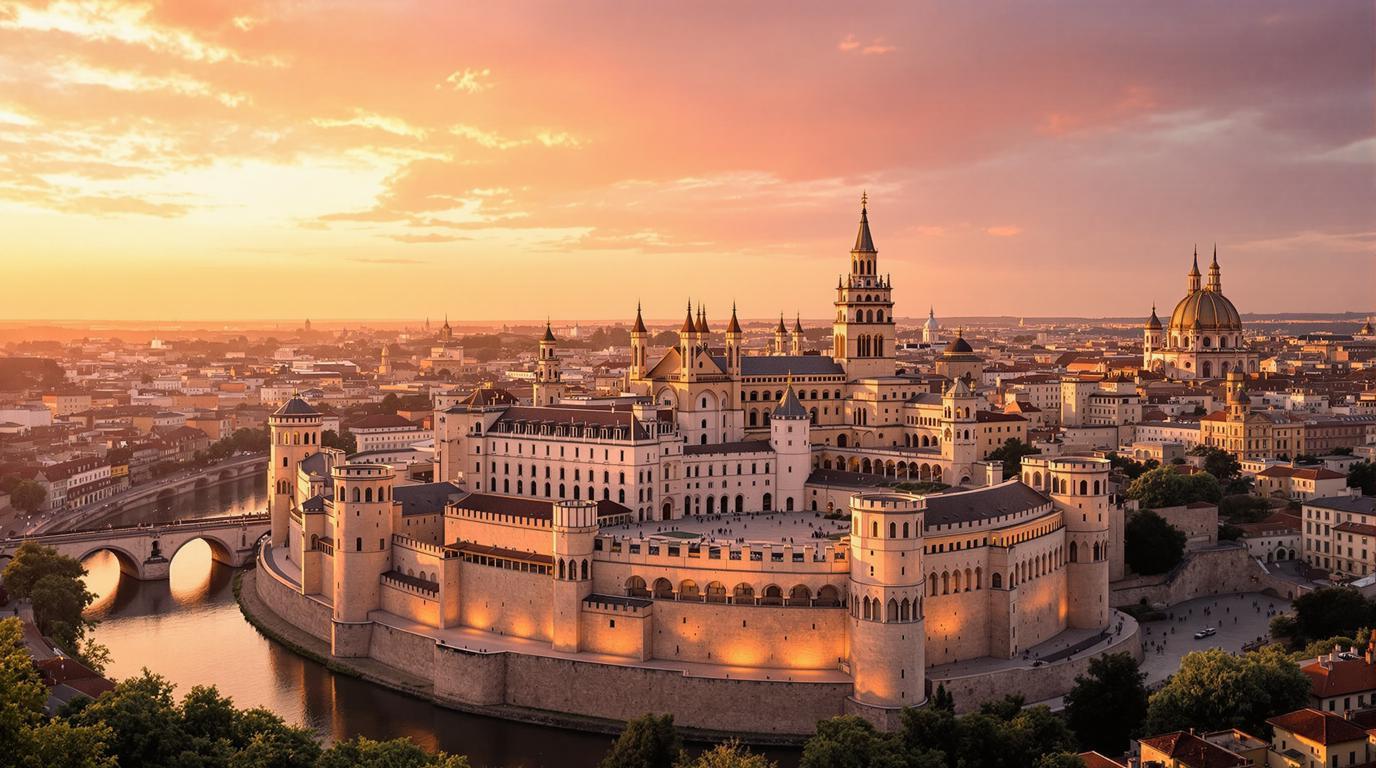
The Palace of the Popes in Avignon stands as one of history’s most magnificent architectural achievements, a colossal fortress-residence that transformed a sleepy Provençal town into the epicenter of Christianity during the 14th century. This UNESCO World Heritage site encompasses an astonishing 15,000 square meters—equivalent to four Gothic cathedrals—making it the largest Gothic palace ever built.
The papal exodus that changed Europe
In 1309, Pope Clement V fled the dangerous politics of Rome, establishing the papacy in Avignon. What followed was a 68-year period known as the “Avignon Papacy,” when seven successive popes ruled Christendom from this French stronghold instead of the Vatican.
“The Palais des Papes represents not just architectural brilliance, but a pivotal moment when the center of Christianity shifted from Italy to France, forever changing European politics,” explains historian Marie Durand, curator at the palace museum.
A fortress fit for God’s representative
Built in less than 20 years between 1335 and 1352, the palace’s imposing walls reach 17 feet thick in places. This wasn’t just spiritual headquarters—it was a military stronghold designed to protect the pope during turbulent times. The blend of defensive architecture with delicate Gothic beauty creates a striking contrast that still impresses visitors today.
Marvel at rooms where history was made
The Grand Tinel, where popes hosted lavish banquets for up to 200 guests, features a ceiling soaring 33 feet high. The Pope’s private chambers contain frescoes by Italian master Matteo Giovannetti depicting hunting and fishing scenes so lifelike they seem to move in the flickering light. These 700-year-old masterpieces survived centuries of neglect through what locals call “un miracle provençal.”
Experience medieval splendor through modern technology
Today’s visitors explore with “Histopads”—digital tablets that use augmented reality to reveal how these now-empty halls looked in their 14th-century glory. The technology transforms bare stone chambers into richly decorated rooms filled with furniture, tapestries, and the bustling activity of medieval papal court.
“We wanted to create a time machine,” says Philippe Verger, director of tourism. “When visitors see these spaces as they once were, they understand the true magnificence of what happened here.”
A legacy beyond religion
The palace’s significance extends far beyond Catholicism. Much like Hungary’s Parliament building, it represents an architectural achievement that transcends its original purpose, becoming a symbol of human creativity and ambition.
The immensity of its construction rivals engineering marvels like the Panama Canal, though built six centuries earlier without modern equipment.
Surrounding treasures worth exploring
After touring the palace, stroll to nearby Pont Saint-Bénezet (the famous “Pont d’Avignon” of the children’s song) and climb Rocher des Doms garden for breathtaking views over the Rhône Valley. The experience rivals the panoramic vistas from Rome’s most stunning viewpoints.
While not offering the beaches of Europe’s hidden island getaways, Avignon compensates with cultural richness and architectural splendor that continues to captivate visitors.
A vibrant modern city with medieval roots
The palace anchors a still-thriving city where narrow medieval streets open suddenly onto sun-drenched plazas filled with café tables. Each July, the renowned Avignon Festival transforms the palace courtyard into one of the world’s most spectacular theater venues.
“Our city lives in the shadow of this giant,” says local chef Jean-Pierre Ravel. “But it’s a friendly giant that brings the world to our doorstep.”
For those passionate about experiencing Europe’s most significant historical sites, the Palais des Papes ranks among the absolute must-see destinations. Find more inspiration for your next European adventure in our travel section.