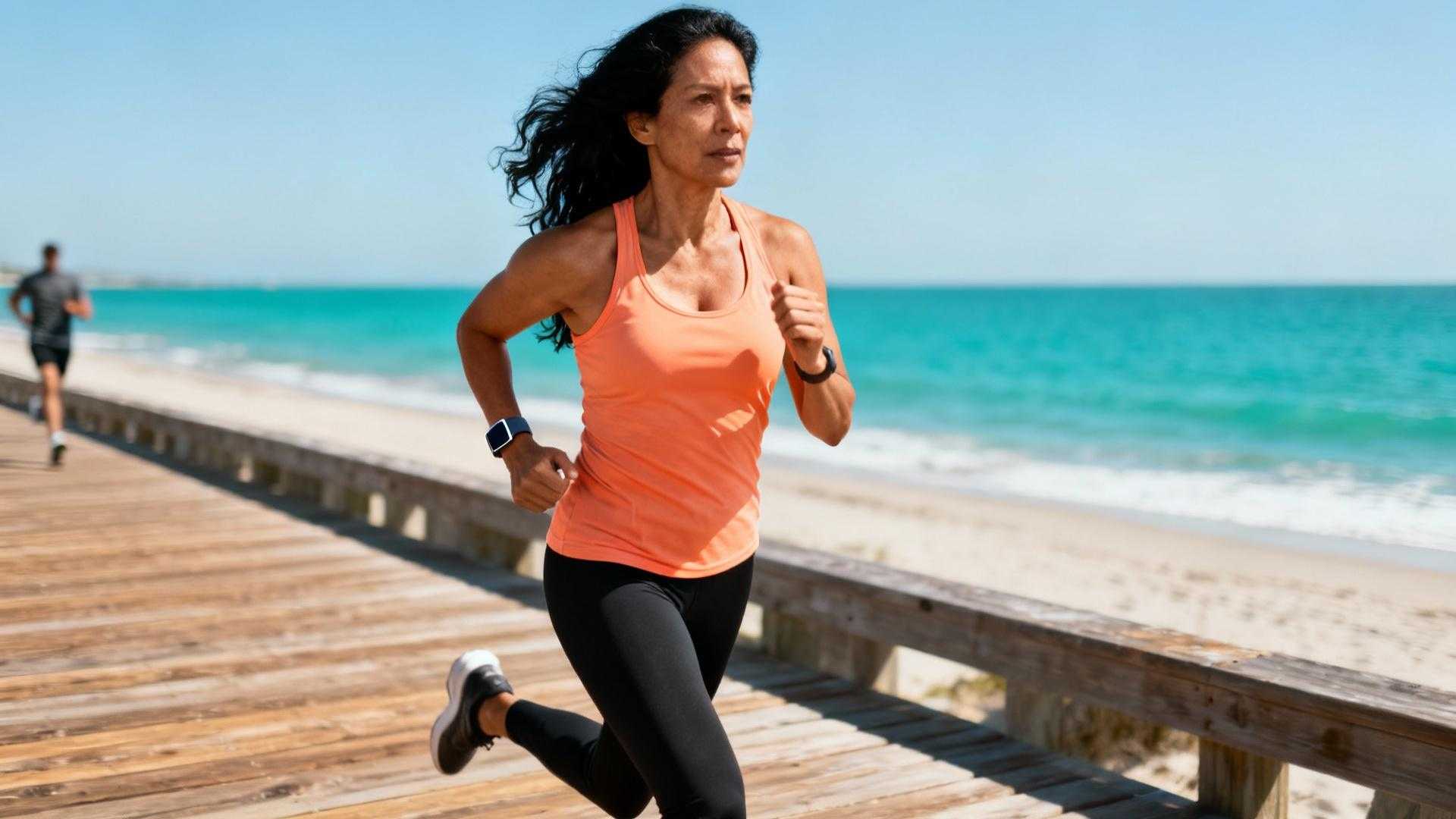
You’ve tracked 10,000 steps daily for months. Your fitness app celebrates with cheerful badges. Yet your scale shows the same stubborn numbers. Sound familiar? Recent studies from UCLA and JAMA reveal a counterintuitive truth: 10,000 steps won’t guarantee weight loss without the right intensity. The magic lies not in hitting arbitrary numbers, but in making every step count strategically.
As certified trainer Mark Thompson explains, “Most people walk at a pace where they could comfortably sing. That’s not creating the metabolic demand needed for fat loss.”
The 10,000-step myth: where the number actually came from
The famous 10,000-step target originated from a 1964 Japanese marketing campaign for a pedometer called “Manpo-kei.” No scientific research validated this number for weight loss. It was simply catchy advertising that became global health gospel.
Dr. David Berrigan from the CDC confirms: “Benefits start at 5,000 steps, but weight loss depends on intensity and lifestyle, not arbitrary thresholds.” Recent Lancet Public Health studies show 7,000-8,000 steps provide most health benefits, with diminishing returns beyond that point.
The real issue isn’t the number itself. It’s that most people achieve their 10,000 steps through low-intensity movement that barely elevates heart rate. Think grocery shopping, casual strolls, or slow neighborhood walks at 2.5 mph.
Why intensity beats volume: the science of fat-burning walking
Leisurely 10,000 steps at 2.5 mph represent only 2.5-3.0 METs of intensity. That’s below the threshold for “moderate intensity” exercise. Your body burns calories but doesn’t trigger metabolic adaptations needed for significant fat loss.
How slow steps fail to trigger metabolic change
Dr. Michael Joyner from Mayo Clinic explains: “Elevated heart rate during walking stimulates metabolism—a key element for weight loss.” Low-intensity walking primarily burns circulating glucose, not stored fat. You need to reach 50-70% of maximum heart rate to activate fat oxidation pathways.
Walking at 3.5-4.0 mph creates a metabolic shift. Your body taps into fat stores and triggers EPOC (excess post-exercise oxygen consumption), extending calorie burn for hours after your walk.
The 10-minute brisk interval protocol
UCLA research published this year shows remarkable results: 10,000 steps with 3,500 at moderate intensity produced 10% weight loss over 18 months. The key? Those moderate steps occurred in continuous 10-minute segments, not scattered throughout the day.
These intervals activate hormonal responses—adrenaline and growth hormone—that mobilize fat stores effectively. Three daily 10-minute brisk walks outperform one hour of leisurely strolling for fat loss.
The optimal walking formula for real weight loss
Dr. Emily Perry from University of Sydney found that 7,500 steps suffice to improve longevity and reduce chronic disease. Combined with intensity research, this reveals an actionable formula: 7,000-8,000 total steps, with 3,000-3,500 at brisk pace.
Quality over quantity: the 7,500-step sweet spot
This approach is more achievable AND more effective than 10,000 slow steps. Target 90-110 steps per minute during your brisk intervals. You should feel slightly breathless but still able to speak in short sentences.
Use the talk test: if you can sing, you’re too slow. If you can’t speak at all, you’re too fast. That sweet spot between conversation and silence is where metabolic magic happens.
The missing piece: moderate calorie awareness
Professor Jason Jakicic’s JAMA study reveals a crucial caveat: “Walking alone, even 10,000 steps, won’t create significant weight loss without moderate calorie reduction.” The math is simple: 10,000 leisurely steps burn about 400 calories, easily offset by one medium latte.
The solution combines strategic walking—7,500 intense steps—with a modest 200-300 calorie daily reduction. Skip the afternoon snack or choose water over soda. Small changes amplify your walking efforts dramatically.
Real results: what happens when you walk smarter, not longer
Jessica, 34, transformed her approach after months of frustrating 10,000-step plateaus. “I stopped obsessing over hitting the number and focused on feeling challenged during walks.” She lost 12 pounds in 4 months with 8,000 daily steps at moderate intensity.
Marc, 45, reduced his blood pressure by 15% in three months with 7,000 fast daily steps. “Quality over quantity changed everything. I actually spend less time walking but see better results.” His resting heart rate dropped from 78 to 65 beats per minute.
Marie, 29, noticed visible body composition changes in just six weeks with 10,000 steps—but 4,000 of them brisk. “The intense intervals made my body respond differently. I could see muscle definition I’d never had before.” Her sleep quality improved dramatically too.
Your questions about why 10,000 daily steps don’t guarantee weight loss answered
Can I lose weight walking only 7,000 steps if they’re intense?
Yes—Lancet studies confirm 7,000-8,000 steps with 40-50% at moderate intensity create greater metabolic impact than 10,000 leisurely steps. Pair with a 200-300 calorie reduction for measurable fat loss of 1-2 pounds weekly. The intensity triggers hormonal fat mobilization absent in low-effort walking.
How do I know if my walking pace is “moderate intensity”?
Use the talk test: you can speak sentences but singing feels difficult. Target 3.5-4.0 mph or 100-120 steps per minute. Heart rate should reach 50-70% of maximum (220 minus age, multiplied by 0.5-0.7). Fitness trackers label this “active minutes.”
Is the 10,000-step goal useless, or does it still have value?
It’s valuable for general health and preventing sedentary lifestyle—cardiovascular benefits, cognitive function, mood improvement. However, for weight loss specifically, it’s incomplete without intensity and dietary awareness. Think of 10,000 steps as a health baseline, not a weight-loss guarantee. Smarter goal: 7,500 total steps with 3,500 brisk plus mindful eating.
Picture tomorrow morning: not stressing over reaching 10,000 steps, but moving with purpose. Three brisk 10-minute walks that leave you energized, not exhausted. Your tracker shows 7,800 steps, but your body feels the difference. Science isn’t asking for more effort. Just smarter effort.