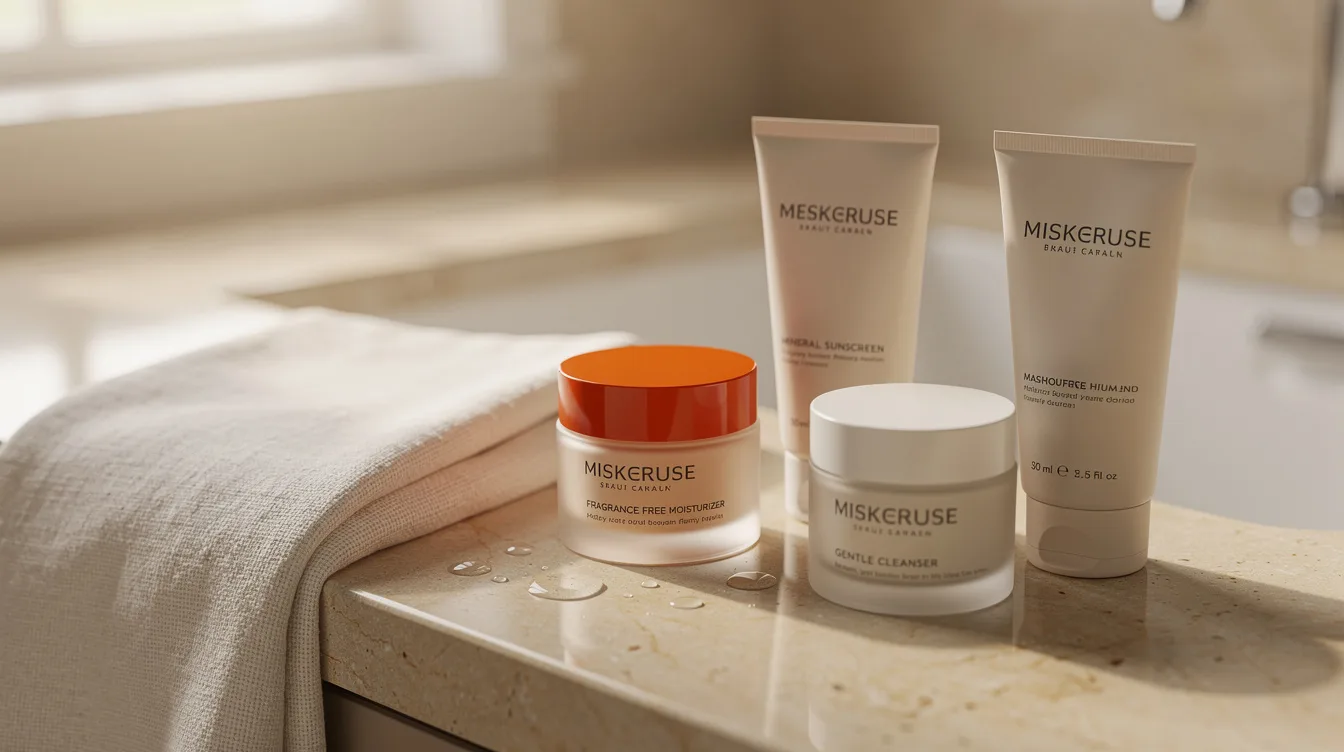
The moment a dependable serum starts stinging beside the nose, or foundation catches on the neck by lunchtime, it can feel as though every product suddenly changed. Often, the bigger shift is skin itself: around menopause, lower estrogen can leave the barrier drier, thinner, and quicker to react.
Research has estimated that collagen and skin thickness may decline by about 1% to 2% yearly after menopause, which helps explain why a formerly simple routine can begin to pill, flush, or feel tight.
What you will find inside
- Protect Thinner Skin Before Chasing Lines
- Trade Foaming Cleansers for Barrier Respect
- Seal In Water With a Real Cream
- Start Retinol at a Pace Skin Can Tolerate
- Treat Vitamin C as Optional, Not Mandatory
- Bring New Bruising, Acne, or Spots to a Professional
Protect Thinner Skin Before Chasing Lines
Daily broad-spectrum SPF 30 is the baseline dermatologists return to because ultraviolet exposure adds to visible thinning, uneven pigment, and loss of firmness. For long outdoor days, we’d choose an SPF 50 formula and apply it to the ears, neck, chest, and backs of hands, not only the face.
La Roche-Posay Anthelios Melt-In Milk Sunscreen SPF 60, typically around $25, is a practical option for exposed body skin when its texture suits you. Sunscreen is less glamorous than a treatment serum, but it earns the first spot in this routine.

Trade Foaming Cleansers for Barrier Respect
Lower oil production can make a once-loved squeaky-clean wash feel like a stripping treatment. Use a mild cleanser once at night, rinse in the morning when that feels sufficient, and skip grainy scrubs while skin is stinging or flaky.
CeraVe Hydrating Facial Cleanser, often about $15, pairs gentle cleansing agents with ceramides and is an excellent unexciting choice. Fragrance and frequent exfoliation are common reasons a routine that looked sophisticated starts feeling punishing.
Seal In Water With a Real Cream
Hyaluronic acid can add hydration, yet drier skin generally needs a cream over it to reduce water loss. Look for glycerin, ceramides, dimethicone, petrolatum, or squalane, then judge the formula by whether your skin remains comfortable several hours later.
CeraVe PM Facial Moisturizing Lotion, usually around $16, is a sensible lightweight option for the face, while Vaseline Original Healing Jelly can be dabbed over especially dry spots at night. We favor a plain, consistent moisturizer over rotating through several active-heavy products.
Start Retinol at a Pace Skin Can Tolerate
Retinoids are among the better-supported topical families for improving the appearance of fine lines and uneven tone over time, but irritation can be especially disruptive when the barrier is already dry. Begin a 0.1% retinol or a typical 0.3% retinol only two nights weekly, over or between layers of moisturizer if needed.
RoC Retinol Correxion Line Smoothing Night Serum Capsules, commonly around $30, offers a measured format, though the best retinoid is the one you can use calmly and consistently. Increase frequency only after your skin is comfortable, and pause during active burning, peeling, or a rash.
Treat Vitamin C as Optional, Not Mandatory
Morning antioxidant serums can support a sunscreen routine, and L-ascorbic acid 10% to 15% is a common evidence-based range for people who tolerate it. It is not a requirement, especially when your cheeks are flushed or your skin reacts to low-pH formulas.
Timeless Skin Care 10% Vitamin C + E Ferulic Acid Serum, typically around $27, is a reasonable gentler-strength starting point sold through major US retailers and Amazon. Apply it on calm skin, and choose moisturizer and sunscreen first if your budget or tolerance only allows a few steps.
Bring New Bruising, Acne, or Spots to a Professional
Thinner skin can bruise more easily, while a dry face may develop new chin or jawline breakouts as hormones shift. Persistent acne, worsening facial hair, scalp-hair thinning, rosacea-like flushing, or a routine that suddenly causes repeated irritation deserves a dermatology conversation, because targeted care may be more useful than another over-the-counter experiment.
Prescription tretinoin and prescription pigment or acne treatments remain options a dermatologist can discuss when appropriate, and over-the-counter products should never delay that care. Have any spot that bleeds, changes shape, or does not heal examined promptly.

Start with the least dramatic purchase: a fragrance-free moisturizer you’ll actually use and a broad-spectrum SPF 30 or higher every morning. Once skin stays calm for a few weeks, add one treatment step at a time.