In a recent menopause and hair survey, about 45% of participants reported a change in hair texture, not only shedding and thinning.
That’s the part almost nobody gets warned about. Hair that used to hold a blowout goes flat at the root and fuzzy at the ends, in the same week, with the same shampoo you’ve used for a decade.
Falling estrogen, a relative rise in androgen influence at susceptible follicles, and a drier scalp are doing most of the work, and the fixes are not the ones the aisle is selling you.
What you will find inside
- Separate Fiber Damage From Real Density Loss
- Stop Washing Like Your Scalp Still Makes Oil
- Cut the Heat Before You Cut the Length
- Give Minoxidil a Real Six Month Trial
- Ask for Bloodwork Before the Supplement Aisle
- Read a Sudden Shed as a Signal
Separate Fiber Damage From Real Density Loss
Before you spend a dollar, work out which problem you actually have.
Hair that snaps, frizzes, and feels like straw from the ears down is fiber damage: the cuticle is roughed up and the shaft is weathered.
A center part that keeps widening, with visibly thinner hair across the crown, is a density problem. Postmenopausal pattern loss usually looks like that, not like a receding hairline at the temples.
A rich conditioner can smooth a damaged cuticle in one wash, and it will do nothing at all for follicle miniaturization. Minoxidil works the other way around: it can support density over months, and it will never repair bleach damage.
Buying the wrong category is the single most expensive mistake I see women over 50 make with their hair.
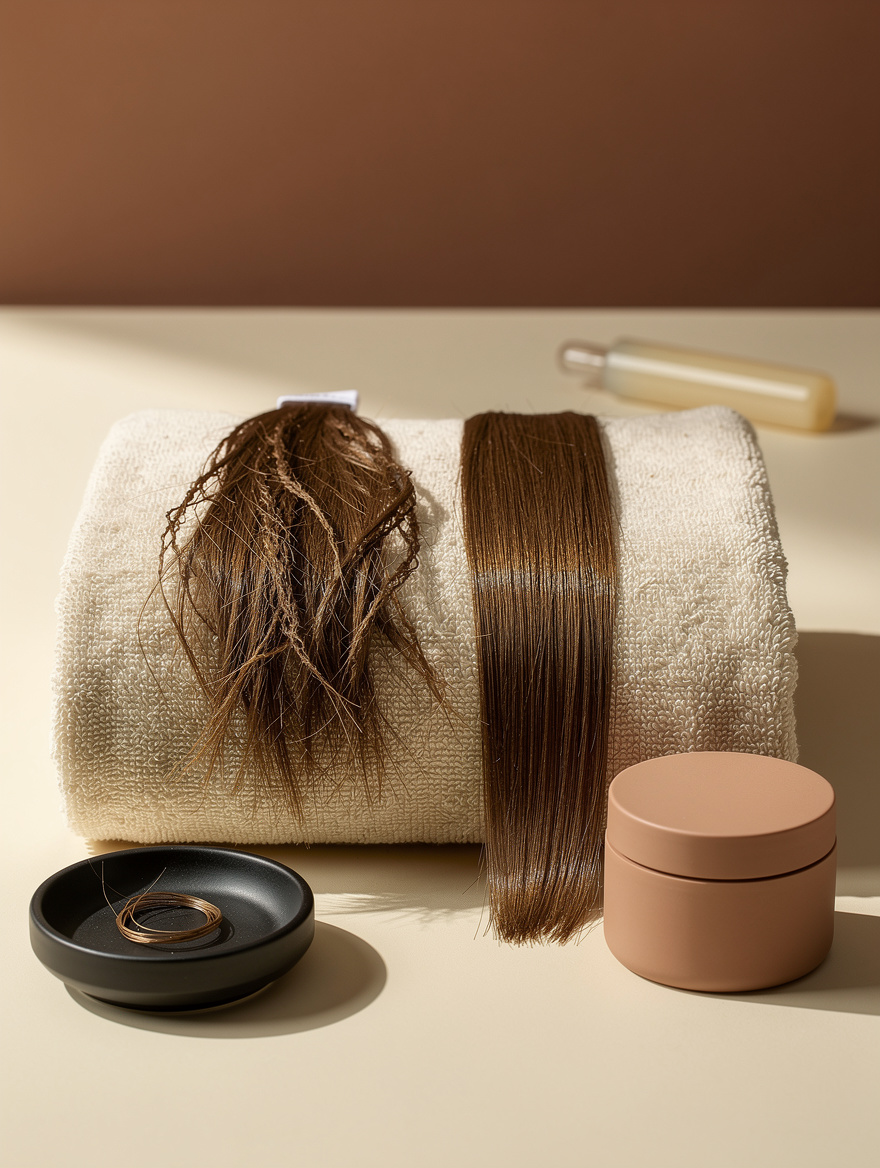
Stop Washing Like Your Scalp Still Makes Oil
Sebum production drops after menopause, and skin hydration shifts with it. A drier scalp shows up as itch, tightness, flaking, and midlengths that look dull no matter what you layer on.
Clarifying three times a week makes that worse. I’d wash two or three times a week with something genuinely mild and scrub with fingertips, never nails.
Vanicream Gentle Shampoo runs about $10 at Target and doesn’t pick a fight with a thinned barrier.
If the flaking is greasy and yellowish rather than dry and powdery, that’s often seborrheic dermatitis, and a ketoconazole 1% shampoo like Nizoral, roughly $17 at CVS, is the standard first move. Redness, tenderness, or persistent scale is a scalp condition, not just menopause.
Cut the Heat Before You Cut the Length
Lower estrogen can shorten the growth phase and reduce average shaft diameter. A finer fiber has less structural stiffness, so the flat iron setting that was fine at 40 does visibly more damage at 55.
Add color, bleach, relaxers, tight ponytails, and summer UV, and the harm stacks. It’s cumulative, which is exactly why your ends look years older than your roots.
Turn the heat down, style less often, and never put a hot tool on unprotected hair. Tresemme Thermal Creations Heat Tamer Spray is about $6 at Walmart and does the basic job well.
For coarse, frizzy ends, Olaplex No. 6 Bond Smoother at roughly $30 is one of the few leave-ins I think earns its price. A blunt trim every ten to twelve weeks does more for perceived thickness than any volumizing spray I’ve tested.
Give Minoxidil a Real Six Month Trial
The American Academy of Dermatology notes that menopause-related hair loss may be treated with minoxidil, laser treatment, or both, with the choice depending on the actual diagnosis.
Women’s Rogaine 5% Minoxidil Foam costs about $30 for a typical two-month supply at Walmart, or around $45 for four months.
The store brand is the same active drug. Equate Women’s Minoxidil 5% Foam is roughly $22 for two months, and I’d take the savings without a second thought.
It’s commonly used once daily on a dry scalp. Some people shed more in the first few weeks, which is expected, and results should be judged at six to twelve months, not six weeks.
Peptide serums like The Ordinary Multi-Peptide Serum for Hair Density, about $20 at Ulta, sit on much thinner evidence. Use one if you like it, but don’t let it replace the thing that actually has data.
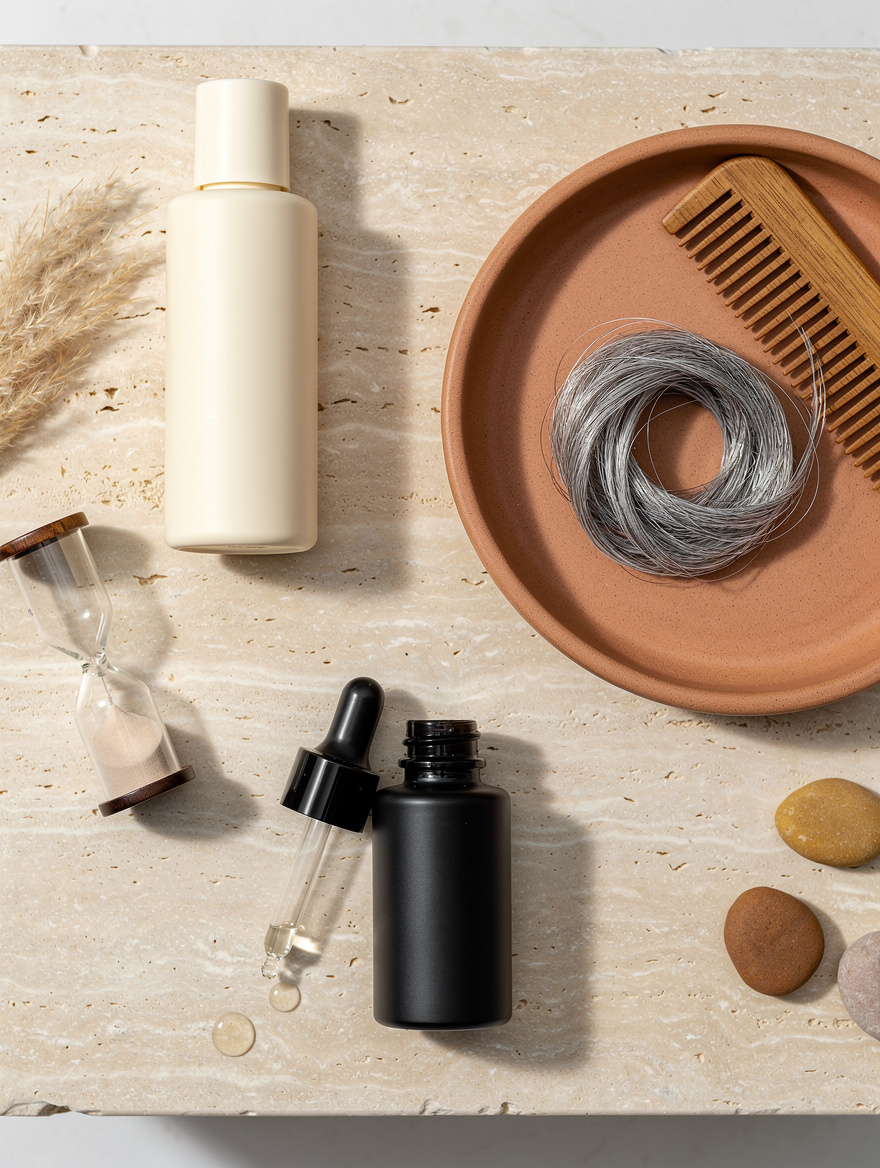
Ask for Bloodwork Before the Supplement Aisle
New, meaningful hair change deserves a workup, not a gummy.
A dermatologist typically examines the scalp with dermoscopy and, when your history supports it, orders a CBC, ferritin and iron studies, and TSH, plus targeted tests based on medications, diet, and the pattern of loss.
Low iron and thyroid disease both change how hair grows, and neither one responds to a hair vitamin. Rapid weight loss and restrictive eating show up in hair too, usually a couple of months later.
One practical warning worth repeating: high-dose biotin can interfere with certain lab assays, so tell whoever draws your blood exactly what you’re taking.
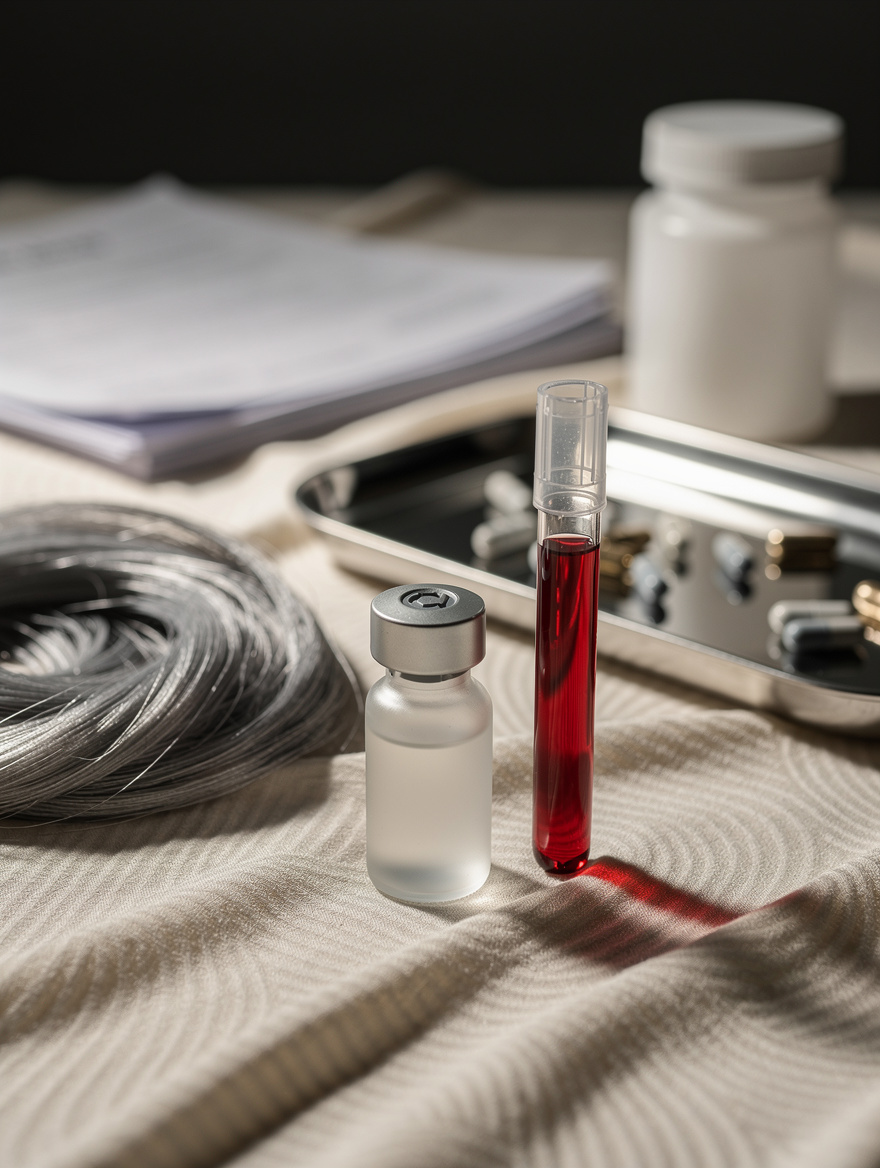
Read a Sudden Shed as a Signal
Menopause can unmask female-pattern hair loss, but a sudden shed that starts two or three months after an illness, surgery, major stress, or a new prescription often points to telogen effluvium instead.
That type usually settles once the trigger is addressed, which is a completely different conversation from miniaturization and a completely different treatment plan.
Get assessed promptly if loss is patchy or painful, if the scalp looks smooth and scar-like where hair used to be, or if it’s worsening fast. Anything on your scalp that bleeds, changes shape, or won’t heal needs a board-certified dermatologist looking at it.
And if you’re already on a prescription for this, whether that’s spironolactone or a compounded topical, don’t quit it because a bottle at the drugstore promised to do the same job.
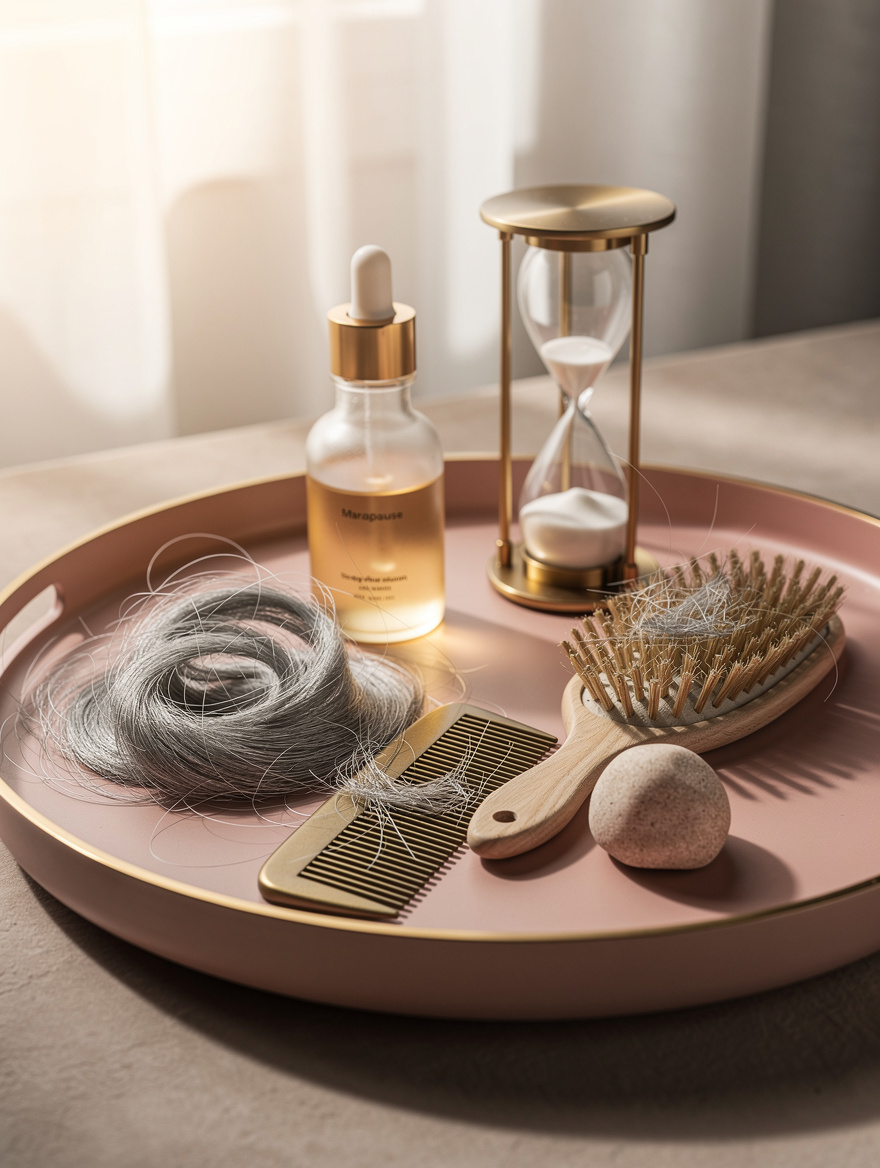
Spend on the diagnosis before the products: a scalp exam and basic bloodwork tell you whether you’re treating damaged fiber or lost density, and that answer is worth more than any serum.
After that, the honest floor is roughly $25 a month for minoxidil and a gentle shampoo, plus about twelve weeks of patience before you’ll know anything at all.