The prickling starts about ninety seconds after you step out, and by the time you find the lotion your shins have already gone chalky. Dermatologists have an unglamorous explanation: the water temperature that feels best on stiff joints is the same one dissolving the lipid film your barrier depends on.
The American Academy of Dermatology puts the sensible bathing window at roughly five to ten minutes of warm water, not hot. Six changes, none of which involve giving up your shower.
What you will find inside
- Turn the Tap Down Before You Blame Your Moisturizer
- Cap the Shower at Five to Ten Minutes
- Soap Only the Parts That Actually Need It
- Pat Dry and Moisturize While You Are Still Damp
- Look for Humectants and Occlusives on the Label
- Pause the Actives Until the Sting Stops
Turn the Tap Down Before You Blame Your Moisturizer
Your barrier is built like brick and mortar: the skin cells are the bricks, and ceramides, cholesterol, and fatty acids are the mortar packed between them. Hot water plus surfactant washes that mortar down the drain far faster than warm water does, which is why the tightness shows up before you have even reached for a towel.
After menopause, lower estrogen is associated with fewer barrier lipids and shorter ceramide chains, so there is less mortar in reserve to begin with and each hot shower costs you more.
The diagnostic is free and takes one morning: if the mirror fogs completely or your chest and shins flush pink on the way out, the water was too hot for the skin you have now.
Cap the Shower at Five to Ten Minutes
The American Academy of Dermatology puts the useful bathing window at roughly five to ten minutes for dry skin, and closer to five if you are dealing with eczema or persistent flaking on the arms and legs.
Length matters as much as heat, because prolonged soaking swells and then over-dries the outer layer regardless of temperature. A timer on your phone works better than good intentions, and most people are genuinely surprised by how long they have been standing there.
If a long hot soak is your one reliable fix for stiff joints or night sweats, take it, then treat the aftermath seriously with a thick layer of petrolatum based cream the moment you step out.
Soap Only the Parts That Actually Need It
Full-body lathering is a habit, not a hygiene requirement. Underarms, groin, feet, and anywhere visibly dirty need cleanser; the outsides of your thighs, your shins, and your forearms almost never do, and plain water handles them fine.
Swap the foaming shower gel for something low-lather and fragrance-free: Vanicream Gentle Body Wash runs about $12 at Target, and Dove Sensitive Skin Beauty Bar costs roughly $9 for a multipack at Walmart if you prefer a bar.
Deodorant soaps, sugar scrubs, and exfoliating washes are the three worst offenders on post-menopausal skin, and we would retire all of them from the shower entirely.
Pat Dry and Moisturize While You Are Still Damp
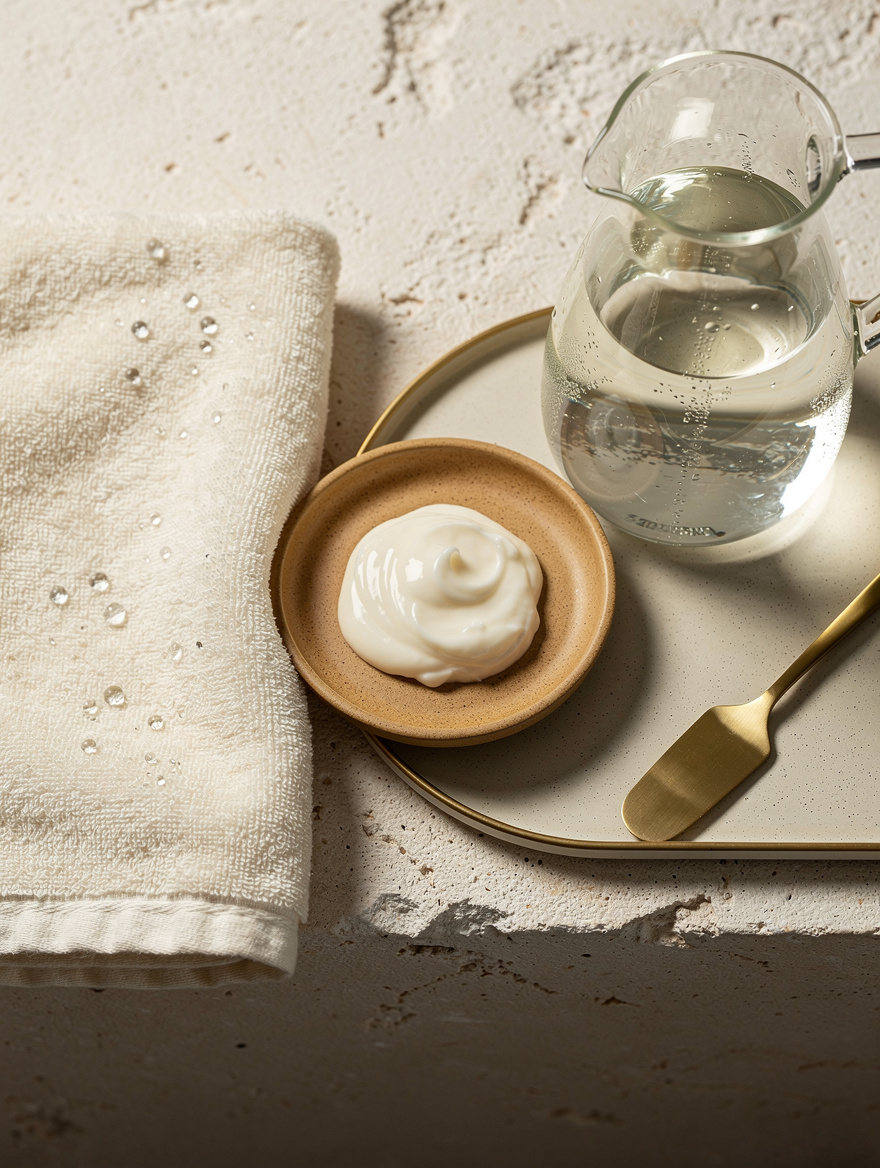
Rubbing with a towel is mechanical exfoliation you did not ask for. Pat instead, and stop while your skin still looks faintly wet, because that trapped surface water is what your cream is supposed to seal in.
The window is short, so keep the jar in the bathroom rather than the bedroom. A 19 ounce tub of CeraVe Moisturizing Cream costs around $18 at CVS and is formulated with ceramides plus hyaluronic acid, which is the right pairing for this job.
For skin that itches at night, Eucerin Advanced Repair Lotion at about $13 spreads more easily over large areas, and a thin layer of Aquaphor on the shins buys you the heaviest occlusion for roughly $6.
Look for Humectants and Occlusives on the Label
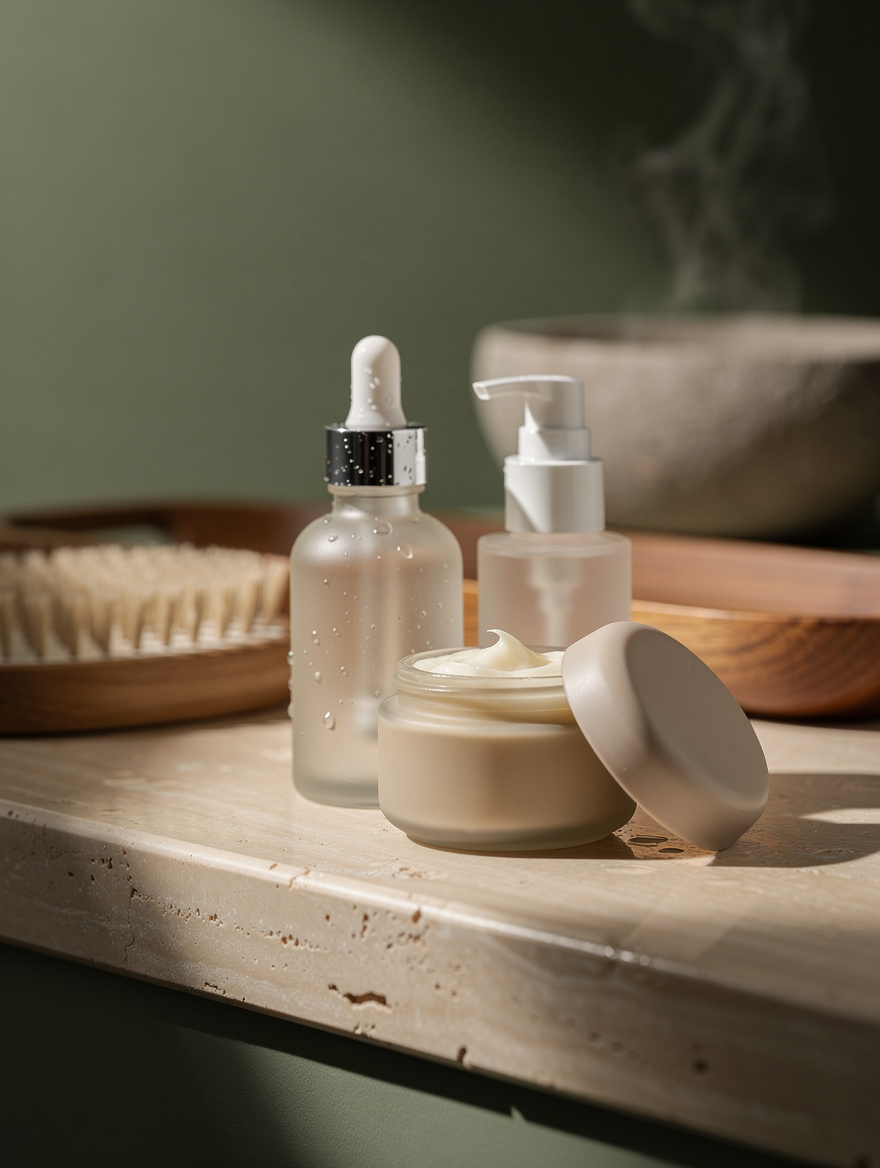
Two categories do almost all the work. Humectants like glycerin, sodium PCA, and hyaluronic acid pull water into the outer layer, while occlusives like petrolatum, mineral oil, dimethicone, and squalane slow how fast that water evaporates back out.
Advertised hyaluronic acid percentages typically land somewhere around 0.1% to 2%, and a bigger number on the front of the bottle is not automatically better. What matters is that a humectant is paired with something occlusive on top of it.
If you want one body product that does both without thinking about it, La Roche-Posay Lipikar Balm AP+M sits around $22 at Ulta and is one of the few drugstore-adjacent balms we would call genuinely rich.
Pause the Actives Until the Sting Stops
Damaged barriers sting, and stinging usually gets treated with more product, which is how a minor case of shower dryness turns into weeks of red, flaking cheeks.
Give it two weeks off from glycolic acid, physical scrubs, and fragranced body lotion, and stick to a bland cleanser like Cetaphil Gentle Skin Cleanser at roughly $14 while the barrier rebuilds. Over-the-counter retinol can wait; if you are on prescription tretinoin, do not stop on your own, talk to whoever prescribed it about spacing the doses.
One firm exception to all of this: any spot that bleeds, changes shape or color, or refuses to heal is a dermatologist appointment, not a moisturizer problem.
Start with the dial, because it costs nothing: warm water, ten minutes, cleanser only where you actually get dirty. The cream is the second priority and the cheaper fix than anything you would buy to undo the damage, so keep an $18 tub within arm’s reach of the towel rack.