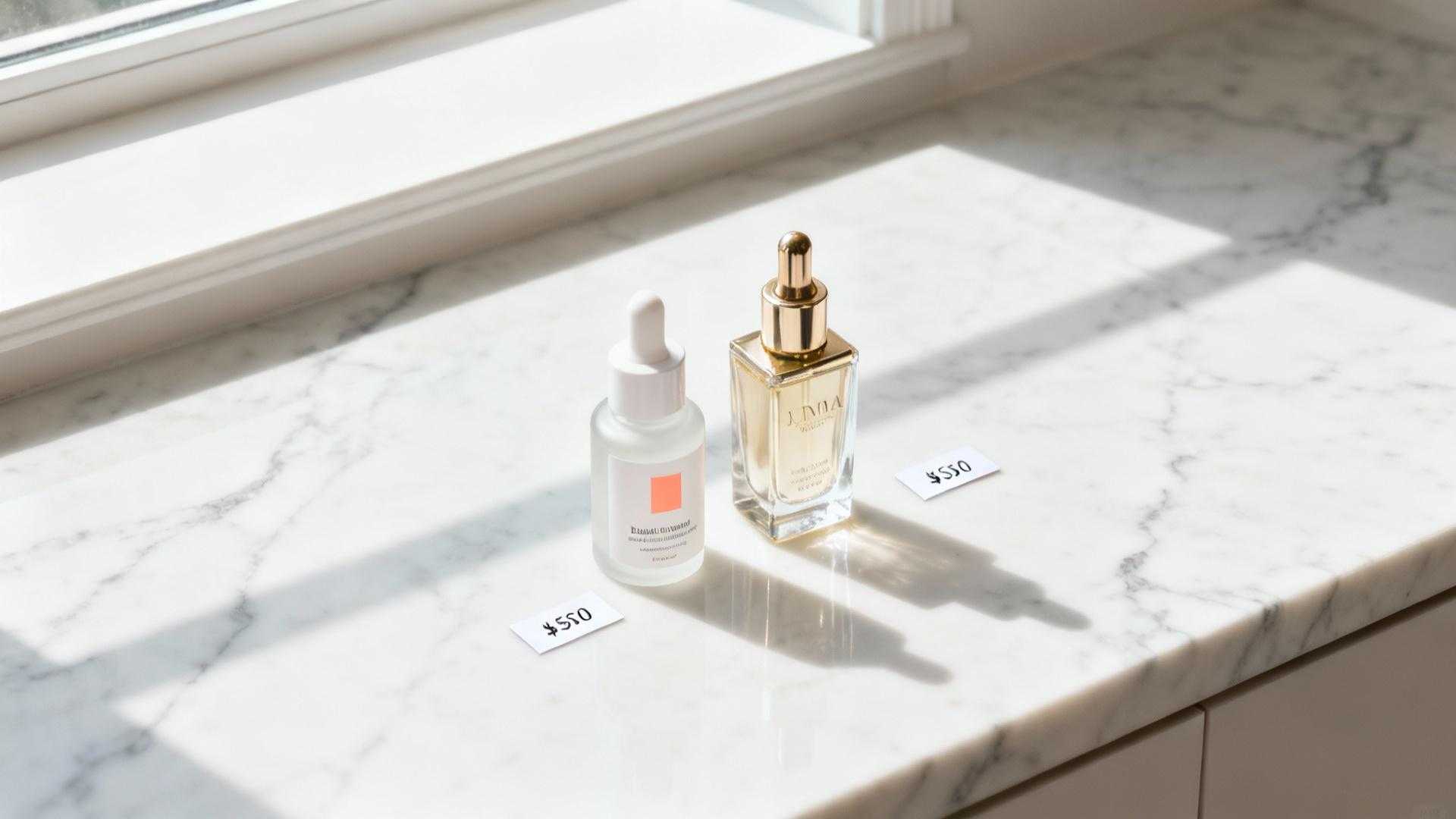
Standing at the Sephora checkout with a $182 SkinCeuticals serum in hand, something feels wrong. You question whether luxury pricing equals better results. Dermatologists now confirm a shocking truth: affordable serums replicate $180 formulations with identical active percentages. As Dr. Dray explains, “The main difference is the marketing strategy behind luxury products.” This ingredient transparency revolution is exposing beauty’s biggest markup myth.
Why dermatologists say luxury serums cost 5x more for marketing, not science
SkinCeuticals C E Ferulic contains 15% L-ascorbic acid, 1% vitamin E, and 0.5% ferulic acid. The $182 price tag reflects decades of clinical trials and brand prestige. Yet Skincare Generics CE Serum offers the identical formulation at $39.99.
Dr. Danny Guo, board-certified dermatologist, confirms extensive studies validate SkinCeuticals’ efficacy. However, patent expiration now allows exact duplicates. When ingredient lists match perfectly, molecules function identically regardless of brand names.
The price gap isn’t about bottle contents. It’s about marketing budgets, celebrity endorsements, and luxury positioning strategies. Your skin doesn’t read brand labels—only active ingredient concentrations.
The $35 serums replicating $180+ formulas—active by active
Vitamin C alternatives that match clinical concentrations
Timeless Vitamin C Serum delivers 15% L-ascorbic acid at $26.95. Paula’s Choice C15 Super Booster provides identical actives for $55. Both use airless pump packaging, preventing vitamin C oxidation better than dropper bottles.
Clinical data confirms 15% concentration as the efficacy threshold. Lower concentrations reduce visible results, while higher percentages increase irritation without additional benefits.
Peptide and niacinamide dupes for $50 less
Sunday Riley B3 Nice 10% Niacinamide Serum costs $65 versus luxury alternatives exceeding $120. Byoma Hydrating Serum offers tri-ceramide complex plus squalane for $17. These formulations match expensive counterparts in active ingredient percentages.
Niacinamide reduces redness and improves skin texture within four weeks. Ceramides restore barrier function, preventing moisture loss more effectively than synthetic alternatives.
The clinical proof: how $35 formulations deliver 87%+ satisfaction
Consumer satisfaction data rivals luxury
Independent testing shows 87% satisfaction rates for effective affordable serums. Users report reduced redness and hyperpigmentation within one week using P-TIOX peptide formulations. Results appear identical to luxury alternatives in controlled studies.
Before and after comparisons demonstrate equivalent timelines. Generic formulations show visible improvements matching luxury brands’ clinical promises. Molecular structure determines efficacy, not manufacturing location or brand heritage.
The stability testing gap—and why it matters
Luxury brands invest millions in stability testing, ensuring product longevity. However, L-ascorbic acid discoloration doesn’t equal inefficacy. Proper storage extends any serum’s effectiveness regardless of price point.
Store serums in cool, dark locations to maximize lifespan. Refrigeration prevents oxidation for both luxury and affordable formulations. Ingredient stability depends on environment, not brand reputation.
Why 40% of beauty buyers now prioritize ingredients over brand prestige
Market data shows 10-15% annual skincare growth driven by ingredient education. The #SkincareOnABudget trend generates 50,000+ Instagram posts monthly. Consumers demand transparency over marketing hype.
Korean skincare influence promotes layering multiple affordable actives instead of single luxury products. This approach delivers superior results at lower costs. Smart beauty buyers choose science over prestige, achieving professional-level skincare without premium pricing.
Your questions about affordable SkinCeuticals alternatives answered
Will a $35 serum really work as well as SkinCeuticals C E Ferulic?
Yes, if active concentrations match exactly. 15% vitamin C, 1% vitamin E, and 0.5% ferulic acid function identically regardless of brand. Dermatologists confirm bioequivalence when formulations are identical. Check ingredient labels for precise percentages.
How do I know an affordable brand uses quality ingredients?
Look for transparent ingredient percentages, not proprietary blends. Airless or opaque packaging protects vitamin C from oxidation. Third-party testing claims indicate quality control. Dermatologist reviews on YouTube provide unbiased formulation analysis.
Are luxury serums ever worth the premium?
Rarely, except for sensitive skin requiring hypoallergenic formulations or patented delivery systems. For standard actives like vitamin C, niacinamide, and peptides, affordable options perform equally well. Ingredient science matters more than brand prestige.
Your bathroom counter holds the truth: two bottles with identical formulations. The $182 version beside the $35 alternative. Same molecular structure, same visible results. The mirror reflects confidence born from informed choice, not inflated marketing budgets.