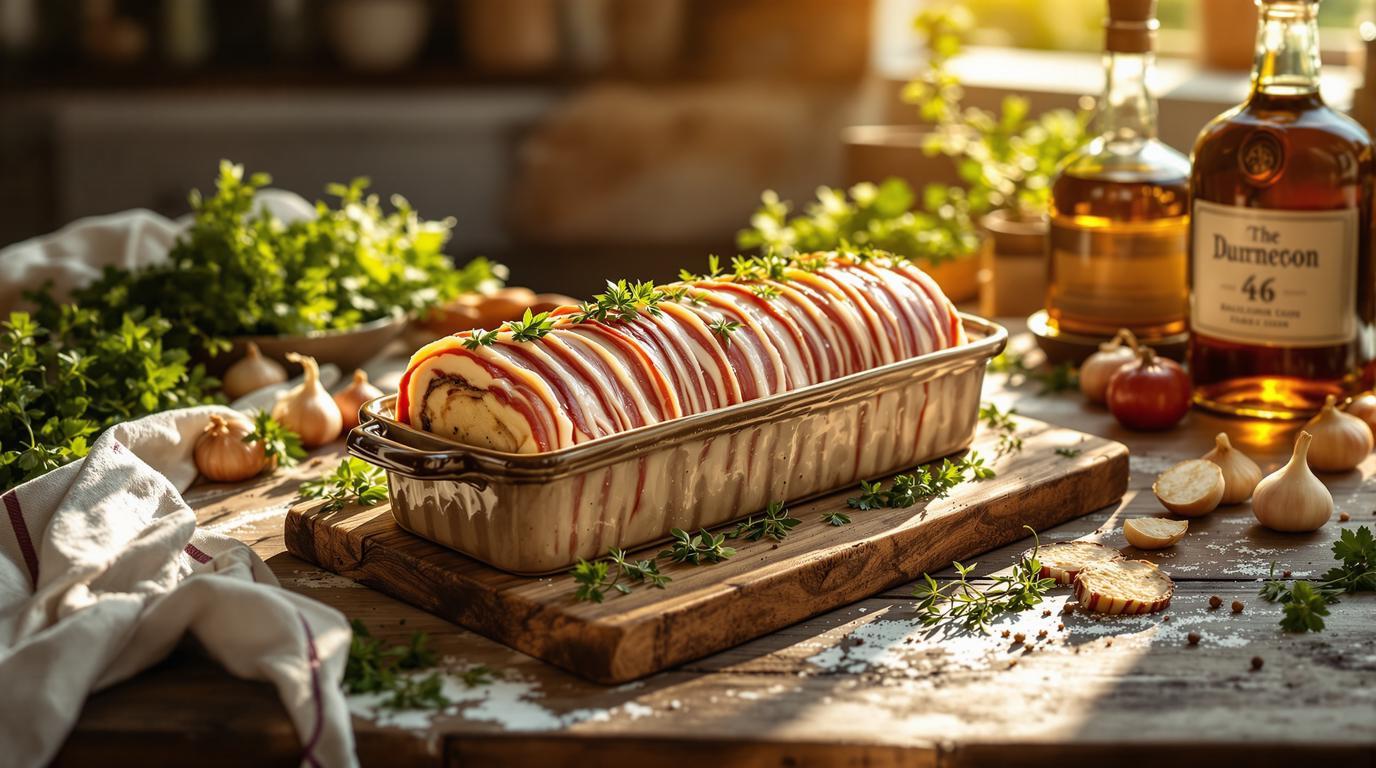
There’s something magical about the rustic terrines that grace the tables of French countryside homes. I first encountered a proper rabbit terrine during my apprenticeship in Burgundy, where my mentor’s grandmother prepared it with a reverence that bordered on religious devotion. This traditional terrine de lapin isn’t merely a recipe—it’s a testament to the frugal ingenuity of generations who transformed humble ingredients into something extraordinary. The process connects us to centuries of charcuterie tradition, where layered meats preserved in fat served both practical necessity and gustatory pleasure. 🇫🇷
The Art of Traditional Rabbit Terrine
Terrines originated as preservation methods in medieval France, when countryside cooks would combine various cuts of meat with aromatic herbs and slowly bake them in ceramic molds. The resulting loaf could be enjoyed for days, developing deeper flavors as it matured. What makes rabbit terrine special is the lean, delicate meat that forms its foundation, complemented by richer pork for succulence and balance.
Before refrigeration, these techniques weren’t merely culinary preferences—they were survival strategies. The careful layering, precise seasoning, and protective fat caps weren’t flourishes but necessities. When I prepare this recipe today, I’m honoring those practical innovations that have become culinary treasures. 📖
Essential Ingredients
For an authentic terrine, quality ingredients make all the difference:
- 1½ pounds (700g) deboned rabbit meat, coarsely chopped
- 1 pound (450g) pork belly, finely ground
- 3½ ounces (100g) rabbit liver (optional but traditional)
- 12 thin slices of bacon (for lining the terrine)
- 3 medium shallots, finely minced
- 2 cloves garlic, crushed
- 2 tablespoons cognac or brandy
- 2 large eggs
- ⅓ cup (80ml) heavy cream
- 2 tablespoons fresh thyme leaves
- 2 tablespoons chopped flat-leaf parsley
- 1 bay leaf, crumbled
- 1½ teaspoons kosher salt
- ½ teaspoon freshly ground black pepper
- ¼ teaspoon ground nutmeg
Chef’s Note: If rabbit liver isn’t available, substitute chicken livers. The organ meat provides essential minerality and depth that differentiates a true country terrine from a simple meat loaf. Many home cooks skip this ingredient, but I urge you to embrace it—it’s what gives the terrine its authentic character.
The Traditional Method
The beauty of terrine-making lies in its meditative simplicity:
- Begin by marinating your rabbit meat overnight with shallots, garlic, herbs, and cognac. This infusion period is non-negotiable—it’s where the magic begins. 🌙
- Line a 1½-quart terrine mold with bacon slices, allowing them to hang over the edges—they’ll eventually fold over to encase the filling.
- Combine the marinated rabbit, ground pork belly, and liver (if using) in a large bowl. Add eggs, cream, salt, pepper, and nutmeg.
- Mix thoroughly but gently with your hands—never a food processor, which would destroy the rustic texture we’re seeking. 👐
- Pack the mixture firmly into your bacon-lined terrine, pressing out air pockets as you go. Fold the overhanging bacon over the top to create a sealed parcel.
- Cover with the terrine lid or aluminum foil.
- Place in a water bath (a roasting pan filled halfway with hot water) and bake at 300°F (150°C) for about 1½ hours until the internal temperature reaches 160°F (71°C).
- Allow to cool slightly, then weight the terrine with a small board and canned goods. Refrigerate for at least 24 hours before serving—this resting period is crucial for flavor development. ⏱️
Serving Your Masterpiece
Traditional terrines shine when served simply. Slice your terrine with a knife dipped in hot water for clean cuts, and arrange on a wooden board with cornichons, grainy mustard, and crusty country bread. A chilled Chablis or Alsatian Riesling perfectly complements the rich, herbaceous flavors. 🍷
For an elegant first course, serve thin slices atop lightly dressed frisée with a few dots of preserved fruit compote to cut through the richness.
I’ve watched guests who claimed to dislike organ meats become absolutely transfixed by a properly prepared rabbit terrine. The transformation of humble ingredients into something sophisticated yet comforting is what makes traditional cooking so rewarding.
Chef’s Tip: Terrines improve with age (within reason). Make yours 2-3 days before you plan to serve it for the most developed flavor profile. Just keep it tightly wrapped in the refrigerator.
Whether you’re creating this terrine for a special occasion or simply to connect with culinary heritage, remember that you’re participating in a tradition that spans generations. The techniques might seem demanding, but they yield incomparable rewards. As my mentor’s grandmother would say, “La patience est la vertu du cuisinier”—patience is the cook’s virtue. For more inspiration on traditional recipes that stand the test of time, explore our recipe collection or visit our homepage for culinary techniques that honor tradition while embracing modern kitchens. Bon appétit! 🇫🇷