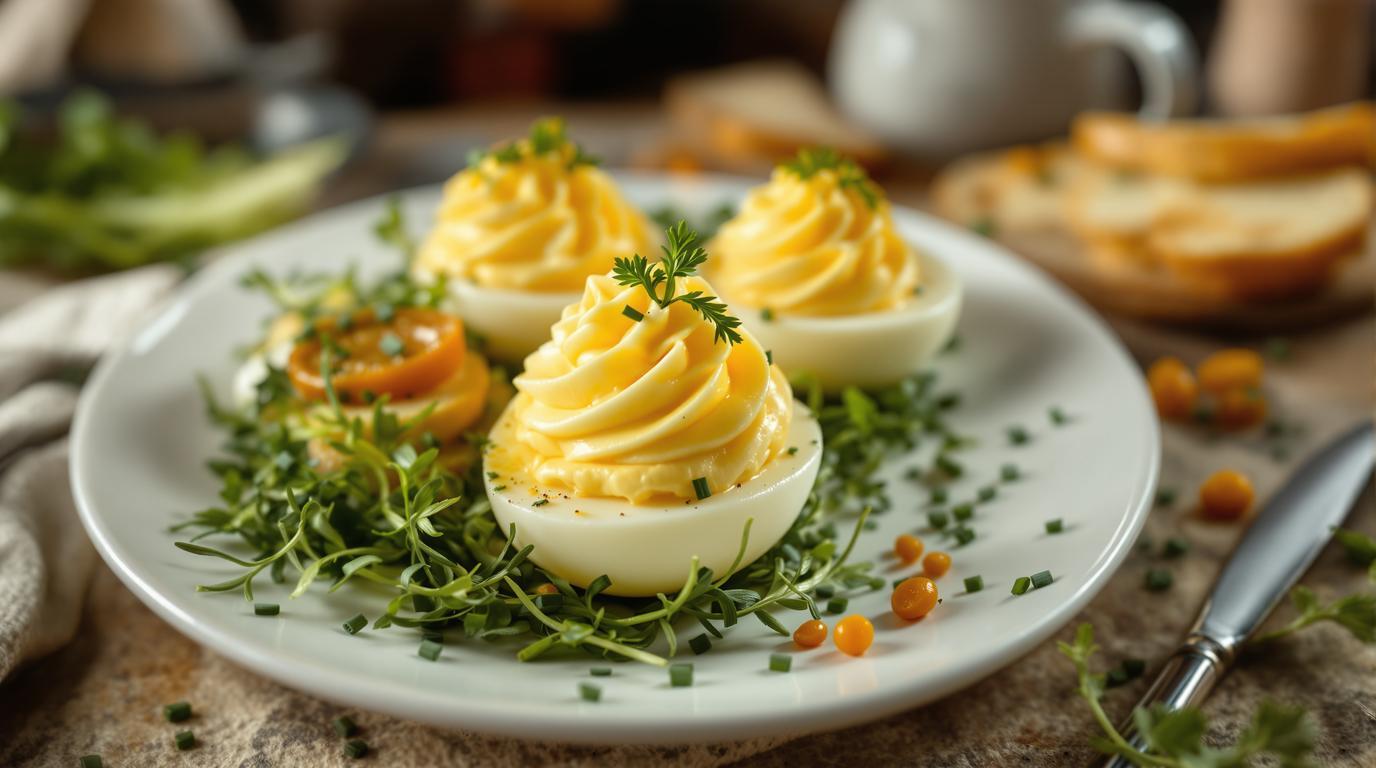
The first time I prepared oeufs mimosa was in a small Parisian kitchen under the watchful eye of my mentor, Chef Laurent. “Alex,” he said with characteristic Gallic intensity, “these are not American deviled eggs. The yolks must be as light as the spring flowers they’re named for.” He demonstrated how to press the yolks through a fine sieve, creating a delicate, fluffy texture that transformed humble hard-boiled eggs into an elegant French classic. Twenty years later, I still hear his voice whenever I prepare this beloved staple of French cuisine bourgeoise. 🇫🇷
The Story Behind Oeufs Mimosa 📖
Named after the bright yellow mimosa flower that blooms across France in early spring, these refined deviled eggs represent French cooking at its most accessible yet elegant. Unlike their American cousins loaded with mayonnaise and relish, traditional oeufs mimosa celebrate restraint and technique, using just enough binding ingredients to showcase the quality of the eggs themselves. Dating back to 19th-century French cookbooks, the signature technique of grating strained yolks creates a distinctive “mimosa” appearance that’s instantly recognizable on Parisian appetizer tables. 🌼
Essential Ingredients 🧾
The beauty of oeufs mimosa lies in its simplicity, making quality ingredients essential:
- 6 large eggs, preferably farm-fresh
- 2 tablespoons (30g) homemade or high-quality mayonnaise
- 1 teaspoon (5g) Dijon mustard (never substitute with yellow mustard!)
- 1 tablespoon (15g) finely chopped fresh herbs (traditional: chives, parsley, or tarragon)
- 1 teaspoon chopped capers (optional but authentic)
- 1 small shallot, finely minced (about 1 tablespoon)
- Salt and freshly ground pepper to taste
- Paprika or edible flower petals for garnish
Chef’s Note: The French technique demands you reserve half the sieved yolks for the garnish—this creates the signature “mimosa” effect. Americans often mix all the yolk into the filling, but this misses the point entirely! 🇫🇷
Step-by-Step Instructions 📝
- Perfect Hard-Boiled Eggs: Place eggs in a pot, cover with cold water by 1 inch. Bring to a gentle boil, then reduce to a simmer for exactly 10 minutes. Transfer immediately to an ice bath for 5 minutes. This prevents the dreaded gray ring around the yolk. 🥚
- Prepare the Base: Peel eggs carefully (I find day-old eggs peel more easily than very fresh ones). Slice in half lengthwise and gently remove yolks into a bowl.
- Create the Mimosa Effect: Press all yolks through a fine-mesh sieve using the back of a spoon. The texture should resemble fluffy snow. Reserve half of this sieved yolk for the garnish. ❄️
- Mix the Filling: Combine the remaining half of sieved yolks with mayonnaise, Dijon, minced shallot, capers, and herbs. Season with salt and pepper. The mixture should be smooth but not pasty—just bound enough to hold its shape.
- Assemble: Fill the egg white halves with a small spoon or piping bag. Don’t overfill—the whites should only be filled to level, not mounded. Sprinkle reserved yolks over the top to create the “mimosa flower” effect. Finish with a light dusting of paprika. 🌸
Chef’s Secret Techniques 🤫
The difference between ordinary deviled eggs and exceptional oeufs mimosa comes down to technique. Pat your egg white halves dry with paper towel before filling—this prevents the dreaded “weeping” effect where moisture pools on your serving platter. For the smoothest filling, ensure all ingredients are at room temperature before mixing. If you find yourself without a sieve, a fine cheese grater can work in a pinch for creating the signature fluffy yolk topping.
For a true French touch, try making homemade mayonnaise. It takes only five minutes and elevates these eggs to an entirely different level. If that’s not possible, look for a high-quality, full-fat European-style mayonnaise at specialty shops or use a good olive oil to enrich store-bought varieties.
Serving & Presentation Tips 🍽️
In France, oeufs mimosa are typically served as part of a composed appetizer plate or buffet. They pair beautifully with a crisp Belgian-style aperitif or a glass of dry white wine like Chablis or Sancerre. For a complete appetizer spread, consider serving alongside Mediterranean-inspired goat cheese stuffed peppers or tomato cups.
For a traditional French presentation, arrange the eggs on a bed of frisée lettuce and garnish the platter with cornichons, radishes, and thin slices of baguette. If you’re feeling adventurous, these eggs also make a delightful addition to a hearty Alpine pasta gratin dinner.
Remember, these elegant bites are meant to be savored, not rushed. As my grandmother always said, “Good food deserves good company and unhurried appreciation.” Take the time to enjoy these little treasures of French cuisine, preferably with people you love. That’s what truly makes a recipe timeless. 💕