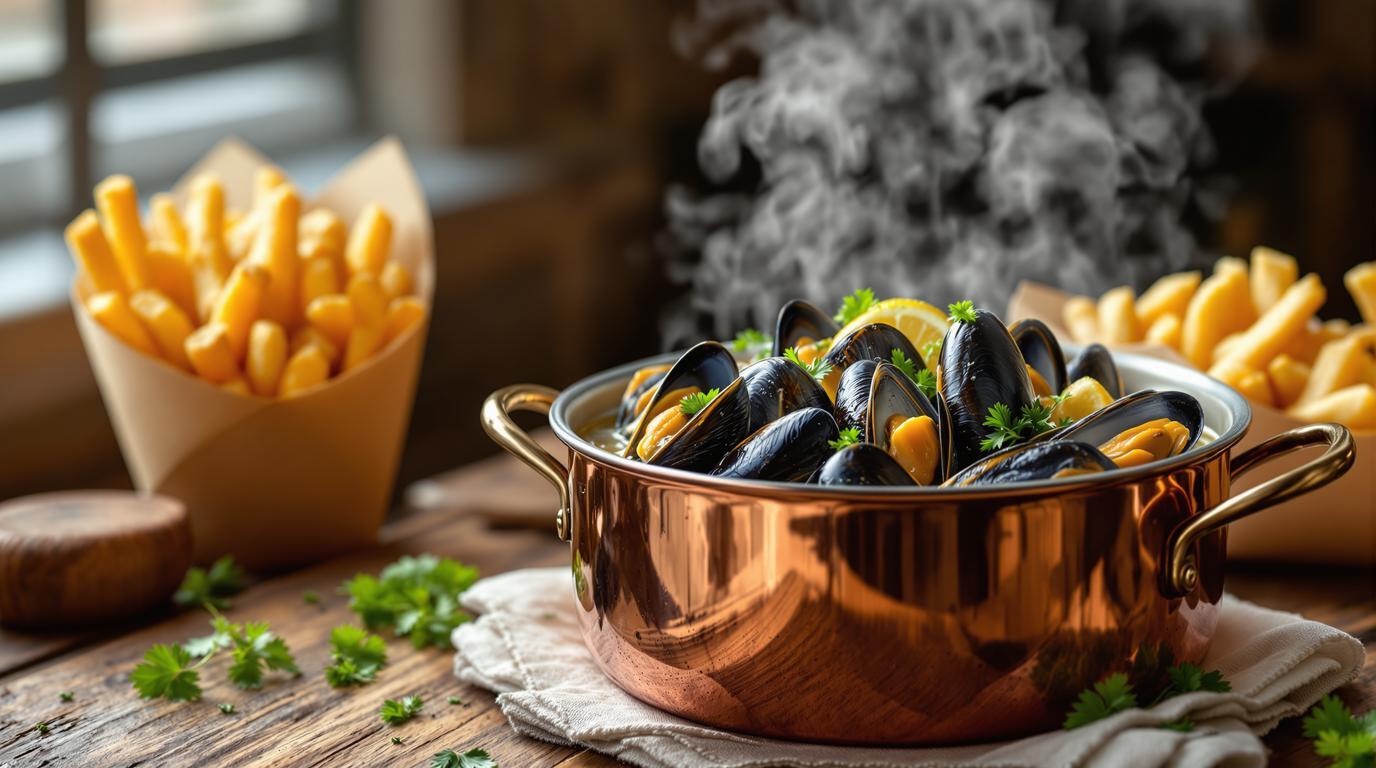
I still remember the first time I tasted proper moules-frites on a rainy afternoon in Brussels. The steam rising from the pot, carrying aromas of white wine, butter, and the sea, created an experience that transcended mere sustenance. What many don’t realize is that this iconic Belgian dish—now served in brasseries worldwide—began as humble street food in the 19th century, before being catapulted to international fame during the 1958 Brussels World’s Fair. Today, I’m sharing my modern interpretation of this classic, with subtle twists that respect tradition while offering something fresh.
The Magic of Moules-Frites Revisitées 🇧🇪
The beauty of moules-frites lies in its elegant simplicity. Fresh mussels quickly steamed in a fragrant broth, served alongside crispy potatoes—a perfect harmony of land and sea. My “revisitées” version maintains these essential elements while introducing thoughtful refinements that enhance rather than overshadow the classic flavor profile.
My grandmother, who spent summers on the Belgian coast, taught me that the quality of mussels makes or breaks this dish. “Look for tightly closed shells with a fresh, oceanic scent,” she’d say, inspecting each one before tossing it into her well-worn copper pot. This meticulous selection process remains my first step, just as it has been for generations of European chefs.
Essential Ingredients 🧾
For the mussels (serves 4):
- 4 lbs (1.8 kg) fresh mussels, scrubbed and debearded
- 3 cups (750 ml) dry white wine (Sauvignon Blanc or Muscadet)
- 4 tablespoons (60g) high-quality unsalted butter
- ½ cup (55g) finely minced shallots
- 6 cloves garlic, finely chopped
- ¼ cup (15g) fresh flat-leaf parsley, chopped
- 4-5 sprigs fresh thyme (or 1 tablespoon fresh tarragon)
- Freshly ground black pepper
For the frites:
- 2 lbs (900g) Russet potatoes
- Vegetable or peanut oil for frying
- Flaky sea salt
Chef’s Secret Techniques 🤫
The difference between good and extraordinary moules-frites lies in technique. First, never rush the aromatics—proper sweating of shallots and garlic creates the foundation of flavor. I melt butter in a large pot over medium-low heat, then add shallots and garlic, cooking until translucent but not browned (about 2 minutes). This gentle approach preserves their sweet complexity rather than creating bitter notes.
Chef’s Note: The classic recipe calls for shallots, but my grandmother occasionally substituted leeks when shallots weren’t available. The subtle sweetness of leeks creates a delicate variation worth trying, especially in spring when young leeks are at their peak. Simply use the white and light green parts of 2 medium leeks, sliced into thin half-moons.
For the frites, I prefer the traditional double-frying method. First at a lower temperature (325°F/165°C) for 5-6 minutes to cook the interior, then at a higher temperature (375°F/190°C) for 2-3 minutes to create that quintessential Belgian crispness. Between fryings, rest the potatoes on paper towels—this crucial step ensures maximum crispness.
The Perfect Cooking Process 📝
- Thoroughly clean the mussels, discarding any with cracked shells or those that don’t close when tapped.
- In a large pot, melt butter over medium heat. Add shallots, garlic, and thyme, cooking until softened but not browned (1-2 minutes).
- Pour in wine, bring to a simmer, then add mussels. Cover tightly.
- After 2 minutes, uncover and gently stir to redistribute mussels. Re-cover and cook 2-3 minutes more until most shells have opened.
- Remove from heat, discard any unopened mussels, and sprinkle with fresh parsley.
The Modern Revisitée Touch 🌿
My contemporary interpretation introduces three subtle refinements: a splash of pastis (anise-flavored spirit) added with the wine for aromatic complexity, a finish of microplaned lemon zest sprinkled just before serving, and a side of garlic-saffron aioli instead of plain mayonnaise. These elements enhance the traditional flavor profile without overwhelming it—evolution rather than revolution.
If you’re looking to explore other delicious French classics, try my Alpine Tartiflette that transforms humble potatoes into cheesy heaven. For summer entertaining, my Caramelized Watermelon trick is a showstopper, while my Summer Berry Rosé Sangria makes the perfect accompaniment.
The beauty of moules-frites lies in its communal nature—a steaming pot placed center table, everyone reaching in, tearing crusty bread, dipping frites into broth. Like its Italian cousin Cold Veal with Grandmother’s Sauce, or the hearty Potato-Crowned Lamb Stew, it’s about more than sustenance—it’s about connection through food. So gather your loved ones, pour generous glasses of white wine, and experience the simple joy of Belgium’s greatest culinary gift to the world.