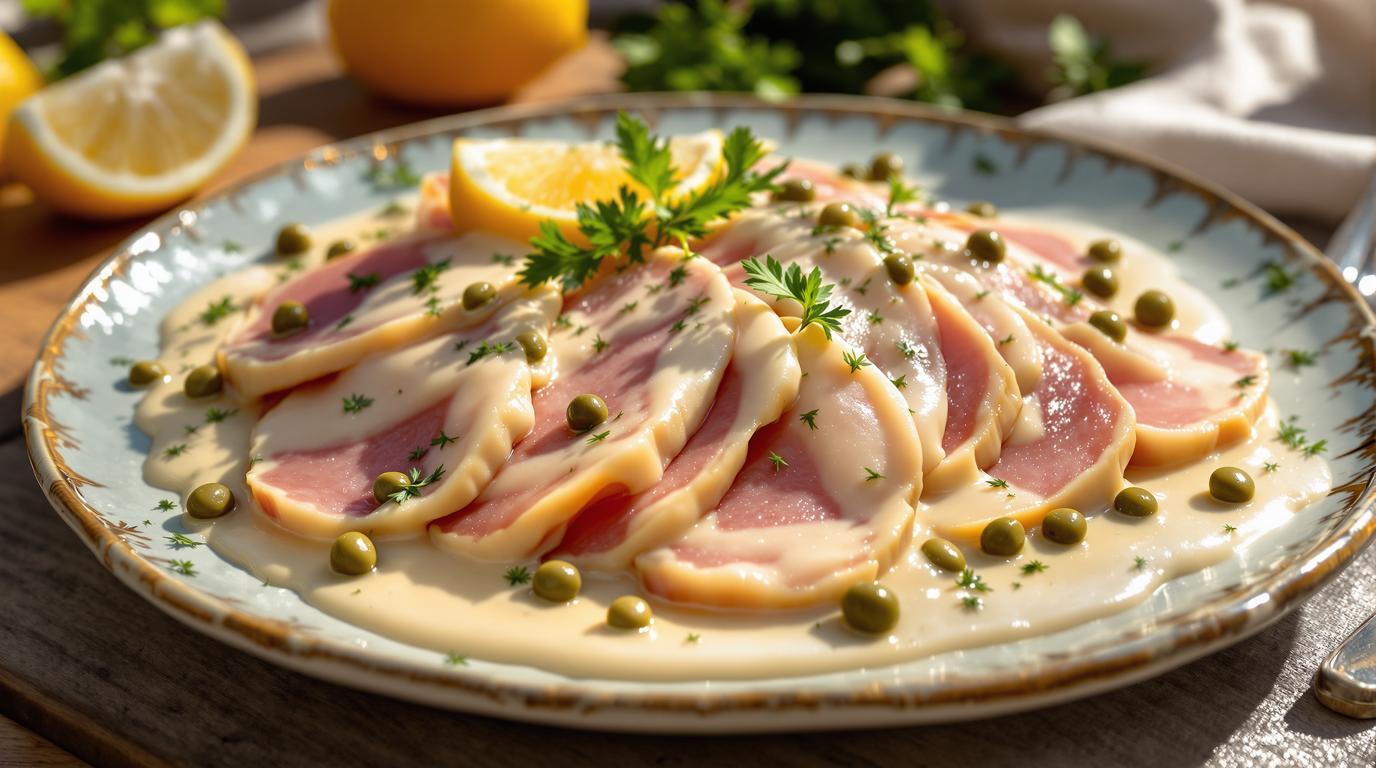
There’s something magical about dishes that marry unexpected flavors—the kind that make you pause mid-bite and wonder how something so simple can taste so complex. Vitello Tonnato is precisely that kind of culinary magic. Growing up, my Italian grandmother would prepare this for special summer gatherings, slicing paper-thin veal in the cool morning hours before the kitchen became too warm. The sauce—a velvety emulsion of tuna, capers, and anchovies—would chill in her refrigerator, developing its remarkable depth of flavor that somehow makes perfect sense despite its unusual pairing of land and sea.
The Piedmontese Treasure 🇮🇹
Vitello Tonnato hails from Italy’s northwestern Piedmont region, where it’s traditionally served as a summertime antipasto. Dating back to the 19th century, this dish represents one of the most elegant “surf and turf” combinations in Italian cuisine. The marriage of delicate veal with a rich tuna sauce initially seems counterintuitive, but one taste reveals why this recipe has endured for generations.
Before refrigeration was common, this dish served a practical purpose as well—the acidity in the sauce helped preserve the meat during warm weather, making it ideal for celebrations when cooking needed to be done in advance. Like tartiflette, it transforms humble ingredients into something extraordinary.
The Essential Components 🧾
For the veal:
- 1.5-2 pounds (700-900g) veal roast (preferably eye of round)
- 1 medium onion, quartered
- 1 carrot, roughly chopped
- 1 celery stalk, roughly chopped
- 1 bay leaf
- 4-5 black peppercorns
- 1 cup (240ml) dry white wine
- Sea salt
For the tuna sauce:
- 7 oz (200g) high-quality tuna in olive oil, drained
- 3-4 anchovy fillets
- 2 tablespoons capers, rinsed
- 1 tablespoon fresh lemon juice
- 2 tablespoons mayonnaise (or 2 egg yolks for traditional approach)
- 3 tablespoons extra virgin olive oil
- Freshly ground black pepper
Preparing the Perfect Veal 🍖
1. Season the veal generously with salt and pepper, then tie with kitchen twine to maintain its shape during cooking.
2. In a Dutch oven or heavy-bottomed pot, arrange the vegetables to create a bed for the veal. Place the meat on top, add the bay leaf and peppercorns, then pour in the white wine and enough water to cover the meat halfway.
3. Bring to a gentle simmer over medium heat, then reduce to low, cover, and cook for about 1.5 hours until the veal registers 135°F (57°C) on an instant-read thermometer.
Chef’s Note: The gentle poaching method is crucial here—aggressive boiling will toughen the meat. Look for barely perceptible bubbles around the edges of your pot. This same gentle approach works beautifully for the lamb in potato-crowned stew.
4. Once cooked, remove from the broth and let cool to room temperature. Wrap tightly in plastic wrap and refrigerate for at least 4 hours or overnight.
The Silky Tuna Sauce 🐟
1. In a food processor, combine the drained tuna, anchovies, and capers. Pulse several times to create a rough paste.
2. Add the lemon juice and mayonnaise (or egg yolks for a more traditional approach), then process while slowly drizzling in the olive oil until you achieve a smooth, creamy consistency.
3. Season with freshly ground pepper (be cautious with salt as the anchovies and capers contribute considerable saltiness). Refrigerate for at least 1 hour to allow flavors to meld.
If you enjoy this delicate sauce technique, you might also appreciate the nuanced flavors in herb-marinated veal rack, which uses a similar approach to balancing flavors.
Assembly and Presentation 🍽️
1. Once thoroughly chilled, unwrap the veal and slice it as thinly as possible against the grain—aim for nearly translucent slices.
2. Arrange the veal slices slightly overlapping on a chilled platter.
3. Spoon the tuna sauce generously over the veal, covering it completely. This isn’t merely a garnish—the sauce is equal partner to the meat.
4. Garnish with additional capers, a drizzle of olive oil, and a light sprinkle of fresh herbs. Some prefer a few thin lemon slices or a touch of lemon zest.
Chef’s Note: For a contemporary summer meal, consider serving this alongside caramelized watermelon for a delightful temperature and flavor contrast, followed by berry rosé sangria.
Making It Your Own 🌿
While the traditional recipe calls for veal, you can substitute turkey breast or pork tenderloin if veal is unavailable. The cooking method remains the same, though cooking times will vary slightly based on the size and type of meat.
For the sauce, some modern interpretations add a small spoonful of Dijon mustard for extra complexity, while others incorporate fresh herbs like flat-leaf parsley or basil for brightness.
This elegant dish has traveled from humble farmhouse kitchens to the finest restaurants in the world without losing its soul. Each time I prepare it, I’m transported back to my grandmother’s kitchen, where she taught me that sometimes the most unexpected combinations create the most unforgettable flavors. As you slice into your chilled veal, draped with that silky sauce, I hope you’ll discover the same quiet revelation I did all those years ago—that true culinary tradition isn’t about rigid rules, but about honoring ingredients with attention and care.