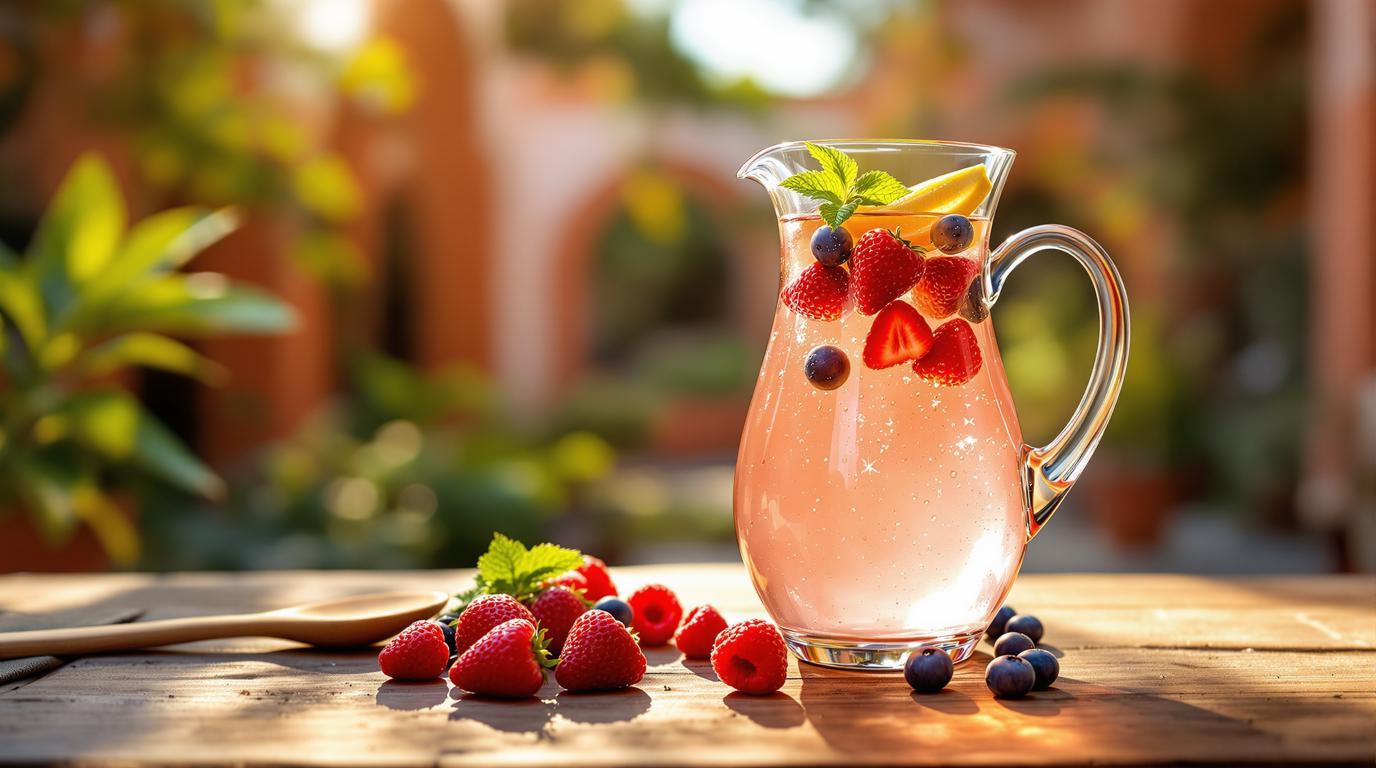
There’s something almost magical about the first sip of a properly made sangria on a warm summer evening. In my grandmother’s courtyard in Andalusia, the ritual of sangria-making was practically sacred—fruit maceration, careful mixing, and the mandatory “resting period” where flavors would meld into something far greater than their parts. My rosé sangria pays homage to that tradition while introducing berries for a refreshing twist that perfectly captures summer in a glass. 🍓
The Story Behind Grandmother-Style Rosé Sangria 📖
Traditional sangria originated as Spain’s answer to making less-than-stellar wines more palatable—mixing in fruits, a touch of brandy, and sweetener. The name itself comes from “sangre” (blood), referring to the deep red color of classic versions. While red sangria dominates tourist menus, my grandmother taught me that rosé creates a lighter, more elegant version that lets berry flavors shine through brilliantly. This recipe maintains authentic techniques while embracing the delicate character of dry rosé wine. 🌸
Essential Ingredients 🧾
The soul of this sangria lies in quality ingredients combined with proper technique:
- 750ml dry rosé wine (Provence-style for floral notes, Spanish Rioja rosé for fruitier profile)
- 1 cup mixed berries (strawberries, raspberries, blueberries)
- 1/3 cup brandy (Spanish brandy or Cognac)
- 1/4 cup granulated sugar
- Lemon or lime slices (optional)
- Sparkling water (for serving)
- Ice cubes
The secret lies in the balance—each element should harmonize rather than compete. The berries provide natural sweetness, the brandy adds warmth and depth, while the rosé delivers a crisp backbone that ties everything together. 🍷
Step-by-Step Instructions 📝
- Prepare the fruit base: In a large glass pitcher, combine mixed berries with sugar. Using a wooden muddler or the back of a wooden spoon, gently crush the berries to release their juices without completely pulverizing them.
- Add the brandy: Pour brandy over the macerated fruit and stir gently. This alcohol infusion helps extract flavors from the fruit while the sugar dissolves. Let this mixture rest for 10 minutes.
- Introduce the wine: Pour the chilled rosé wine into the pitcher and stir with a long wooden spoon, using a gentle lifting motion to combine without bruising the wine.
- Rest and develop: Cover and refrigerate for 1-2 hours. This resting period is non-negotiable—it allows the flavors to harmonize without dulling the wine’s character.
- Serve: Pour over ice in wide-rimmed glasses, adding a splash of sparkling water if desired. Garnish each glass with fresh berries and a sprig of mint.
Chef’s Note: The muddling technique is crucial—apply just enough pressure to release berry juices and oils without creating a puree. You want the fruit to maintain some structural integrity for both texture and visual appeal.
Chef’s Secret Techniques 🤫
After years in professional kitchens, I’ve learned that temperature control makes or breaks a good sangria. Your rosé should be properly chilled before mixing, but never add ice directly to the pitcher—this dilutes the carefully balanced flavors. Instead, chill the sangria thoroughly and serve over ice in individual glasses. 🧊
For those seeking a less alcoholic version, substitute half the brandy with orange juice or replace it entirely with elderflower cordial, which beautifully complements the berry and rosé flavors while maintaining complexity. You’ll lose some of the traditional warmth but gain floral brightness that works wonderfully for afternoon gatherings. 🌺
Serving & Presentation Tips 🍽️
Sangria’s true charm lies in communal serving. I present mine in a clear glass pitcher with a wooden spoon for guests to stir before pouring—ensuring everyone gets their fair share of fruit. Pair this grandmother-style sangria with traditional Spanish tapas like goat cheese stuffed peppers or alongside a rustic pasta salad for a complete Mediterranean experience.
For the perfect summer gathering, consider creating a sangria station with this rosé version alongside a more robust option like a hearty lamb stew for those preferring something more substantial. The contrast creates a beautiful balance that accommodates diverse palates.
Remember, sangria isn’t just a drink—it’s an invitation to slow down and savor the moment, just as my grandmother taught me all those years ago in that sun-dappled Spanish courtyard. Salud! 🥂