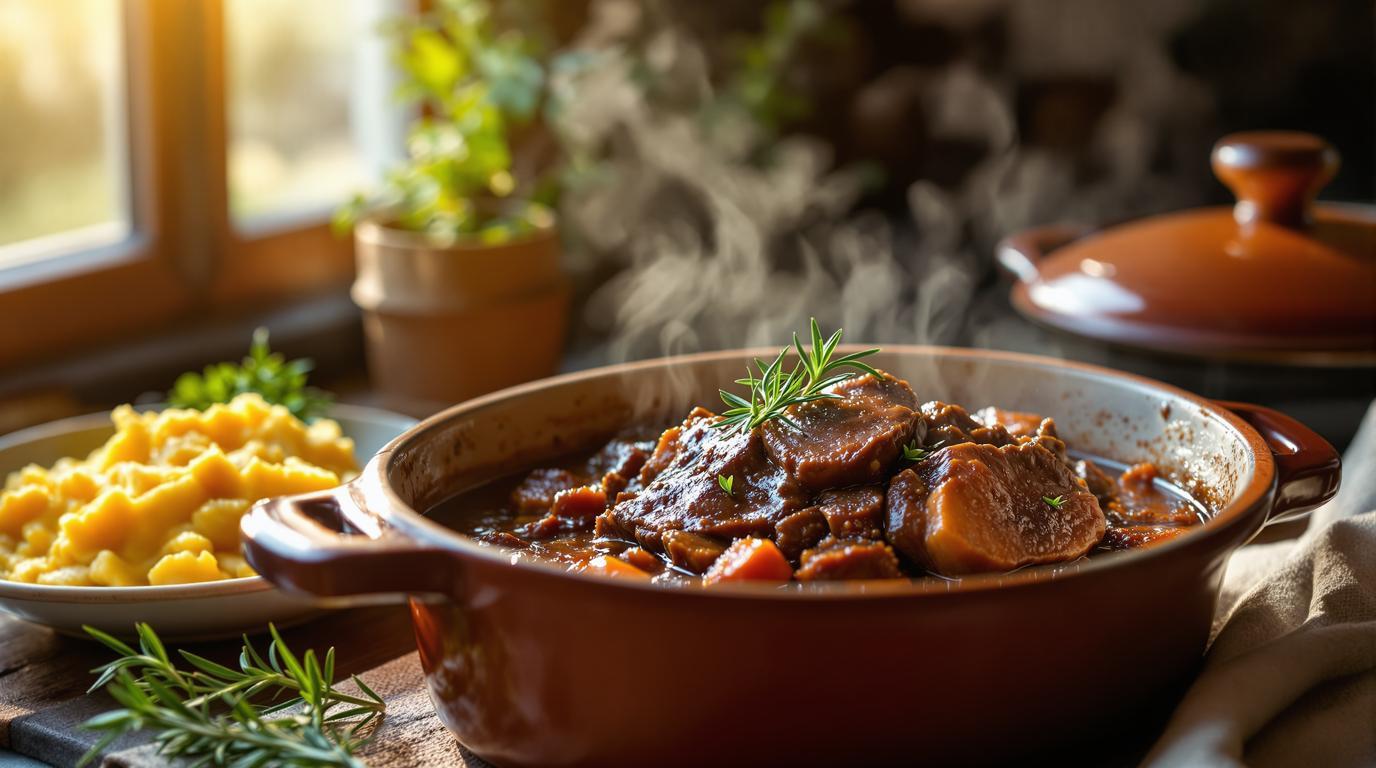
There’s something deeply comforting about a proper Italian braise that simply can’t be rushed. I’ll never forget watching my nonna’s hands as she prepared stracotto in her tiny Tuscan kitchen, the aroma filling every corner of the house for hours. This “over-cooked” beef (which is exactly what “stracotto” means) transforms humble chuck roast into something magical through patience and a handful of simple ingredients. While American pot roast relies on water and simplicity, this Italian cousin embraces wine, aromatics, and time to create something transcendent. 🇮🇹
The Soul of Stracotto di Manzo 📖
Stracotto emerged from northern Italian peasant kitchens where frugal cooks transformed tough, inexpensive cuts of beef into Sunday dinner masterpieces. The genius lies in its simplicity—the dish requires just one pot, basic ingredients, and the gentle magic of low, slow heat. What separates authentic stracotto from ordinary pot roast is the fine mirepoix (soffritto in Italian), generous red wine, and the patient braise that allows collagen to transform into gelatin, creating that distinctive silky sauce. 🍷
Essential Ingredients 🧾
For a traditional 3-pound stracotto that serves 6 people:
- 3 lbs (1.35 kg) boneless beef chuck roast
- 3 tablespoons olive oil
- 1 cup (150g) finely chopped soffritto (equal parts onion, carrot, celery)
- 4 garlic cloves, minced
- 1 cup (240ml) Chianti or Cabernet Sauvignon
- 3 tablespoons tomato paste or 1 can (400g) crushed tomatoes
- 1 cup (240ml) beef stock
- 2 sprigs fresh rosemary
- 2 bay leaves
- 1 cinnamon stick (optional, traditional in Tuscan versions)
- 2 whole cloves (optional)
- Sea salt and freshly ground black pepper
The Cooking Method 📝
- Pat the beef completely dry with paper towels, then season generously with salt and pepper on all sides.
- Heat olive oil in a heavy Dutch oven over medium-high heat until shimmering.
- Sear the beef aggressively on all sides until deeply browned, about 4-5 minutes per side. Don’t rush this step—proper browning creates the foundation of flavor.
- Remove beef to a plate and reduce heat to medium.
- Add the soffritto to the pot and cook until softened, about 5-7 minutes, stirring occasionally to scrape up those flavor-packed brown bits from the bottom.
- Add garlic and cook just until fragrant, about 30 seconds.
- Pour in the wine and simmer for 2 minutes, scraping the bottom of the pot thoroughly.
- Stir in tomato paste, stock, herbs, and spices.
- Return beef to the pot, bring to a gentle simmer.
- Cover and transfer to a 300°F (150°C) oven for 2½-3 hours, turning the roast every 45 minutes, until fork-tender.
Chef’s Note: The finest stracotto is actually made a day ahead. Cool completely, refrigerate overnight, then skim solidified fat before gently reheating. This rest period allows flavors to marry and deepen in a way that same-day serving can’t match. This is why Sunday’s leftover braise often tastes even better on Monday!
Secret Techniques 🤫
The heart of stracotto lies in three critical techniques I learned in my first Italian kitchen. First, dice your soffritto extremely fine—much smaller than American pot roast, about ¼-inch pieces that will mostly disappear into the sauce. Second, don’t skimp on the wine reduction; this concentrates the acidity that balances the richness. Finally, maintain the gentlest possible simmer during braising—bubbles should barely break the surface. Rapid boiling will toughen the meat fibers rather than render them tender. 🔪
Serving & Pairing 🍽️
Traditionally, stracotto is paired with creamy polenta, which creates the perfect neutral canvas for the rich sauce. Slice the meat against the grain about ¼-inch thick (it should yield easily to the knife), then spoon the strained sauce generously over both meat and polenta. For a stunning presentation, add a small sprig of fresh rosemary and serve with a bold Chianti Classico or Barolo.
If polenta isn’t your preference, this pairs beautifully with pillowy gnocchi or wide pappardelle noodles that catch the sauce. For a complete Italian feast, consider starting with crispy appetizers to counterbalance the richness of the main course.
This stracotto embodies the soul of Italian cooking—transforming humble ingredients through technique and time into something truly magnificent. Whether you’re cooking for family on Sunday or impressing weekend guests, this classic demonstrates that greatness in the kitchen often comes not from complexity, but from honoring traditions that have been perfected over generations. Buon appetito! 🇮🇹