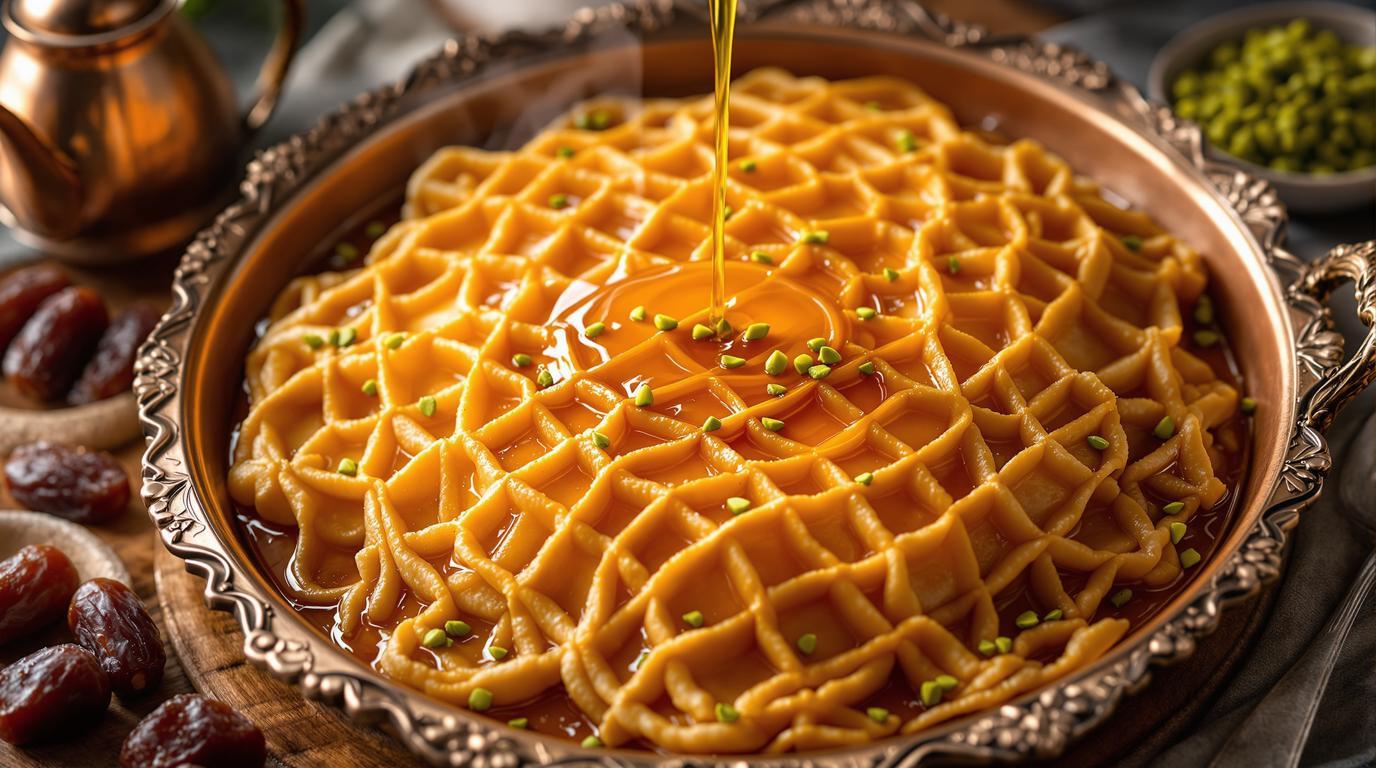
I still remember the first time I tasted authentic kunafa during Ramadan in Cairo. The contrast between the crisp, golden shredded pastry and the sweet, fragrant syrup was nothing short of magical. This dessert isn’t just food—it’s a celebration, a tradition passed through generations of Egyptian families. What makes kunafa special isn’t fancy techniques or rare ingredients, but rather the love and attention to detail that transforms simple components into something extraordinary. The secret? That delicate balance of textures and the unexpected hint of rose water that perfumes every bite.
The Story Behind Kunafa 📖
Kunafa has graced Middle Eastern tables for centuries, originating in the Levant region before making its way to Egypt during the Fatimid Caliphate (909-1171 CE). What fascinates me is how this dish evolved from royal courts to become the centerpiece of family Ramadan celebrations. In Egypt, kunafa symbolizes generosity and communal joy, traditionally served after sunset to break the fast.
My mentor in Cairo, an elderly woman who had been making kunafa for over 60 years, taught me that the pastry represents the golden threads that bind families together during holy months. “Make it with patience,” she would say, “and it will taste of tradition.”
Essential Ingredients 🧾
For the pastry base:
– 1 pound (450g) kataifi dough (shredded phyllo)
– 12 tablespoons (170g) ghee or clarified butter, melted
For the sweet cream filling:
– 3 cups (720ml) whole milk
– ½ cup (120ml) half and half
– 3 tablespoons granulated sugar
– 3 tablespoons cornstarch
– 1 teaspoon vanilla extract
For the syrup:
– 2½ cups (500g) granulated sugar
– 1½ cups (360ml) water
– Juice of ½ lemon
– 1 teaspoon rose water
– ⅓ cup (40g) pistachios, roughly chopped
Step-by-Step Instructions 📝
- Preheat your oven to 375°F (190°C). Take the kataifi dough from the package and gently pull apart the strands with your fingers. If they’re very long, cut them into 2-inch pieces with scissors.
- In a large bowl, drizzle the melted ghee over the kataifi, using your hands to toss until every strand is lightly coated. This ensures your pastry will be crisp, not dry.
- For the cream filling, combine milk, half and half, sugar, and cornstarch in a medium saucepan. Whisk continuously over medium heat until the mixture thickens to the consistency of pudding, about 5-7 minutes. Remove from heat, stir in vanilla, and let cool slightly.
- Grease a 12×8-inch baking dish with ghee. Press half the buttered kataifi into an even layer at the bottom of the dish. Don’t compact it too tightly—you want some air pockets for texture.
- Pour the cream filling evenly over the pastry base, then top with the remaining kataifi, creating a sandwich effect. Brush the top with any remaining ghee.
- Bake for 25-30 minutes, rotating halfway through, until the top turns a deep golden brown color.
- While the kunafa bakes, prepare your syrup by combining sugar, water, and lemon juice in a saucepan. Bring to a boil, then reduce heat and simmer for 10 minutes until slightly thickened. Remove from heat and stir in the rose water.
- When the kunafa comes out of the oven, immediately pour the hot syrup evenly over the hot pastry. It will sizzle—that’s perfect! Let it rest for 10-15 minutes to absorb the syrup.
- Sprinkle with chopped pistachios before cutting into diamond shapes to serve.
Chef’s Note: The temperature contrast is crucial—always pour hot syrup over hot kunafa. This technique creates that signature crisp exterior while allowing the inside to remain tender and soaked with flavor. If both components are the same temperature, the pastry may become soggy rather than achieving that perfect textural contrast.
Chef’s Secret Techniques 🤫
The distinction between good kunafa and exceptional kunafa lies in three techniques I’ve refined over decades. First, never overwork the kataifi strands—toss them gently with ghee to maintain their delicate structure. Second, when creating your cream filling, keep whisking even after you think it’s done; those extra 60 seconds prevent any lumps from forming. Finally, listen for the sizzle when pouring syrup over the hot kunafa—this sound confirms you’re creating that perfect crisp-tender contrast.
If rose water isn’t available, orange blossom water makes an excellent substitution. For those who prefer less sweetness, reduce the syrup by a quarter and add a pinch of salt to the filling to enhance the flavor complexity.
Serving & Presentation Tips 🍽️
Kunafa shines brightest when served warm, about 15 minutes after adding the syrup. The traditional diamond-shaped cuts aren’t just decorative—they honor the geometric patterns found throughout Islamic art. Serve alongside strong Arabic coffee (much like a good slow-simmered broth, quality coffee balances the sweetness perfectly).
For a complete Ramadan iftar experience, pair your kunafa with savory dishes like hand-held savory pies or Turkish-inspired kebabs. The contrast between savory and sweet completes the traditional iftar experience.
Modern interpretations might include serving kunafa alongside cheese-based dishes or even incorporating elements from rustic country terrines to create fusion appetizers before presenting this beloved dessert.
Remember that kunafa isn’t just about following instructions—it’s about connecting to centuries of tradition. When you make this dish, you’re not just cooking; you’re participating in a cultural heritage that has brought families together for generations. That connection, more than any technique I could teach you, is what makes food truly extraordinary.