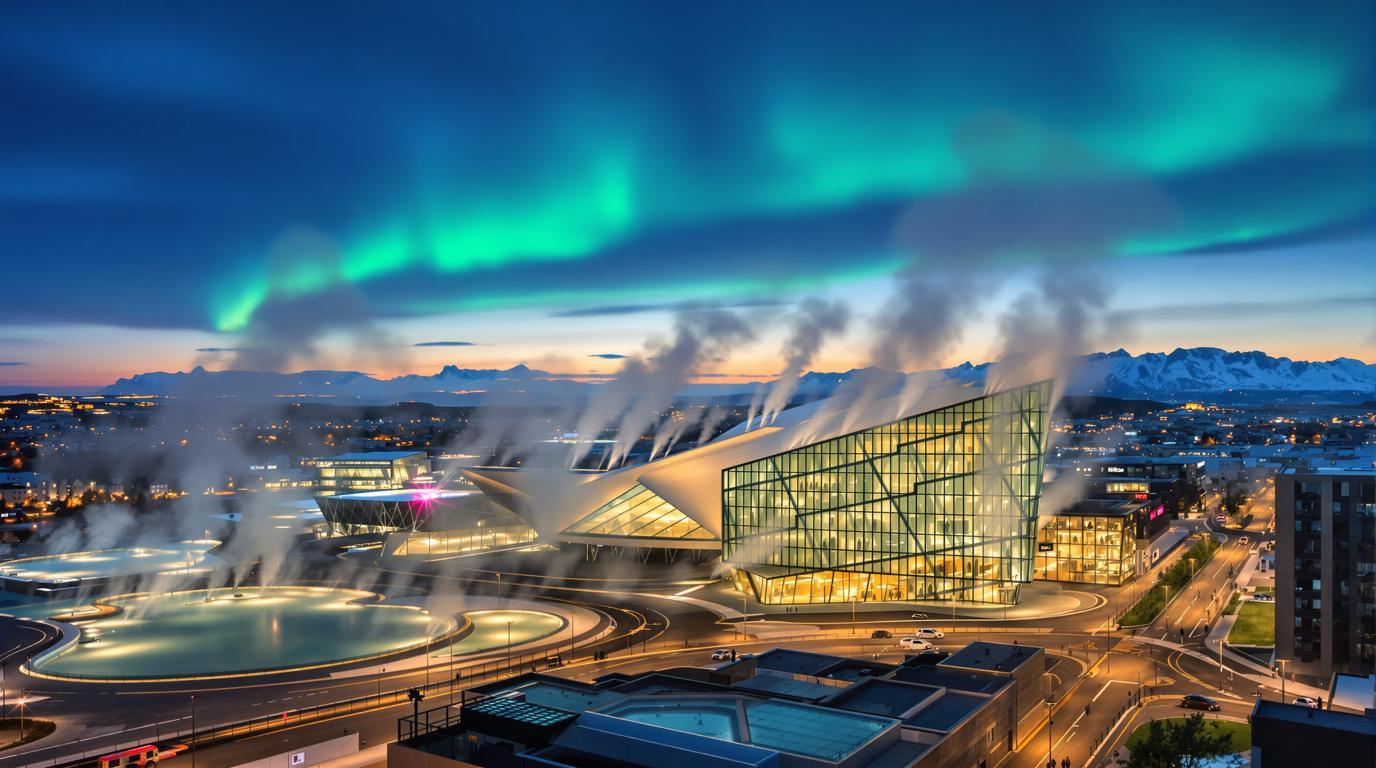
Iceland’s vibrant capital is a magnetic fusion of geothermal wonders and Nordic cool that defies expectations. Reykjavik may be Europe’s northernmost capital, but this compact city center packs an outsized cultural punch against a backdrop of steaming earth and crystalline northern light.
Where fire meets ice: Reykjavik’s geothermal heartbeat
Nowhere else on earth can you find a capital city powered almost entirely by geothermal energy. Beneath Reykjavik’s stylish streets, superheated water courses through pipes, heating homes and creating the distinctive steam plumes that rise from manholes during winter months. This volcanic energy isn’t just practical—it’s transformed into world-class thermal bathing experiences that locals consider their second living room.
For an authentic thermal soak without tourist crowds, skip the famous Blue Lagoon and head to local favorite Laugardalslaug, where Reykjavik residents gather year-round to soak and socialize in naturally heated waters while northern lights dance overhead during winter months.
A cultural explosion in the land of ice
“Our isolation created a pressure cooker for creativity,” explains Elín Björk, local artist and gallery owner. “When you’re surrounded by such dramatic landscapes but cut off from the world for centuries, imagination becomes your greatest resource.”
This creative spirit manifests in Reykjavik’s vibrant street art, with massive murals transforming ordinary buildings into open-air galleries. The architecturally stunning Harpa Concert Hall stands as a glittering testament to Icelandic innovation, its geometric glass façade inspired by volcanic basalt columns.
Beyond puffin shops: Höfuðborgarsvæðið’s hidden treasures
While tourists crowd souvenir shops selling puffin plushies, savvy travelers explore the broader Höfuðborgarsvæðið (Capital Region) where surprises await. In Hafnarfjörður, just 10 minutes from downtown, locals swear elves inhabit the strange lava formations that punctuate this ancient Viking settlement.
If you’re seeking magical isolation like Scotland’s remote islands, head to Viðey Island via a quick ferry ride, where abandoned farms and Yoko Ono’s Peace Tower create an otherworldly atmosphere minutes from the capital.
Summer’s endless daylight, winter’s mystical glow
Between May and September, Reykjavik transforms under the midnight sun. “Summer here is like being granted extra hours of life,” shares Gunnar Thorsson, local chef. “At 11 PM, you’ll find children playing in parks and restaurants filled with diners basking in golden evening light.”
This concentrated season of light balances the winter darkness, when the city glows with tasteful holiday illuminations and cozy café windows beckon with warmth. Unlike Spain’s sun-drenched towns, Reykjavik embraces its dramatic seasonal shifts.
Beyond whale steaks: Reykjavik’s surprising culinary revolution
Forget dated notions of fermented shark and bland potatoes. Reykjavik’s food scene has undergone a radical transformation, embracing New Nordic cuisine while maintaining Icelandic identity. At Dill Restaurant, Iceland’s first Michelin-starred establishment, foraged ingredients meet cutting-edge techniques.
Unlike Greece’s mountain villages with centuries-old culinary traditions, Reykjavik’s isolated location has forced chefs to innovate with limited ingredients—resulting in astonishingly creative dishes.
The 50km golden rule: day-tripping from Keflavík
With Keflavík International Airport (KEF) just 50km from downtown, Reykjavik offers remarkable accessibility. Even on a brief layover, travelers can sample thermal baths, dramatic landscapes, and urban sophistication without exhausting journeys.
Unlike hidden Philippine paradises requiring complex transportation, Reykjavik delivers instant immersion into Icelandic culture mere minutes after leaving the airport.
“Reykjavik isn’t just a starting point for Iceland’s natural wonders—it’s a destination that rewards those who linger with cultural depth rarely found in cities triple its size,” notes travel writer Maria Jensen.
While Reykjavik lacks the rainbow vibrancy of Europe’s LGBTQ beach paradises, it offers its own inclusive atmosphere in a setting where nature’s drama—not nightlife—takes center stage. This northern capital doesn’t just survive at the edge of the Arctic—it thrives, pulsing with creativity born from isolation and powered by the earth’s fiery heart.