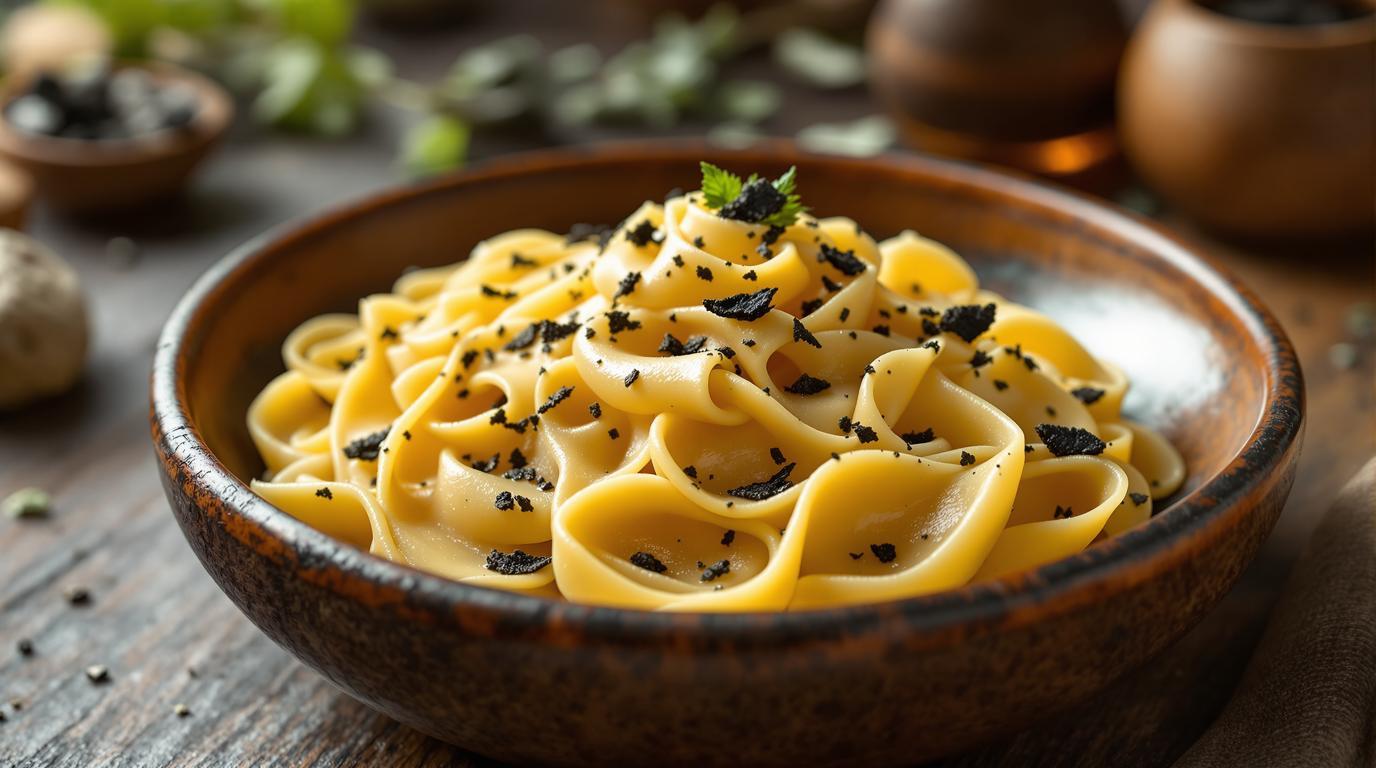
There’s something almost magical about fresh pasta swirled in butter and adorned with truffle shavings. My grandmother used to say that the most exquisite dishes are often the simplest ones, where quality ingredients speak for themselves. The first time I prepared truffle tagliatelle for a dinner party, my guests fell silent as they took their first bites—that moment of pure culinary bliss is what every chef lives for. This iconic northern Italian dish originated in the truffle-rich regions of Piedmont and Emilia-Romagna, where generations of cooks have perfected the art of highlighting this precious fungus with minimal interference.
The Story Behind Truffle Tagliatelle 📖
Truffle tagliatelle represents the epitome of Italian culinary philosophy: exceptional ingredients prepared simply. Unlike many pasta dishes that rely on complex sauces, this creation puts the rare, earthy aroma of truffles center stage. While exploring the foothills of Alba years ago, I watched in awe as a local chef handled paper-thin truffle slices with the reverence usually reserved for precious gems. “The heat from the pasta will release the perfume,” he explained, “so we add much of it at the very end.” This technique, passed down through generations of Italian kitchens, preserves the truffle’s delicate essence that would otherwise dissipate with prolonged cooking.
If you enjoy Italian classics, you might also love this Nonna’s 3-Cheese Gnocchi Bake, which captures that same Italian spirit of beautiful simplicity.
Essential Ingredients 🧾
The beauty of truffle tagliatelle lies in its simplicity, making the quality of each component crucial:
- 200-250g fresh tagliatelle or tagliolini (7-9 oz)
- 15-20g fresh black or white truffle (½-¾ oz)
- 70-80g unsalted European-style butter (5-6 Tbsp)
- 60g Parmigiano Reggiano, freshly grated (4 Tbsp)
- Sea salt and freshly ground black pepper
Chef’s Note: If fresh truffles are beyond your budget or unavailable, a high-quality truffle paste (1 tsp) or truffle oil (2-3 drops) can substitute, though the experience will differ. Never use imitation truffle oil containing synthetic compounds – your palate deserves better.
Step-by-Step Instructions 📝
- Prepare the truffle: Gently clean with a soft brush or damp cloth—never water. Slice 5g very thinly and reserve the remainder for serving.
- Infuse the butter: In a large skillet over medium-low heat, melt the butter until foaming subsides. Add the 5g of sliced truffle and let it infuse for 1-2 minutes without browning.
- Cook the pasta: Meanwhile, bring a large pot of generously salted water to a rolling boil. Cook fresh tagliatelle for 2-3 minutes until al dente. Reserve 1 cup of pasta water before draining.
- Marry the elements: Using tongs, transfer the pasta directly to the butter mixture. Toss gently to coat, adding a splash of pasta water if needed to create a silky emulsion.
- Finish with cheese: Remove from heat and immediately fold in most of the Parmigiano Reggiano, reserving some for garnish. Season with salt and freshly ground pepper to taste.
- Serve immediately: Plate in warmed shallow bowls, topping each portion with freshly shaved truffle and a final sprinkle of cheese.
For more elegant Italian-inspired appetizers, consider these Spanish Tapas that pair beautifully before serving this truffle masterpiece.
Chef’s Secret Techniques 🤫
The difference between a good truffle pasta and an extraordinary one lies in technique. First, your pasta water should taste like the sea—properly salted water is crucial for seasoning the pasta from within. Second, reserve that starchy pasta water religiously; it contains the magical element that helps emulsify the butter into a silky sauce that clings to each strand.
Perhaps most importantly, use a truffle shaver or mandoline for whisper-thin, almost translucent truffle slices. When shaved properly, even a small amount of truffle creates an impressive visual and aromatic impact. If you enjoy perfecting techniques like these, you might appreciate the attention to detail in this slow-simmered ramen recipe that similarly celebrates technique and patience.
Serving & Presentation Tips 🍽️
Present truffle tagliatelle in warmed, shallow bowls that help capture the aroma. The pasta should be loosely gathered rather than tightly coiled, allowing the truffle shavings to settle into the nooks and crannies. Serve immediately—this dish waits for no one as the heat activates the truffle’s perfume.
For wine pairing, nothing complements the earthy notes of truffle better than a Barolo or Barbaresco from Piedmont. If you prefer white, a crisp Arneis provides beautiful contrast. And if you’re planning a full Italian feast, consider starting with these fluffy French eggs as an elegant appetizer, followed by this Alpine potato tartiflette as a hearty side.
Remember that truffle tagliatelle isn’t just a meal—it’s an experience. Take your time, savor each bite, and appreciate the beautiful simplicity that has made this dish a cornerstone of Italian gastronomy for generations. As my mentor once told me, “Anyone can complicate a dish, but it takes a true chef to perfect simplicity.” In your own kitchen, embrace that philosophy and let these precious ingredients shine. Buon appetito! 🍴✨