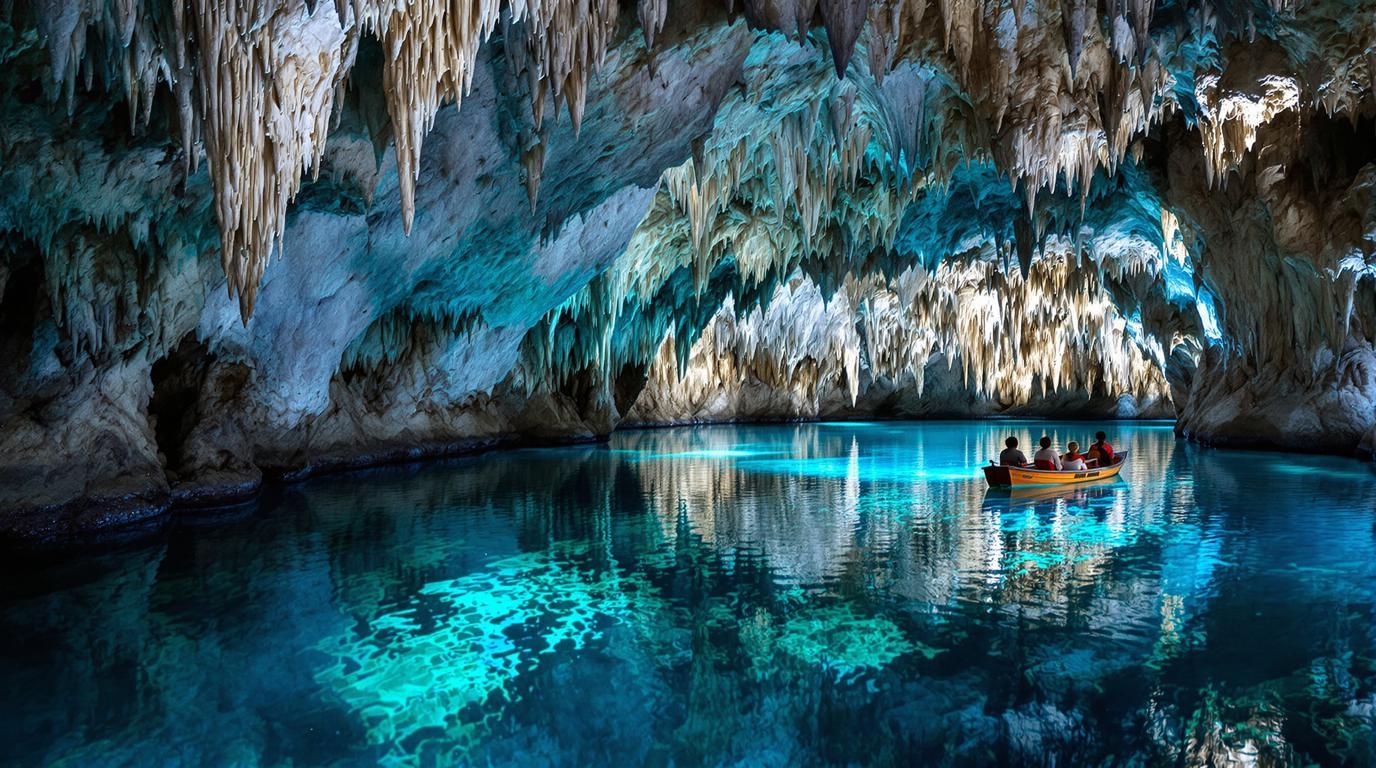
America’s underground wonders hold secrets few travelers discover. Beneath the rolling landscapes and hidden gorges, a network of forgotten river caves beckons adventurers seeking experiences beyond typical tourist paths. These subterranean waterways carve through ancient limestone, creating otherworldly environments that feel like stepping into Earth’s mysterious past.
The hidden network of America’s lost underground rivers
Throughout the eastern United States, a remarkable phenomenon exists where rivers seemingly disappear into the earth only to emerge elsewhere. These “lost rivers” create spectacular cave systems with crystal-clear water flowing through chambers adorned with stalactites and stalagmites formed over millions of years.
According to geologists, these underground waterways represent some of North America’s most pristine freshwater ecosystems, harboring specialized species that have evolved in isolation from the surface world. Their crystal waters remain a constant 52-54°F year-round, creating perfect conditions for rare mineral formations.
Kentucky’s boat-accessible cave marvel
Perhaps the most accessible of these underground river systems is found in Bowling Green, Kentucky. Here, visitors can board small boats and glide beneath massive limestone arches on the same waters once used by Civil War soldiers seeking refuge.
“The moment visitors round that first bend and see the blue hole illuminated from below, there’s always a collective gasp. That electric blue color comes from minerals in the water reflecting light in ways you simply don’t see in nature elsewhere,” explains cave guide Maria Jennings.
The cave’s history includes serving as a hideout during the Civil War and even hosting an underground nightclub during the 1930s. Today, tour guides point out century-old graffiti left by soldiers who sought shelter in these hidden chambers.
New Hampshire’s boulder maze of cascading waters
In North Woodstock, nature enthusiasts discover a different type of cave system, where massive glacial boulders create a labyrinth of passages through which mountain waters cascade. Unlike traditional limestone caves, these boulder caves formed during the last ice age when enormous rocks tumbled into the gorge.
Visitors navigate a boardwalk trail descending 300 feet into the gorge, where they can explore 11 different boulder caves. The most adventurous travelers squeeze through passages with names like “Lemon Squeezer” and “Thor’s Cauldron,” emerging to witness waterfalls tumbling through ancient rock formations.
Pennsylvania’s crystal cavern waters
In eastern Pennsylvania, another remarkable underground river system awaits. Established as a tourist destination in 1930, this limestone cavern features walkways alongside an underground river where the waters remain perfectly clear at a constant temperature.
“I’ve guided tours through these passages for twenty years, and still find myself mesmerized by how the water appears almost luminous in certain chambers,” says veteran guide Thomas Wilkins. “When we dim the lights, visitors can see how the water literally glows from within.”
Culinary delights near the depths
After exploring these subterranean wonders, travelers can indulge in exceptional dining experiences nearby. While nothing compares to Europe’s medieval dining experiences, America’s cave regions offer their own culinary treasures.
At Adair Country Inn near New Hampshire’s boulder caves, diners enjoy beef medallions and locally-inspired maple walnut desserts in a setting that complements the natural beauty of the region. In Kentucky, emerging chefs create farm-to-table experiences using ingredients grown in the fertile soil above the cave systems.
Conservation challenges in fragile ecosystems
These underground river systems face growing environmental pressures. Unlike Thailand’s conservation efforts, America’s cave protection remains inconsistent across states. Water quality threats from surface pollution and increased visitation challenge preservation efforts.
Dr. Elaine Montgomery, hydrogeologist at Karst Research Institute, warns: “What happens on the surface directly impacts these underground systems. A single contamination event can damage formations that took thousands of years to create.”
Planning your underground adventure
For travelers seeking these hidden wonders, advance planning is essential. Most cave systems require reservations, especially during summer months. Sturdy footwear, layered clothing for cool temperatures, and cameras capable of low-light photography will enhance the experience.
While Iceland offers volcanic wonders, America’s forgotten river caves provide equally magical experiences without crossing the Atlantic. The underground rivers connecting these hidden worlds continue flowing silently beneath our feet, waiting for those curious enough to discover their ancient secrets.
When you venture into these forgotten waterways, you’re not just visiting a tourist attraction—you’re experiencing Earth’s hidden arteries, where water has sculpted masterpieces in darkness for millions of years. Like Europe’s vibrant coastal towns, these subterranean wonders transform visitors, revealing how much beauty exists just beyond our everyday perception.